What happened: 140 stores, zero warning
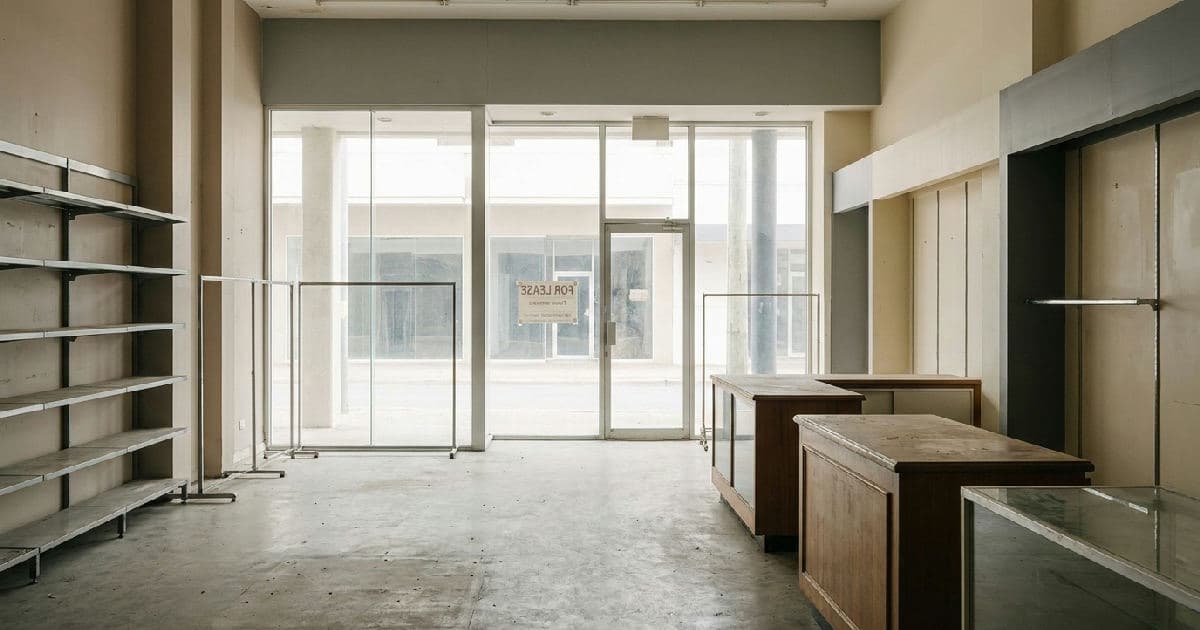
The closures affect every standalone Claire's location in the UK and Ireland, according to Personnel Today. More than 1,000 staff have lost their positions. No phased wind-down or store-by-store review has been publicly disclosed; the entire estate appears to have been shuttered in a single move.
Claire's parent company filed for Chapter 11 bankruptcy protection in the United States in March 2018, carrying roughly $2bn in debt at the time, according to court filings reported by Reuters. The business was subsequently acquired out of bankruptcy by its senior creditors, led by Elliott Management. The UK arm continued to trade after the restructuring, but its financial trajectory has been under pressure from rising occupancy costs, weaker footfall, and shifting consumer habits among its core demographic of teenagers and pre-teens.
The chain's concession partnerships with retailers such as Superdrug are understood to be separate from the standalone store operation, though the long-term status of those arrangements remains unclear.
Why single-category high-street retail keeps failing
Claire's exit fits a pattern that has accelerated sharply since the pandemic. Wilko entered administration in August 2023, closing more than 400 stores and making roughly 12,500 workers redundant, according to the administrators' statement at the time. The Body Shop UK followed into administration in February 2024, initially shutting 75 of its 198 stores, as reported by the Financial Times.
The British Retail Consortium's data shows that UK high-street vacancy rates stood at approximately 13.9% in late 2024, a figure that has remained stubbornly elevated since the post-pandemic period. For single-category, low-ticket retailers, the arithmetic is especially unforgiving. Rent, rates, and staffing represent a largely fixed cost base. When average transaction values sit in single digits, stores need consistently high footfall volumes simply to cover overheads.
Claire's model depended on impulse purchases from a demographic that has increasingly migrated to online platforms. Shein, Amazon, and a constellation of social-media-native accessories brands now compete directly for the same spend, often at lower price points and with none of the property cost burden. The result is a structural mismatch: a physical retail format designed for an era of Saturday-afternoon high-street browsing, operating in a market where that behaviour has materially declined among under-25s.
Comparable international exits reinforce the trend. Claire's had already scaled back its European footprint in previous years, and other single-category chains such as Accessorize have restructured repeatedly to remain viable.
Workforce fallout and redundancy obligations
The loss of more than 1,000 jobs is significant in absolute terms. Office for National Statistics data shows that the UK retail sector employed approximately 2.9 million people as of late 2024. While Claire's redundancies represent a small fraction of that total, the impact is concentrated in specific towns and shopping centres where the chain was often one of few employers offering flexible, entry-level roles suited to younger workers.
Under UK employment law, any employer proposing 20 or more redundancies at a single establishment within a 90-day period must undertake collective consultation. For 100 or more redundancies, the minimum consultation period is 45 days, and the employer must notify the Redundancy Payments Service. Whether Claire's UK operation followed this process, or whether the closures were executed through an insolvency procedure that modifies those obligations, has not been confirmed in public statements at the time of writing.
Affected staff are entitled to statutory redundancy pay if they have at least two years' continuous service, calculated on the basis of age, weekly pay (capped at £643 per week for the current statutory limit), and length of service.
Practical takeaways for bricks-and-mortar operators
Claire's closure offers several lessons for operators running comparable physical retail formats.
Diversify the revenue base. Single-category retailers carry concentrated risk. When consumer preference shifts, or when a lower-cost channel emerges, there is no adjacent product line to absorb the blow. Operators with narrow ranges should stress-test their models against a 20-30% footfall decline scenario.
Reassess lease commitments ruthlessly. Long leases with upward-only rent reviews were a feature of pre-2020 retail property deals. Operators should seek turnover-linked rents or shorter lease terms wherever possible. The Landlord and Tenant Act 1954 allows contracting out of security of tenure, and more landlords are open to flexible arrangements given elevated vacancy rates.
Monitor demographic behaviour, not just spend. Claire's core customers did not stop buying accessories; they stopped buying them on the high street. Operators targeting younger demographics need real-time data on channel preference, not just basket size.
Plan for orderly exit. The reputational and legal costs of a disorderly closure are substantial. Maintaining a contingency plan that includes consultation timelines, supplier notification, and lease break options is not pessimism; it is basic operational discipline.
Claire's departure removes a familiar name from British high streets. For the workers affected, the consequences are immediate. For operators in adjacent categories, the signal is harder to ignore: low-ticket, single-category physical retail faces structural headwinds that no amount of store refurbishment is likely to reverse.