HPE's £10.45bn Juniper Bet: Can It Dislodge AI Networking Giants?
- HPE completed its £10.45bn acquisition of Juniper Networks one year ago, representing roughly 40% of the company's market capitalisation at announcement
- The merged entity is targeting the AI data centre networking market, where Cisco, Arista Networks, and Nvidia's Mellanox division already hold dominant positions
- HPE has launched new routing platforms and liquid-cooled switches for AI training environments, integrating Juniper's Mist platform with Aruba networking software
- No revenue figures or customer adoption data have been disclosed to validate the company's claims of early momentum
A year after Hewlett Packard Enterprise sealed its £10.45bn acquisition of Juniper Networks, the company is making bold claims about early momentum in the white-hot market for AI data centre infrastructure. But strip away the corporate optimism, and what emerges is a more complicated picture: two historically second-tier networking players attempting to challenge entrenched rivals precisely when the stakes have never been higher. Rami Rahim, the former Juniper chief executive who now heads HPE's networking division, used Mobile World Congress in Barcelona to declare the integration had progressed from "ambition" to "execution".
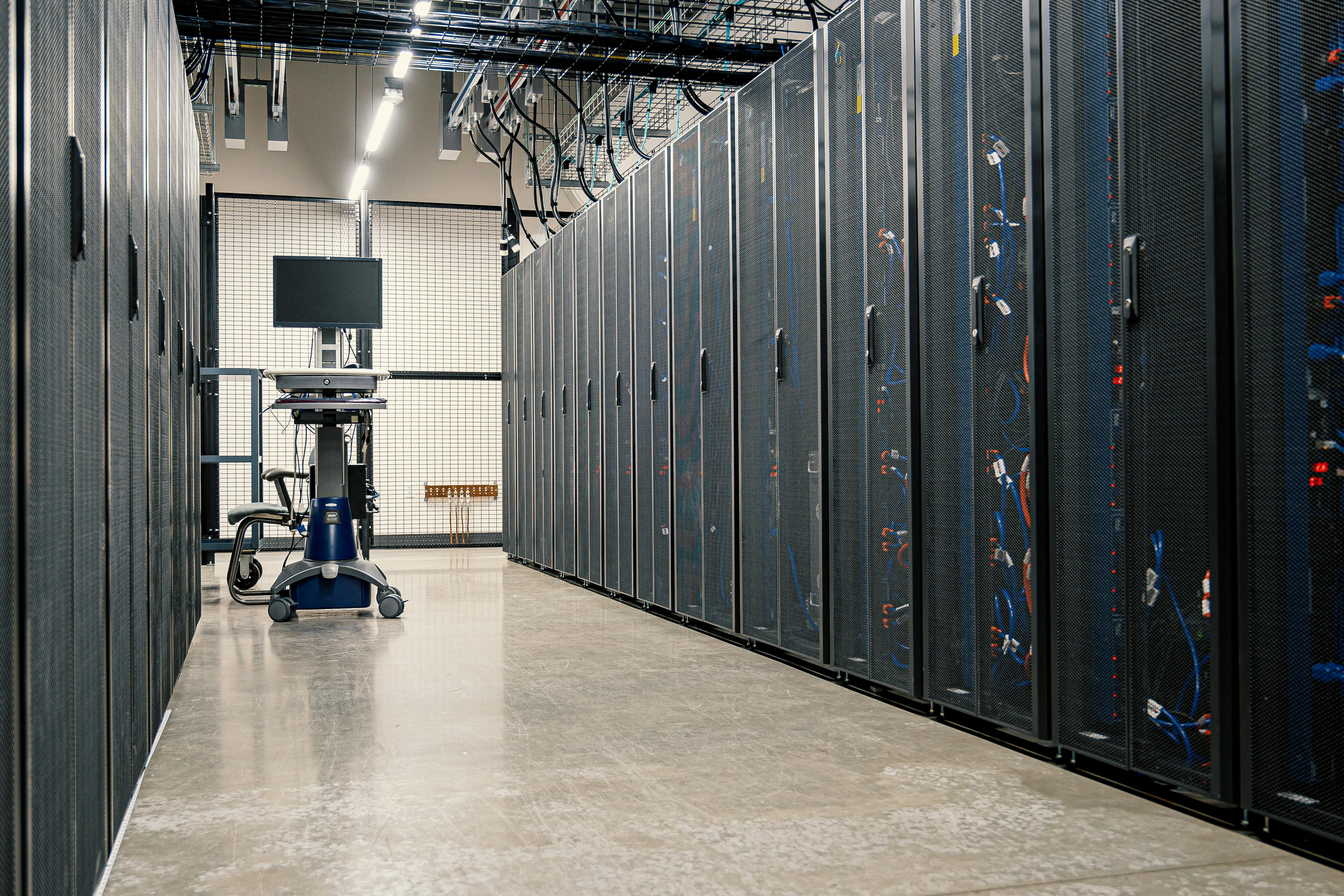
The company has pushed out new routing platforms for high-capacity data centres and launched a liquid-cooled switch aimed at AI training environments. Parts of Juniper's Mist platform are now meshing with HPE's existing Aruba networking software. All of which sounds encouraging, except for one nagging detail: HPE is arriving late to a market where Cisco, Arista Networks, and Nvidia's own Mellanox-powered networking division have already claimed dominant positions.
The networking layer of AI infrastructure may represent a smaller proportion of total data centre costs than GPU clusters, but it determines whether those billion-dollar chip investments actually run efficiently.
Getting this wrong means expensive silicon sitting idle.
Enjoying this article?
Get stories like this in your inbox every week.
The £10.45bn gamble on scale and timing
That price tag matters more than HPE might care to admit. At roughly 40% of the company's market capitalisation when the deal was announced, this acquisition needs to deliver commercially, not just technically. HPE has bet that combining Juniper's routing technology with its Aruba business creates enough scale to compete with players who've spent years embedding themselves in the AI infrastructure supply chain.
Rahim's pitch centres on reach. According to him, Juniper possessed "great technology" but lacked the customer base HPE brings. Fair enough. Yet what's notably absent from HPE's narrative is any hard evidence of customer adoption beyond the company's own assertions.
No revenue figures. No testimonials from hyperscale operators or enterprise clients. No third-party validation that the merged entity is actually winning deals in the AI data centre space where it matters most.

The company's claim that demand for networking capacity resembles "the early days of the internet" remains unquantified marketing language. What does that mean in concrete terms? How many customers? What deal sizes? Without specifics, such comparisons sound more like wishful positioning than market reality.
Cisco and Arista didn't just arrive early to AI networking—they've built entire ecosystems around their technology, with deep integration into the infrastructure stacks that hyperscalers and major enterprises have already deployed.
What's interesting here is the disconnect between HPE's confidence and the competitive dynamics it faces. Cisco and Arista didn't just arrive early to AI networking—they've built entire ecosystems around their technology, with deep integration into the infrastructure stacks that hyperscalers and major enterprises have already deployed. Displacing that kind of incumbency requires more than a larger sales force.
Telcos and hybrid cloud: a secondary battleground
Beyond data centres, HPE is eyeing telecommunications operators as a potential revenue stream. Rahim highlighted interest from telco groups exploring sovereign cloud initiatives and AI infrastructure projects, driven by the uncomfortable reality that network traffic keeps growing whilst connectivity revenue largely doesn't. That opportunity exists, certainly. Operators attending industry events routinely discuss such projects.
But telecom companies have an atrocious track record when it comes to pivoting into cloud services. The graveyard of failed Network Functions Virtualisation initiatives serves as a cautionary tale about what happens when telcos attempt to compete outside their core business.
HPE is also banking on enterprises reconsidering their cloud architecture for AI workloads, particularly around sensitive data. According to Rahim, businesses find it "too risky" to use public cloud services or public large language models for certain applications, driving interest in hybrid systems where data stays closer to its source. There's truth in that trend. Regulatory requirements, data sovereignty concerns, and latency considerations are pushing some AI workloads towards private or hybrid infrastructure.
But this narrative needs balancing against a stubborn fact: hyperscalers still dominate enterprise AI spending. AWS, Microsoft Azure, and Google Cloud aren't losing their grip on the market—they're expanding it whilst also addressing hybrid use cases with their own on-premises offerings.
What actually needs to happen
For HPE's Juniper acquisition to prove its worth, the company needs to demonstrate three things it hasn't yet shown publicly. First, it must win significant design wins at major AI-focused customers—the kind of deployments that validate its technology stack against Cisco and Arista. Second, it needs to execute the integration without the product delays and strategic confusion that typically plague large technology mergers.
Third, it must convert its expanded sales reach into actual revenue growth in the AI networking segment. The timing isn't entirely against HPE. AI infrastructure spending continues to surge, and some customers do value having credible alternatives to the established players.
But history suggests that combining two weaker competitors rarely produces a market leader, particularly in enterprise technology where switching costs are high and relationships run deep. The question facing HPE isn't whether demand exists—it manifestly does. Rather, it's whether the company can move fast enough to claim meaningful market share before the current wave of AI infrastructure buildout consolidates around the incumbents.
Rahim's optimism about execution may yet prove justified, but investors and customers will want to see evidence beyond launch announcements and conference appearances. Revenue figures from the merged networking division, expected in coming quarterly reports, will provide the first real test of whether this £10.45bn bet is paying off or merely catching up. Some analysts have already raised questions about whether AI demand is translating to HPE's core business, while recent quarterly results have shown stronger-than-expected performance in the networking division itself.
- HPE must demonstrate tangible customer wins and revenue growth from the merged networking division in upcoming quarterly reports to justify the massive acquisition price
- The real test is whether HPE can capture meaningful market share before AI infrastructure spending consolidates around existing incumbents like Cisco, Arista, and Nvidia
- Watch for evidence of major design wins at hyperscalers and large enterprises—without these anchor customers, HPE risks remaining a secondary player in the most lucrative segment of AI networking

Co-Founder
Multi-award winning serial entrepreneur and founder/CEO of Venntro Media Group, the company behind White Label Dating. Founded his first agency while at university in 1997. Awards include Ernst & Young Entrepreneur of the Year (2013) and IoD Young Director of the Year (2014). Co-founder of Business Fortitude.
Comments
💬 What are your thoughts on this story? Join the conversation below.
to join the conversation.