The price increase, described as one of the broadest in Apple's history, landed on Thursday. It came just a week after chief executive Tim Cook warned that rises would be "unavoidable" because of the "unsustainable" cost of memory and storage, as reported by City AM. Apple shares fell 6.1 per cent on Thursday to $271.10 (£205.40).
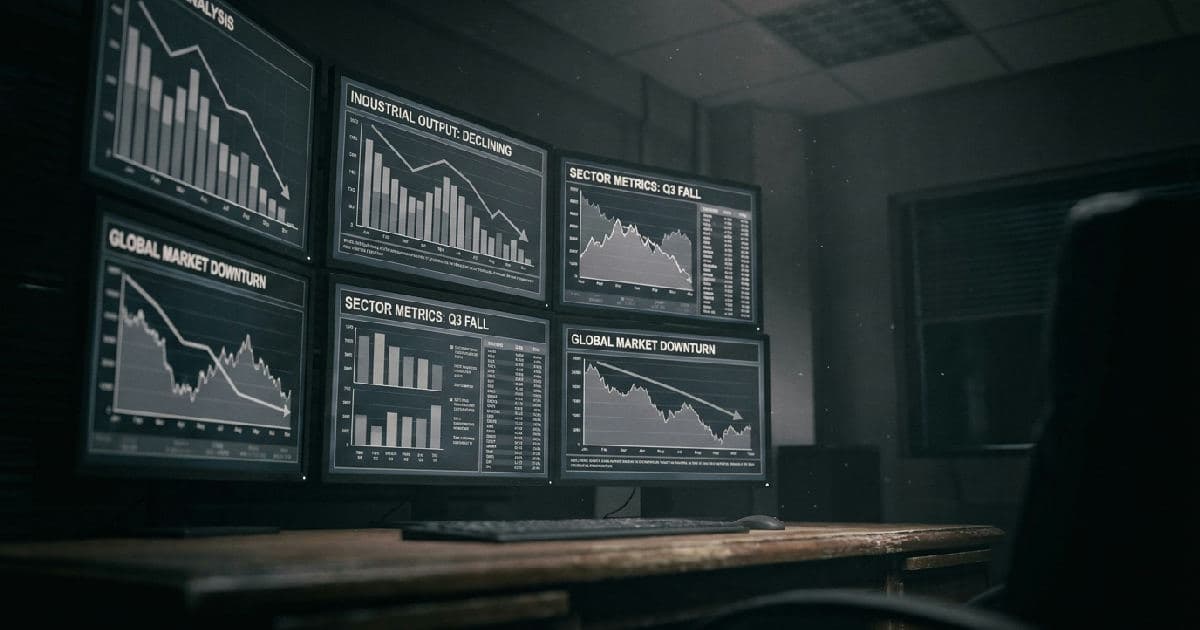
The ripple effects were immediate. South Korea's Kospi fell 6.9 per cent on Friday, forcing a 20-minute trading halt, its third of the week and fifth of 2026, according to City AM. Major semiconductor stocks posted heavy losses. Reports of a possible delay to OpenAI's initial public offering added a second source of contagion.
For UK-based SMEs and scale-ups that depend on Apple hardware, cloud infrastructure, or any computing equipment containing memory chips, the implications are practical and pressing.
What Apple's price hike means for business buyers
Apple said on Thursday that the consumer technology industry faces what it called an "unprecedented challenge", with memory prices rising so quickly that passing costs to buyers was the only option, according to City AM.
"The rapid expansion of AI data centres has created an extraordinary surge in demand for memory and storage. We know this is not welcome news, and we are working tirelessly to find solutions."
A 20 per cent increase across MacBooks and iPads is not a rounding error. For a business running a fleet of 50 MacBook Pros on a three-year refresh cycle, the uplift translates into thousands of pounds in additional capital expenditure per cycle. Organisations that had budgeted for hardware refreshes in the second half of 2026 now face a choice: absorb the cost, delay procurement, or look at alternative suppliers who may themselves be exposed to the same memory price pressures.
The timing is particularly awkward. Many UK businesses set annual IT budgets in the first quarter. A mid-year price shock of this magnitude sits outside most planning assumptions. Finance directors will need to revisit procurement forecasts, and those locked into Apple's ecosystem through device management platforms or macOS-dependent workflows have limited room to switch.
Susannah Streeter, chief investment strategist at Wealth Club, said investors remain "unconvinced that consumers will keep paying higher prices" regardless of Apple's brand strength, as quoted by City AM. That scepticism applies equally to business buyers operating under margin pressure.
How the memory chip squeeze is reshaping hardware costs
The root cause of Apple's price increase is not tariffs or logistics. It is a structural supply-demand imbalance in memory and storage chips, driven by the rapid build-out of AI data centres worldwide.
High-bandwidth memory (HBM) chips, essential for training and running large AI models, consume manufacturing capacity that would otherwise serve consumer electronics. The same fabrication plants producing DRAM and NAND flash for laptops, tablets, and smartphones are being pulled towards higher-margin AI infrastructure orders.
Streeter noted that "the fight for memory chips, which has pushed up prices to eye-watering levels, is showing up in sharp increases for end-users," adding that "there's a feeling that there's only so long this can go on for," according to City AM.
For UK operators, the cost inflation extends beyond devices. Cloud service providers rely on the same memory components for server infrastructure. If chip prices remain elevated, data-centre capacity costs are likely to follow. Businesses whose capital expenditure plans depend on affordable cloud compute, whether for software development, data analytics, or AI experimentation, should expect sustained upward pressure on those line items.
The episode also illustrates how the AI investment cycle is reaching a point where end-user pricing pressure could dampen demand. If businesses and consumers pull back on hardware purchases because of cost, that reduced demand could eventually feed back into the semiconductor supply chain, creating the conditions for another sharp swing in sentiment.
Asia's market reaction: Kospi halts and semiconductor losses
Friday's sell-off across Asian markets was severe and broad-based, according to City AM.
South Korea's Kospi tumbled 6.9 per cent to 8,309.6 points, erasing gains from a brief Thursday rally that had been driven by Micron's profit surge. The index triggered a 20-minute trading halt. SK Hynix, a major supplier of HBM chips, plunged 9.1 per cent to 2,651,000 KRW (£1,305.60). Samsung Electronics fell 6.2 per cent.
In Tokyo, the Nikkei 225 dropped 4.3 per cent to 69,194.6 points. Semiconductor equipment maker Tokyo Electron fell 3.2 per cent.
Taiwan's TAIEX declined 3.6 per cent, with TSMC, the world's largest contract chipmaker, falling 2.1 per cent.
The speed of the reversal is notable. Just 24 hours earlier, Micron's strong earnings had briefly lifted sentiment across chip stocks. The whiplash underscores how fragile confidence has become in the semiconductor sector. Markets are swinging sharply on each new data point about chip supply, demand, and pricing.
Streeter observed that "with valuations so stretched, even a slight turn in sentiment shows up in big moves," adding that investors are "highly sensitive to worries about how long the voracious demand for chips to power the AI revolution will last," as quoted by City AM.
OpenAI's IPO delay and the wider AI valuation question
A second source of market contagion emerged on the same day. Reports that OpenAI could delay its anticipated public market debut from 2026 to 2027 hit several major stocks, according to City AM.
OpenAI chief executive Sam Altman has reportedly pushed advisers to target a $1 trillion valuation, a significant leap from the company's latest private market valuation of $730 billion, leading the AI firm to consider postponing its listing to achieve that figure, City AM reported.
Tokyo-listed SoftBank, one of OpenAI's largest backers, saw its share price fall 12.5 per cent as earlier gains were erased. Arm Holdings, SoftBank's US-listed semiconductor design subsidiary, fell 3.1 per cent during Thursday trading.
The potential delay raises a broader question about AI valuations. If the most prominent AI company in the world cannot find a public market price that satisfies its leadership at current levels, it suggests that the gap between private AI valuations and what public markets will bear may be wider than assumed.
For UK businesses, this matters less as a market story and more as a signal about the durability of the AI spending cycle. If the capital flowing into AI infrastructure begins to slow, whether because of valuation concerns, rising input costs, or demand fatigue, the downstream effects on hardware availability and pricing could shift again.
What UK operators should watch
Three practical considerations emerge from the past week's events.
First, hardware budgets need revisiting. Any organisation planning device procurement in the second half of 2026 should stress-test its assumptions against a sustained period of elevated prices, not just from Apple but across the consumer electronics sector.
Second, cloud costs may follow. Memory chip shortages do not stay contained in the device market. Server infrastructure uses the same components, and providers will eventually pass higher input costs through to customers.
Third, the AI cost cycle is not linear. The same AI boom driving chip shortages is also inflating the valuations of the companies building AI tools. If those valuations correct, or if end-user demand softens because of higher prices, the cycle could reverse. Planning for volatility, rather than a single directional trend, is the more prudent approach.
The memory chip squeeze is unlikely to resolve quickly. AI data-centre construction continues at pace globally, and new fabrication capacity takes years to bring online. UK businesses dependent on computing hardware and cloud services are facing a period of sustained cost uncertainty.