What Trump actually announced, and what remains in force
In an online post on 6 May 2026, President Trump said that Project Freedom, the US military operation escorting commercial shipping through the Strait of Hormuz, would be "paused for a short period of time" while negotiations with Iran continued, as reported by City AM.
The language matters. The pause is framed as conditional: it holds only while progress is made towards what Trump called "a Complete and Final Agreement" with Iranian representatives. He cited a request from Pakistan and other countries, as well as what he described as "great progress" in talks.
Critically, the US blockade on Iranian ports remains in full force. US Secretary of State Marco Rubio confirmed separately that Operation Epic Fury, the broader offensive campaign against Iran, had also ended, with the administration's focus shifting to diplomacy, according to City AM's reporting.
That distinction is important for anyone pricing risk in the region. A paused escort mission is not the same as open sea lanes. Roughly 20% of global oil supply transits the Strait of Hormuz. French shipping group CMA CGM reported that one of its vessels was attacked on 5 May, just one day before the announcement, according to the same report. Shipping risk has eased on paper; it has not disappeared in practice.
Iranian state media reportedly claimed Trump had "retreated", though the regime's surviving leadership has not issued a formal response. Some senior Iranian officials were in China for talks on global relations at the time of the announcement, City AM reported.
Oil and equity moves: the numbers behind the rebound
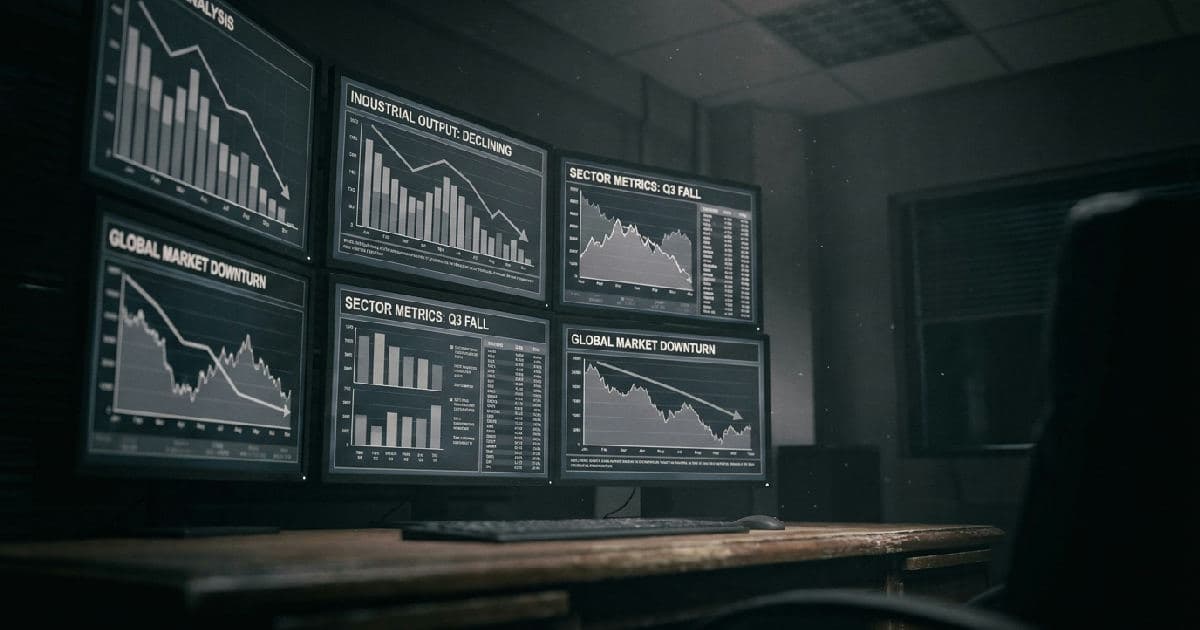
Brent crude had been trading at approximately $115 per barrel during the peak of the US-Iran military escalation. Following Trump's post, the benchmark slipped below $100 per barrel, a decline of more than 13% from recent highs, according to City AM.
The FTSE 100 responded swiftly, rising nearly 2% within the first two hours of trading on 6 May, recovering losses accumulated during the escalation period, City AM reported. Asian and European equity markets also rebounded.
For UK businesses, the equity move is secondary. The oil price shift is where the operational impact sits. A $15-per-barrel swing in Brent feeds directly into diesel costs, petrochemical feedstock pricing, gas-linked electricity contracts, and marine fuel surcharges. Businesses that locked in energy procurement or freight rates during the escalation now face the prospect of having overpaid. Those that waited may feel vindicated, but they remain exposed if talks collapse and prices spike again.
The pattern is familiar. During the tariff escalation earlier in Trump's second term, companies that rushed to stockpile inventory ahead of threatened duties found themselves sitting on excess stock when levies were rolled back. The cost of reacting to headlines, rather than scenarios, compounds quickly.
The 'TACO' pattern and why it complicates business planning
Market analysts were quick to label the reversal as another instance of the 'TACO' dynamic: Trump Always Chickens Out. The term describes a recurring pattern in which the administration issues large, disruptive threats, only to retreat before the full consequences materialise.
"There are three things certain in life – death, taxes and a TACO," said Neil Wilson, investor strategist at Saxo UK, as quoted by City AM. "No battle plan survives first contact with the enemy but 'Project Freedom' seems to have been dropped with unseeming haste."
The TACO pattern has now surfaced across tariff threats, trade wars with multiple partners, and a live military operation. Each reversal produces a sharp but short-lived market swing. The problem for UK operators is that these swings are large enough to move input costs materially, but too unpredictable to hedge against with conventional tools.
Consider a mid-sized UK manufacturer buying energy six months forward. During the escalation, forward Brent contracts would have priced in sustained disruption to Hormuz shipping. A procurement director locking in at $110 or above now faces a contract that looks expensive against a spot price below $100. Conversely, waiting for clarity risks being caught out if talks fail and prices return to $115 or higher.
The same logic applies to freight. Container rates on Asia-to-Europe routes have been volatile since the Houthi disruption in the Red Sea in 2024. Any perceived reduction in Hormuz risk feeds into rate negotiations, but the CMA CGM attack on 5 May is a reminder that vessel-level risk persists regardless of diplomatic signals.
For SMEs without dedicated treasury functions or hedging programmes, the TACO dynamic is particularly punishing. Large corporates can use options, swaps, and structured products to manage a range of outcomes. A business turning over £5m with thin margins typically cannot. The result is that geopolitical whipsaws disproportionately affect the firms least equipped to absorb them.
What UK operators should consider on energy and freight exposure
The practical question for finance directors and operations leaders is not whether a US-Iran deal will hold. It is how to manage a cost base when a single social media post can move input prices by double digits in a matter of hours.
Several principles apply.
Scenario-based procurement over single-point forecasts
Businesses still budgeting on a single assumed oil price are exposed. A more resilient approach involves modelling at least three scenarios: a sustained deal that keeps Brent below $100, a collapse that sends it back above $115, and a prolonged period of oscillation between the two. Margin forecasts, pricing decisions, and cash-flow projections should be stress-tested against all three.
Shorter contract tenors where possible
Locking in 12-month fixed-price energy contracts during a period of extreme volatility carries concentration risk. Where suppliers offer flexibility, shorter tenors of three to six months, or contracts with price-review clauses, reduce the cost of being wrong. The trade-off is less certainty, but certainty priced at the top of a spike is not a bargain.
Freight flexibility and diversification
For importers reliant on goods transiting the Strait of Hormuz or the broader Middle East corridor, the lesson from the Red Sea disruption remains relevant. Dual-routing strategies, buffer stock policies, and relationships with multiple freight forwarders provide optionality that single-carrier contracts do not.
Watching the blockade, not just the pause
The continuing US blockade on Iranian ports is the detail most likely to sustain elevated shipping insurance premiums and route diversions, even if Project Freedom remains paused. Operators should monitor blockade enforcement and any changes to war-risk insurance zones, which directly affect freight surcharges.
Building internal hedging literacy
For businesses above a certain scale, basic hedging instruments such as fixed-for-floating energy swaps or forward freight agreements are accessible through brokers. The barrier is often knowledge rather than cost. Finance directors who have not previously engaged with these tools may find that the current environment justifies the investment in understanding them.
The outlook remains binary
A finalised US-Iran agreement would represent a significant de-escalation, potentially removing the Hormuz risk premium from energy and freight markets for the medium term. A breakdown in talks, or another TACO-style reversal, would do the opposite.
UK businesses cannot control which outcome materialises. They can control how many scenarios they have planned for. In a period where a single post can move Brent by $15, the cost of planning for only one outcome is higher than it has ever been.