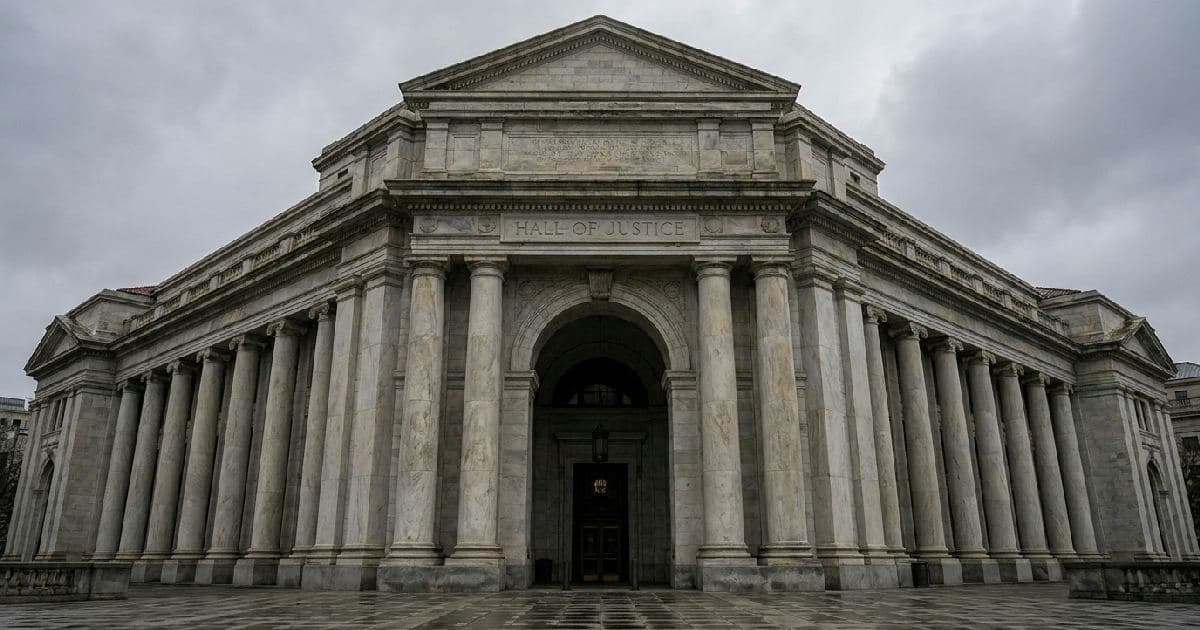
What the Supreme Court decided, and why it matters beyond Washington
On 29 June 2026, the US Supreme Court handed down its ruling in the case concerning President Trump's removal of Lisa Cook, a Federal Reserve governor, as first reported by the Guardian. The justices found that a president does not have the constitutional authority to fire a Fed governor without cause, according to the court's opinion.
The ruling is narrow in its legal scope but vast in its practical consequences. Since early 2025, the Trump administration has tested the boundaries of executive power over independent agencies. Attempts to restructure or exert direct control over the Consumer Financial Protection Bureau (CFPB) and the National Labor Relations Board (NLRB) had already raised questions about whether the Federal Reserve itself could be brought under White House direction. The Cook ruling draws a firm constitutional line: the Fed's seven governors serve their 14-year terms unless removed for cause, not at presidential discretion.
For markets, the signal is unambiguous. The Federal Reserve will continue to set interest rates based on its dual mandate of price stability and maximum employment, not on political instruction. That distinction matters enormously for anyone outside the United States whose business model depends on the cost and availability of dollars.
The rate-setting implications for UK businesses with dollar exposure
The Federal Reserve's current target range for the federal funds rate sits at 4.25% to 4.50%, having been held steady through the first half of 2026 after a series of quarter-point cuts in late 2024 and early 2025. Before the ruling, futures markets had been pricing in persistent uncertainty about the trajectory of US rates, in part because of the unresolved question of whether the president could reshape the Fed's board to favour looser policy.
That uncertainty carried a tangible cost. Sterling-dollar implied volatility had remained elevated through much of 2026, making currency hedging more expensive for UK exporters invoicing in dollars and for importers purchasing dollar-denominated commodities. The pound traded at approximately $1.28 in the days leading up to the ruling, according to market data, and edged higher in the immediate aftermath as risk premiums receded.
For UK SMEs and scale-ups, the practical effect is threefold.
Hedging costs
Forward contracts and options on GBP/USD should become cheaper as implied volatility declines. Firms that had been paying elevated premiums to lock in dollar rates for 6 to 12 months may find more favourable terms in the weeks ahead.
Financing costs
UK businesses with dollar-denominated debt, whether drawn from US lenders or priced off US benchmarks, can now plan around a Fed rate path driven by economic data rather than political intervention. The spread between US Treasuries and sterling gilts had widened partly on political-risk grounds; that component should narrow.
Revenue forecasting
Companies earning revenues in dollars and repatriating to sterling face less binary risk. A politically captured Fed might have slashed rates to stimulate growth before the 2026 midterm elections, or equally might have been pressured to hold rates higher to strengthen the dollar. Neither scenario now applies. Rate decisions will follow the Federal Open Market Committee's assessment of inflation and employment, which, while imperfect, is at least analytically tractable.
Central bank independence: lessons for the Bank of England
The ruling carries resonance well beyond the United States. The Bank of England has operated with formal monetary-policy independence since 1997, when the then-Chancellor Gordon Brown granted the Monetary Policy Committee (MPC) the authority to set interest rates. That independence rests on statute, specifically the Bank of England Act 1998, rather than on constitutional protection of the kind the US Supreme Court has now affirmed for the Fed.
The distinction is important. A future UK government could, in theory, amend or repeal the relevant provisions of the 1998 Act through ordinary legislation. No constitutional barrier equivalent to the US "for cause" removal protection exists in the UK system. The Supreme Court's ruling may prompt renewed discussion about whether the Bank of England's independence should be further entrenched.
Andrew Bailey, the Bank of England governor, has repeatedly emphasised the importance of central bank independence for anchoring inflation expectations. The Bank's current base rate stands at 4.50%, and the MPC has signalled a cautious approach to further cuts. A perceived threat to that independence, whether domestic or imported through contagion from US political norms, would risk destabilising gilt markets and pushing up borrowing costs for UK businesses and households alike.
The European Central Bank faces a parallel debate. The ECB's independence is enshrined in the Treaty on the Functioning of the European Union, making it arguably the most legally protected of the three major central banks. The US ruling aligns the Fed more closely with that European model, at least in practical terms.
For UK firms operating across multiple currency zones, the convergence is welcome. A world in which the Fed, the Bank of England, and the ECB all operate at arm's length from their respective governments is a world in which interest-rate differentials reflect economic fundamentals rather than political cycles. That makes cross-border treasury management materially simpler.
What operators should do now
The ruling does not change the Fed's current policy stance or guarantee any particular rate path. It does, however, remove a tail risk that had been difficult to price and impossible to hedge directly. UK finance directors and treasury teams exposed to dollar markets should consider several practical steps.
Review hedging positions. Firms that extended hedge tenors or paid up for options protection against political-risk scenarios may now be able to reduce those positions or roll them at lower cost. A conversation with the company's bank or broker is timely.
Reassess dollar-debt terms. Businesses with floating-rate dollar borrowings should revisit their interest-rate assumptions. The removal of political interference risk means that the Fed's dot plot and forward guidance become more reliable anchors for forecasting. Refinancing windows may open if spreads compress.
Update scenario planning. Many UK firms built extreme scenarios into their 2026 and 2027 budgets to account for the possibility of a politically directed Fed. Those scenarios can now be retired or substantially downweighted, freeing up management attention for risks that remain live.
Watch the Bank of England debate. If the US ruling catalyses a broader conversation about central bank independence in the UK, there may be regulatory or legislative developments worth tracking. Firms with significant gilt or sterling-rate exposure should stay close to any proposals that touch the Bank of England Act.
The Supreme Court's decision is, at its core, an American constitutional matter. But in an integrated global financial system, the independence of the world's most influential central bank is everyone's business. UK operators with transatlantic exposure have one fewer source of uncertainty to manage. That is a concrete, measurable benefit, and it arrived courtesy of nine justices in Washington rather than any action in Westminster.