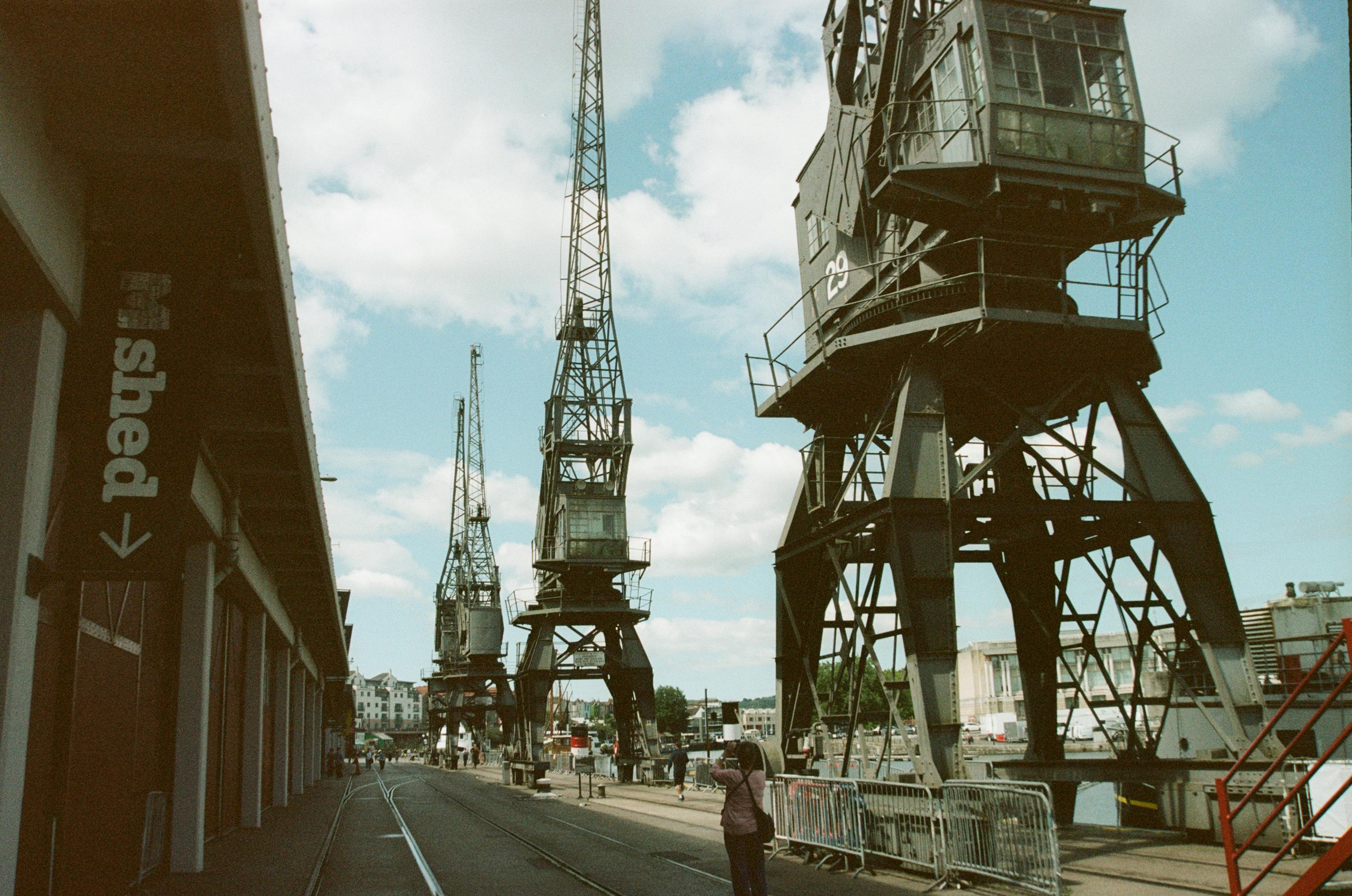
Bristol's new Aviva Arena will be a 20,000-capacity venue opening in late 2028 inside a converted Concorde hangar
YTL Live projects the complex will host over 120 events annually and contribute more than £1bn to the local economy in its first decade
Construction is expected to create over 2,000 jobs, with 500 permanent positions once operational
Bristol's metropolitan area population of 1.1 million currently relies on a 2,000-capacity O2 Academy as its largest indoor venue
Bristol's new 20,000-capacity arena has secured Aviva as its naming rights partner, finally bringing a major indoor venue to Britain's sixth-largest city. The question is whether it's arriving at exactly the wrong time. The live entertainment sector that Bristol is belatedly entering looks markedly different from the one that underpinned arena investments a decade ago.
Modern arena venue with stage lighting
The Aviva Arena, due to open in late 2028 inside a converted Concorde hangar at Brabazon, represents a significant investment in a city that has long been an outlier amongst major UK urban centres. Manchester has the AO Arena, Birmingham hosts Utilita Arena, and Cardiff boasts the International Arena. Bristol has made do with the 2,000-capacity O2 Academy and a collection of smaller spaces, forcing residents to trek to neighbouring cities for Taylor Swift or Harry Styles.
Ticket prices have climbed sharply, venues are competing more aggressively for a finite number of major touring acts, and audiences are still recalibrating their spending habits after two years of cost-of-living pressure. The challenge facing Bristol is whether sufficient demand exists to support another major venue in an increasingly saturated market.
Enjoying this article?
Get stories like this in your inbox every week.
The economics of arrival
YTL Live, which owns and will operate the venue alongside the two other converted Brabazon hangars, projects the complex will host more than 120 events annually and contribute in excess of £1bn to the local economy during its first decade. Construction is expected to create over 2,000 jobs, with 500 permanent positions following once doors open.
Those figures merit scrutiny. Economic impact projections for large-scale leisure developments have a history of optimism, often conflating gross spending with net economic benefit and failing to account for displacement effects. When audiences spend £100 on arena tickets, that's frequently £100 not spent at local theatres, restaurants, or other entertainment venues.
When audiences spend £100 on arena tickets, that's frequently £100 not spent at local theatres, restaurants, or other entertainment venues.
The construction timeline presents its own concerns. Four years from announcement to opening in 2028 might sound reasonable, but UK construction has been plagued by material cost inflation, labour shortages, and persistent supply chain disruption. Major infrastructure projects across the country have routinely overrun both schedule and budget. Co-op Live in Manchester, which opened this year, faced repeated delays and technical setbacks.
Large concert crowd at indoor venue
What's interesting here is the confidence in securing a major sponsor before a single seat has been installed. Aviva's multi-year commitment—financial terms undisclosed—suggests the insurer sees reputational value in associating with Bristol's creative economy, adding to its portfolio alongside Aviva Stadium in Dublin and Aviva Studios in Manchester. For Bristol, it provides financial underpinning at a stage when many development projects are struggling to attract institutional backing.
Market saturation or unmet demand?
The UK's arena landscape has expanded considerably over the past 15 years. London alone offers the O2, Wembley Arena, and the recently opened Co-op Live provides Manchester with a second major venue alongside the AO Arena. Newcastle, Glasgow, Leeds, Liverpool, and Nottingham all have purpose-built facilities exceeding 10,000 capacity.
Industry figures remain divided on whether this represents healthy competition or dangerous oversupply. Promoters point to the difficulty in securing dates at top-tier venues, particularly during peak touring seasons. Venue operators, meanwhile, quietly acknowledge that mid-tier events—the bread-and-butter bookings between blockbuster tours—are becoming harder to secure as fixed costs rise and programming teams compete for the same acts.
Bristol's population of roughly 465,000 sits within a wider metropolitan area of 1.1 million, with further reach into Somerset and Wiltshire. That's a substantial catchment, comparable to cities that have successfully sustained arena operations. The counterargument is that Cardiff sits 45 minutes away by train, with its 15,000-capacity venue already serving much of South Wales and the western English regions.
Andrew Billingham, CEO of YTL Live, described the venue as set to become "one of the most exciting and sustainable live entertainment venues anywhere in the world." The sustainability claim is worth examining. Converting existing industrial structures rather than building from scratch offers embodied carbon advantages, though the energy demands of a 20,000-capacity venue with modern lighting, sound, and climate control systems remain substantial.
The delivery question
Chancellor Rachel Reeves welcomed the announcement, calling it "exactly the kind of long-term investment this government is backing right across the country." That governmental enthusiasm comes with an implicit expectation of delivery.
Large-scale leisure developments in the UK have a patchy record. Bristol itself provides a cautionary tale: the city spent years debating various arena proposals before previous plans collapsed amid cost escalations and political disagreements. The Brabazon project benefits from private financing and an established developer in YTL, but 2028 remains a considerable distance away in an uncertain economic climate.
Bristol is betting that demand for large-scale indoor experiences will not only persist but grow sufficiently to justify another major venue entering an already crowded field.
Construction site of modern venue development
The commitment to supporting emerging local talent—outlined by Dame Amanda Blanc, Aviva's group chief executive—adds a community dimension that distinguishes this from purely commercial venue operations. Whether that translates into meaningful opportunities for artists building audiences or remains largely promotional messaging will become apparent only once programming decisions begin in earnest.
Bristol's cultural economy undoubtedly deserves infrastructure that matches its creative output. The city has produced artists across genres, from Massive Attack to IDLES, yet lacks the capacity to host them at scale. An arena addresses that gap, but it also locks the city into a model of mass entertainment that depends on maintaining high utilisation rates and securing consistent headline bookings in an increasingly competitive market.
Four years offers ample time for the live entertainment sector to evolve further, for audience behaviours to shift, and for economic conditions to change. Bristol is betting that demand for large-scale indoor experiences will not only persist but grow sufficiently to justify another major venue entering an already crowded field. Whether that wager pays off depends less on the quality of the conversion and more on the fundamentals of a sector still finding
Multi-award winning serial entrepreneur and founder/CEO of Venntro Media Group, the company behind White Label Dating. Founded his first agency while at university in 1997. Awards include Ernst & Young Entrepreneur of the Year (2013) and IoD Young Director of the Year (2014). Co-founder of Business Fortitude.