Mercury13's Multi-Club Bet in Women's Football: Confidence or Overreach?
- Mercury13 has acquired FC Badalona Women, its third European club, adding a mid-table Spanish side currently eighth in Liga F
- The acquisition follows weeks after co-founder Victoire Cogevina Reynal's unexplained departure from the American-backed ownership group
- Liga F average attendance sits around 1,500 despite Barcelona Femení regularly drawing 90,000+ crowds
- Mercury13's portfolio now spans three countries with Bristol City Women (England), FC Como Women (Italy), and FC Badalona (Spain)
Women's football investors are about to discover whether the multi-club ownership model that has reshaped the men's game can survive in a commercial environment still finding its feet. Mercury13's acquisition of FC Badalona Women—a mid-table Spanish side with three consecutive bottom-half finishes—represents either bold confidence or dangerous overreach. The timing, coming weeks after the group's co-founder departed without explanation, raises immediate questions about strategic direction.
The American-backed ownership group has added FC Badalona Women to a portfolio that already includes Bristol City Women in England's second tier and FC Como Women in Italy. Former US international Lauren Holiday, who chairs Mercury13, will join Badalona's board. The club currently sits eighth in Spain's Liga F and has finished no higher than 11th since earning promotion in 2022.
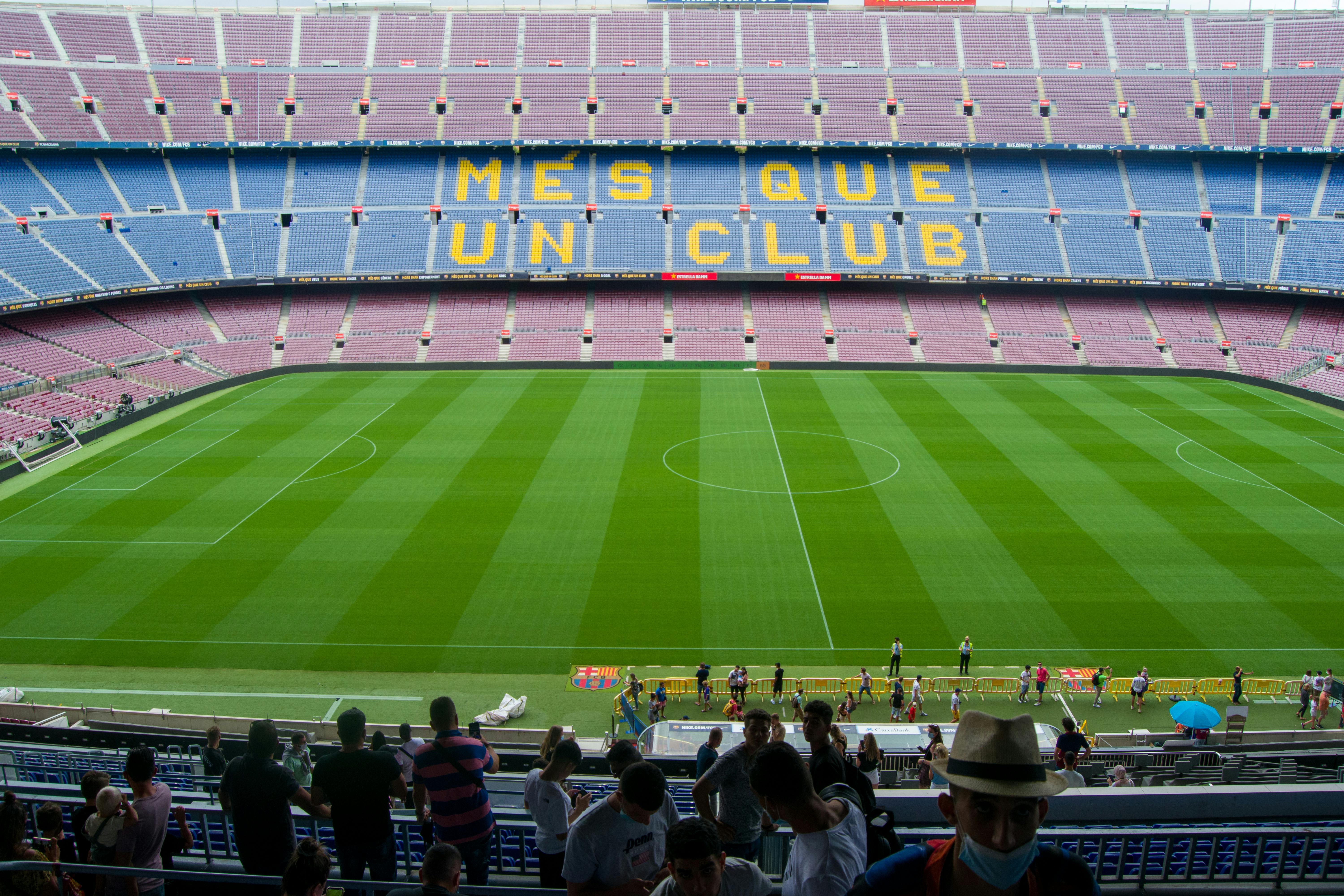
Holiday claims Spanish women's football has experienced 'extraordinary growth' in recent years, though that assertion demands scrutiny. Whilst Barcelona Femení regularly draws crowds exceeding 90,000 and Spain won the 2023 World Cup, Liga F's commercial infrastructure remains patchy. Average attendance across the league hovers around 1,500, and broadcast deals pale compared to the men's game or England's WSL.
Enjoying this article?
Get stories like this in your inbox every week.
The multi-club playbook faces its first real test
The model Mercury13 is attempting to replicate has become commonplace in men's football. City Football Group operates clubs across five continents whilst Red Bull owns teams in Leipzig, Salzburg, and New York. The theory is straightforward: shared resources, coordinated player development, and economies of scale across everything from sports science to commercial partnerships.
Whether that translates to women's football is an open question. The commercial fundamentals are entirely different.
WSL clubs still operate on budgets a fraction of their men's equivalents. Broadcasting rights generate modest returns despite recent improvements. Sponsorship interest is growing but remains selective. Mercury13 secured backing from Avenue Sports Fund in 2023, though a failed 2022 attempt to buy into Lewes FC Women suggests investors initially struggled with the proposition.
What's particularly striking about the Badalona acquisition is the club's mediocrity. Multi-club models in men's football typically involve establishing talent pipelines or building teams that challenge for European places. Badalona has demonstrated neither pathway. Three consecutive finishes in the bottom half of Liga F doesn't suggest hidden potential or a strong academy structure to leverage.
Leadership instability clouds strategic direction
Cogevina Reynal's departure last month has gone largely unexplained, which is unusual for a co-founder leaving during active expansion. Executive turnover happens, but the opacity around the exit raises questions about internal alignment. Mercury13 has stated ambitions to operate clubs in all of Europe's top five leagues, meaning France and Germany would logically follow.
That's an aggressive growth trajectory for an ownership group that secured major funding only 18 months ago and now navigates a leadership transition. Pedro Iriondo, Badalona's chief executive, speaks of building 'strong professional structures' and developing 'a clear identity'—language suggesting significant operational work ahead rather than immediate competitiveness.
The broader question is whether Mercury13 is building something sustainable or simply betting that women's football's growth trajectory will bail out ambitious positioning.
The deal includes partnerships with Nike and experiences platform Fever, pointing to Mercury13's intention to leverage commercial relationships across its network. Whether that generates meaningful revenue for a club averaging a few thousand spectators per match remains uncertain. Attendance and broadcast figures are improving across Europe, but slowly.

Spain's Liga F has benefited enormously from Barcelona's success and the national team's World Cup triumph, yet that halo effect hasn't lifted all clubs equally. Badalona plays in a city of 220,000 just outside Barcelona, competing for attention in a saturated football market. The club faces an uphill battle for visibility and commercial traction.
Uncertain foundations for aggressive expansion
Multi-club ownership works in men's football partly because financial returns are established and player trading markets are liquid. Women's football has neither characteristic at scale yet. Transfer fees remain modest outside elite clubs, and the commercial upside of developing talent is unproven.
Mercury13's model assumes that coordinated investment across multiple clubs will create competitive advantages that individual ownership cannot. The Badalona acquisition, with its modest target and uncertain pathway to success, will test whether that assumption holds when resources spread across three leagues in three countries. The group's ability to stabilise leadership whilst pursuing France and Germany will prove critical.
The next 18 months will clarify whether Mercury13's network becomes a template for women's football investment or a cautionary tale about importing strategies from a commercial environment that doesn't yet exist. Investors watching should pay attention to whether Badalona climbs the table or continues treading water—and whether the strategic vision survives contact with reality.
- Watch whether Mercury13 can demonstrate genuine competitive advantages from multi-club coordination in an underdeveloped commercial market, particularly whether Badalona shows improvement under networked ownership
- Leadership stability matters—the group's ability to clarify strategic direction following Cogevina Reynal's departure whilst pursuing aggressive expansion into France and Germany will signal investor confidence
- The Badalona acquisition tests whether women's football can support the resource distribution model that works in men's football, or whether spreading investment across mediocre clubs in three countries dilutes impact fatally

Co-Founder
Multi-award winning serial entrepreneur and founder/CEO of Venntro Media Group, the company behind White Label Dating. Founded his first agency while at university in 1997. Awards include Ernst & Young Entrepreneur of the Year (2013) and IoD Young Director of the Year (2014). Co-founder of Business Fortitude.
Comments
💬 What are your thoughts on this story? Join the conversation below.
to join the conversation.