London's Construction Halt: A Looming Crisis for Housing and Business
- Build to Rent construction in London has collapsed by 80 per cent year-on-year
- Housing starts have fallen to levels not seen since the 2008 financial crisis
- Overall vacancy rates across Greater London stood at 8.2 per cent in Q4 2024, above the long-term average
- London needs 88,000 new homes a year over the next decade to meet demand
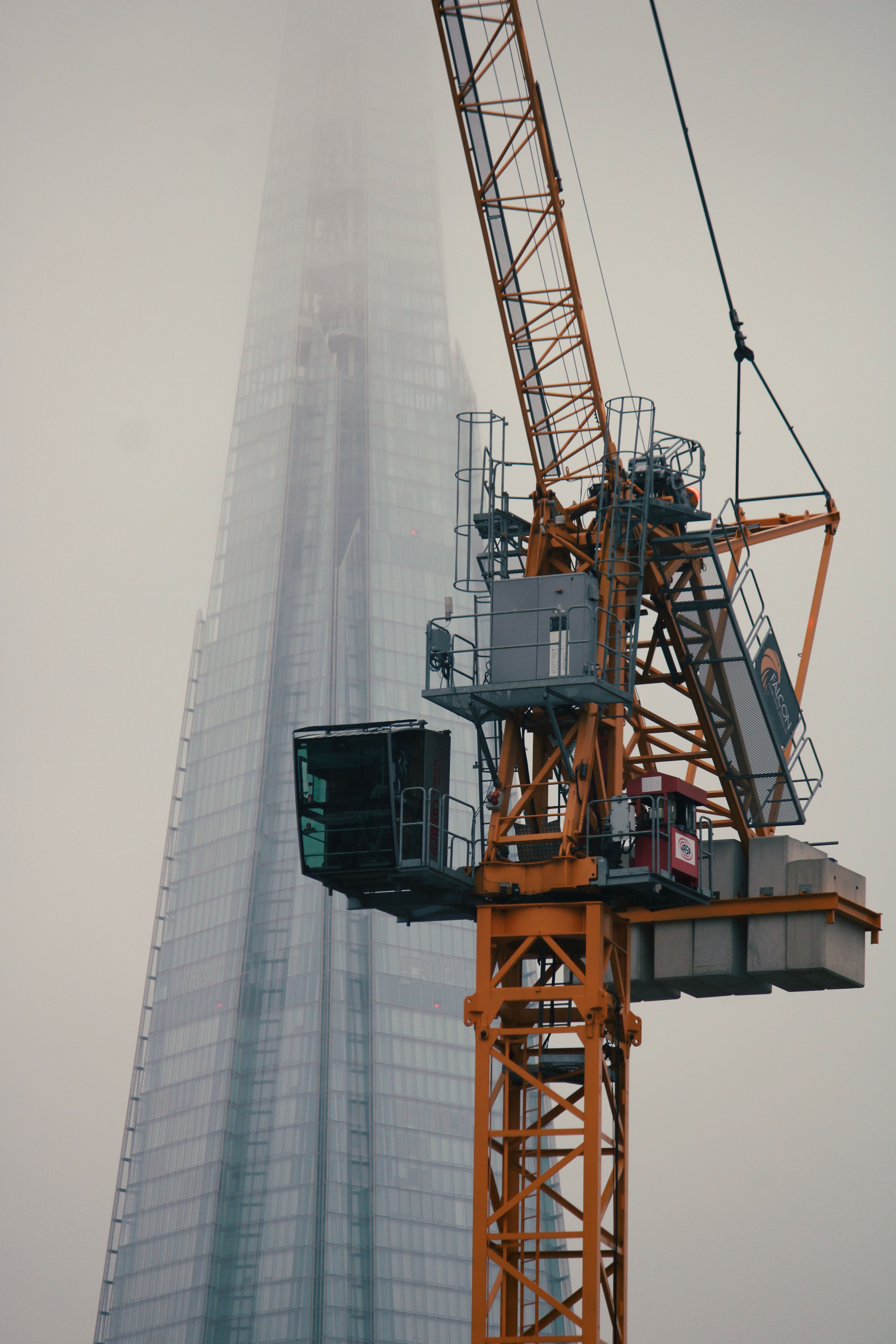
The construction cranes are disappearing from London's skyline at a pace that should alarm anyone who cares about the capital's economic future. Both residential and commercial development pipelines have dried up simultaneously, creating what the British Property Federation describes as a 'double development whammy'. Capital ready to deploy into British projects sits idle, held back by high construction costs, labour shortages, and regulatory delays.

Housing starts have cratered whilst Build to Rent construction, until recently a bright spot in the capital's development story, has collapsed by 80 per cent year-on-year according to industry figures. But what makes this downturn different is that it's not just residential development grinding to a halt. The commercial pipeline has dried up too, threatening to lock in housing unaffordability and economic underperformance for years to come.
The timing could hardly be worse. Major employers are pushing return-to-office mandates just as the supply of premium workspace enters a prolonged drought. Meanwhile, the 25-45 age cohort faces an even tighter rental market as fewer new homes come forward.
Enjoying this article?
Get stories like this in your inbox every week.
When the regulatory brake stayed on
The Building Safety Regulator, established after the Grenfell Tower fire, continues to create significant approval delays for high-rise residential projects despite recent improvements in processing times. Developers report that projects with planning consent are stalling at the building control stage, adding months or years to delivery schedules.
Construction cost inflation has made projects that pencilled in 2021 unviable by 2024 standards. Soft forward sales pipelines mean developers can't rely on off-plan purchases to finance construction. Business confidence remains weak despite government assurances about planning reform.
The characteristic clatter and rumble of London construction has quieted in ways that veteran developers say they haven't witnessed outside of recession conditions.
The result is visible across the capital. High-profile sites that should be active remain dormant.
The office conversion myth
Industry representatives are quick to dismiss suggestions that surplus office space could ease the residential shortage. Melanie Leech, chief executive of the British Property Federation, argues that vacant office stock is 'often either inappropriate to change into homes or unviable to modernise as offices.'

That claim deserves scrutiny. Research from the Centre for London published last year found that office-to-residential conversions could deliver thousands of new homes in inner London boroughs, particularly in secondary office stock that no longer meets modern workplace standards. The Greater London Authority's own planning guidance acknowledges conversion as a legitimate source of housing supply in appropriate locations.
What's true is that the best office stock in prime locations won't convert because it commands premium rents from corporate tenants. The vacancy rates that appear in headline statistics often mask a bifurcated market where Grade A space in central locations sees strong demand whilst older buildings in less desirable locations sit empty. Leech's assertion that demand for premium office space 'far exceeds supply' may hold for trophy buildings in the City and Canary Wharf, but overall vacancy rates across Greater London stood at 8.2 per cent in the fourth quarter of 2024 according to Savills research, above the long-term average.
The more pressing question is whether the planning system should make office-to-residential conversion easier or harder. Current permitted development rights already allow many conversions without full planning permission, though Labour councils have pushed back against what they see as poor quality housing delivered through this route.
Political resolve meets electoral reality
The local elections on 7 May will test whether voters connect the dots between the capital's development paralysis and the government's ability to deliver on its promises. Labour won a historic majority last July, but its poll ratings have declined sharply as economic growth remains anaemic and planning reforms have yet to translate into construction activity.
Leech, writing in her capacity as chief executive of a property industry lobby group, argues the government has shown 'a growing track record of not being able to take hard decisions and stick to them.'
That's a pointed criticism from an industry that supported Labour's planning reforms in opposition but now worries about implementation in office.
The government insists its planning reforms will accelerate development once they work through the system. The revised National Planning Policy Framework and changes to permitted development rights will take months to filter through to actual building activity. Planning was the brake; construction viability is the engine, and industry figures say that engine is 'deeply asthmatic' right now.
Without intervention, the supply-demand imbalance could persist through the end of the decade. That means London's housing crisis deepening for another five years. It means businesses struggling to recruit talent who can't afford to live within commuting distance. It means the capital's global competitiveness eroding as other European cities invest in both housing and commercial infrastructure.
The construction sector is calling for planning flexibility to improve project viability, accelerated Building Safety Regulator approvals, and political consensus that survives electoral cycles. Whether any government can deliver that combination whilst also responding to local opposition to development is the £100 billion question. London needs 88,000 new homes a year over the next decade, yet the government's pro-growth planning reforms have yet to translate into the construction activity required. The cranes won't return until that answer becomes clear.
- The supply-demand imbalance could persist through the end of the decade without intervention, deepening London's housing crisis for another five years and eroding the capital's global competitiveness
- Watch the local elections on 7 May as a test of whether voters connect development paralysis with government delivery on economic promises
- The real bottleneck has shifted from planning permission to construction viability—high costs and weak forward sales mean projects with approval still aren't breaking ground

Co-Founder
Multi-award winning serial entrepreneur and founder/CEO of Venntro Media Group, the company behind White Label Dating. Founded his first agency while at university in 1997. Awards include Ernst & Young Entrepreneur of the Year (2013) and IoD Young Director of the Year (2014). Co-founder of Business Fortitude.
Comments
💬 What are your thoughts on this story? Join the conversation below.
to join the conversation.