Dubai's Neutrality Premium Crumbles: Banks Face New Risks
- Standard Chartered and Citigroup have evacuated staff from Dubai offices after Iran threatened to target US and Israeli-linked banks and economic centres in the region
- Dubai's International Financial Centre hosts 290 banks, 102 hedge funds, 500 wealth management firms, and nearly 1,300 family offices as of end-2025
- HSBC's CEO reaffirmed commitment to the Gulf region on Monday; by Wednesday the bank was closing Qatar branches and issuing safety advice
- Gulf sovereign wealth funds control trillions in assets, making the region a priority growth market for London-based banking institutions
The brass nameplates at Dubai's glittering financial district headquarters matter rather less when staff aren't there to walk past them. Standard Chartered has begun evacuating personnel from its Dubai offices after Iran's military command warned it could target 'economic centres and banks belonging to the United States and the Zionist regime in the region'. For City of London institutions that have spent the past decade treating Gulf expansion as their next growth engine, the question is no longer theoretical: what happens when a regional conflict moves from the horizon to the lobby?
The moves represent something close to unprecedented in modern banking. Financial institutions routinely shift operations in response to regulatory changes, tax incentives, or market opportunities. They do not typically evacuate staff because a military power has explicitly named their sector as a potential target. Standard Chartered employees remain in the area working remotely, according to sources, though the distinction between 'evacuated from offices' and 'relocated from the country entirely' carries obvious implications for how seriously the threat is being assessed.
Citigroup has followed suit. HSBC has closed branches in Qatar. What's unfolding is not a routine risk management exercise but a fundamental stress test of the Gulf's proposition as a safe harbour for international capital.
Enjoying this article?
Get stories like this in your inbox every week.
Dubai's neutrality premium under pressure
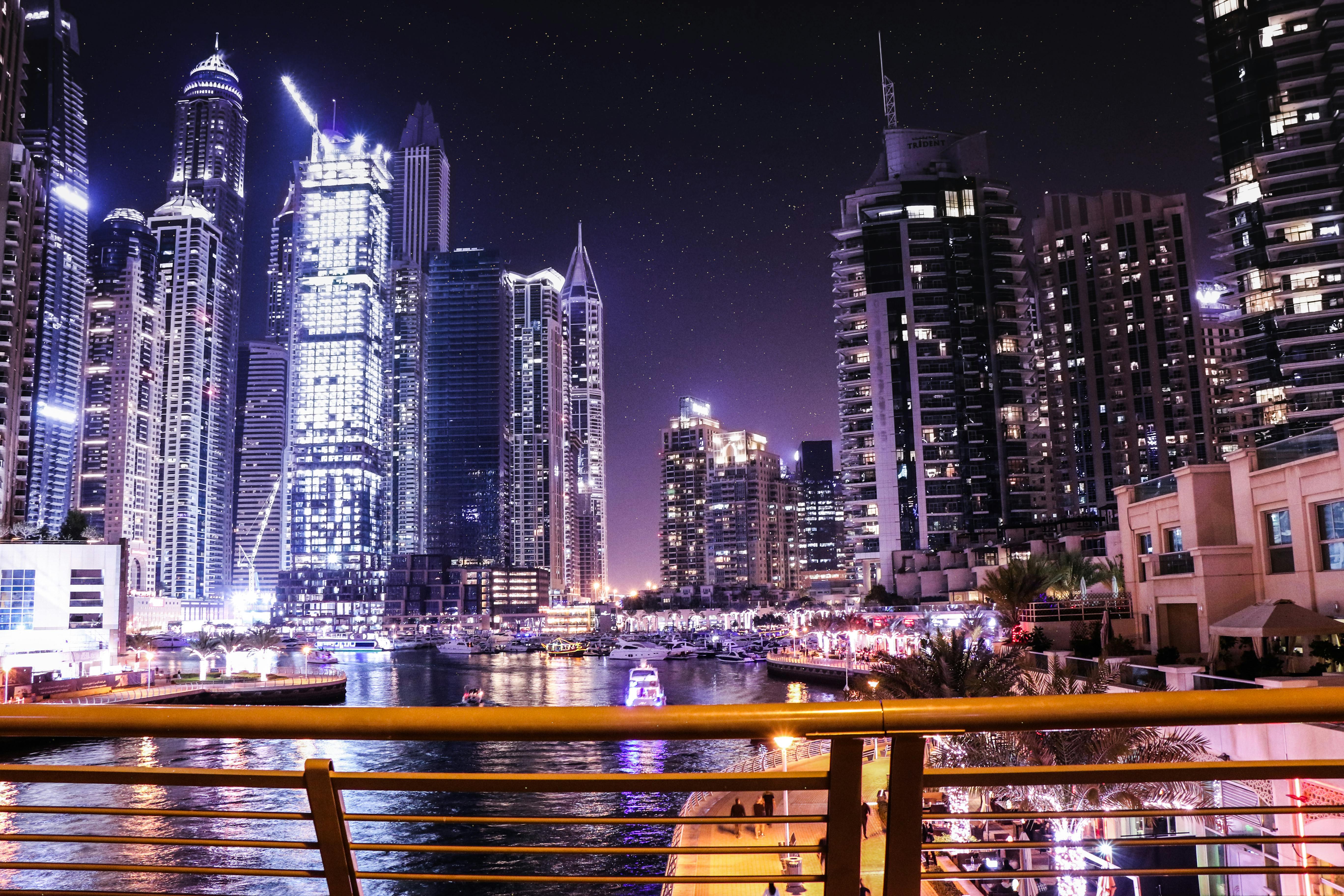
Dubai has spent two decades constructing an identity as a politically neutral safe harbour for capital. The Dubai International Financial Centre, established in 2004, attracted more than 290 banks, 102 hedge funds, 500 wealth management firms, and nearly 1,300 family office entities by the end of 2025. These institutions didn't arrive for Dubai's natural resources or domestic market size.
They came because the emirate positioned itself as Switzerland with better weather: a jurisdiction where geopolitics stopped at the door and business carried on regardless of regional turbulence. That premium is now being stress-tested in real time.
Whether the threat represents operational military capability or rhetorical posturing matters less than the fact that major banking groups are treating it as credible enough to alter physical operations.
Iran's Revolutionary Guard statement—delivered on Wednesday—was explicit in its scope. What's interesting here is the timing. Just days before the evacuations began, HSBC's chief executive Georges Elhedery was publicly reaffirming the bank's commitment to the Gulf Cooperation Council region.

'Our conviction in the GCC's fundamentals and its future is unchanged,' he said on Monday. By Wednesday, HSBC was issuing statements about 'actively following government guidelines' and 'communicating safety advice with colleagues'. The gap between strategic conviction and tactical retreat can apparently be measured in hours.
The London connection
Standard Chartered and HSBC have both anchored their growth strategies on Middle East expansion. For Standard Chartered, the Gulf represents a natural extension of its Asia-focused model—high-net-worth clients, trade finance, and wealth management in markets where Western competitors have lighter footprints. HSBC, under Elhedery's leadership, has been even more explicit about treating the GCC as a priority market, particularly as Chinese operations face persistent political and regulatory pressure.
The commercial logic remains sound. Gulf sovereign wealth funds control trillions in assets. Family offices across the emirates are diversifying generational wealth. Infrastructure projects require financing.
But that logic assumes a stable operating environment where expatriate bankers can work from physical offices without calculating blast radius. Dubai's appeal has always rested on being in the region but not of it—close enough to service Gulf capital, distant enough to avoid Gulf conflicts.
When Iran names banks as potential military targets, proximity becomes a liability rather than an asset.
What comes next
The White House has offered its characteristic clarity on the situation. President Trump told CBS News earlier this week that the conflict was 'very complete, pretty much'. Hours later, he revised his assessment: 'We could call it a tremendous success right now... or we could go further. And we're going further.' Iran's Revolutionary Guard responded that they 'will determine the end of the war'.
For institutions with billions invested in Gulf infrastructure and thousands of staff across the region, this is not an environment that lends itself to long-term planning. Business continuity protocols are designed for natural disasters, cyber incidents, or localised civil unrest—not for state actors explicitly naming your sector as a military objective.
The evacuations also raise uncomfortable questions about the past decade of Gulf expansion strategies. If physical presence becomes untenable during periods of regional tension—and the Middle East has never lacked for regional tension—then the entire model of building out expensive local operations needs recalibrating. Remote work solves the immediate safety concern.
It doesn't solve the client relationship problem when wealth management depends on face-to-face trust, or the regulatory problem when licences require substantive local presence. Dubai will likely remain a financial centre regardless of how the current crisis resolves. Too much capital is already there, and the alternatives aren't obviously better.
But the neutrality premium that justified the initial investment has just become considerably more expensive to maintain. For London banks that have committed to Gulf growth, the calculation now includes a line item that wasn't there before: the cost of operating in a financial hub that hostile powers consider a legitimate target.
- The Gulf expansion model for London banks now requires factoring in security costs that weren't previously part of the equation—Dubai's neutrality premium has been repriced by geopolitical reality
- Watch whether evacuations remain temporary tactical responses or become the start of permanent operational restructuring, particularly if remote work proves incompatible with regulatory licensing requirements
- The gap between Monday's strategic commitments and Wednesday's evacuations signals that banks may need entirely new frameworks for assessing political risk in markets where state actors can explicitly target the financial sector

Co-Founder
Multi-award winning serial entrepreneur and founder/CEO of Venntro Media Group, the company behind White Label Dating. Founded his first agency while at university in 1997. Awards include Ernst & Young Entrepreneur of the Year (2013) and IoD Young Director of the Year (2014). Co-founder of Business Fortitude.
Comments
💬 What are your thoughts on this story? Join the conversation below.
to join the conversation.