Iranian Missile Strikes Expose Gulf's Strategic Risk for Big Four
- Iran launched 189 ballistic missiles and 941 drones targeting UAE and Qatar cities, killing at least three people and injuring 78 others since Saturday
- An estimated 150,000 British professionals work across Dubai, Abu Dhabi, Riyadh, and Doha, with 130,000-240,000 British nationals living in the UAE alone
- Big Four accountancy firms and Magic Circle law firms have expanded Gulf operations dramatically, with some quadrupling headcount since 2019
- Major professional services firms including Freshfields, Clyde & Co, KPMG, and Baker McKenzie have ordered staff to work remotely following the missile strikes
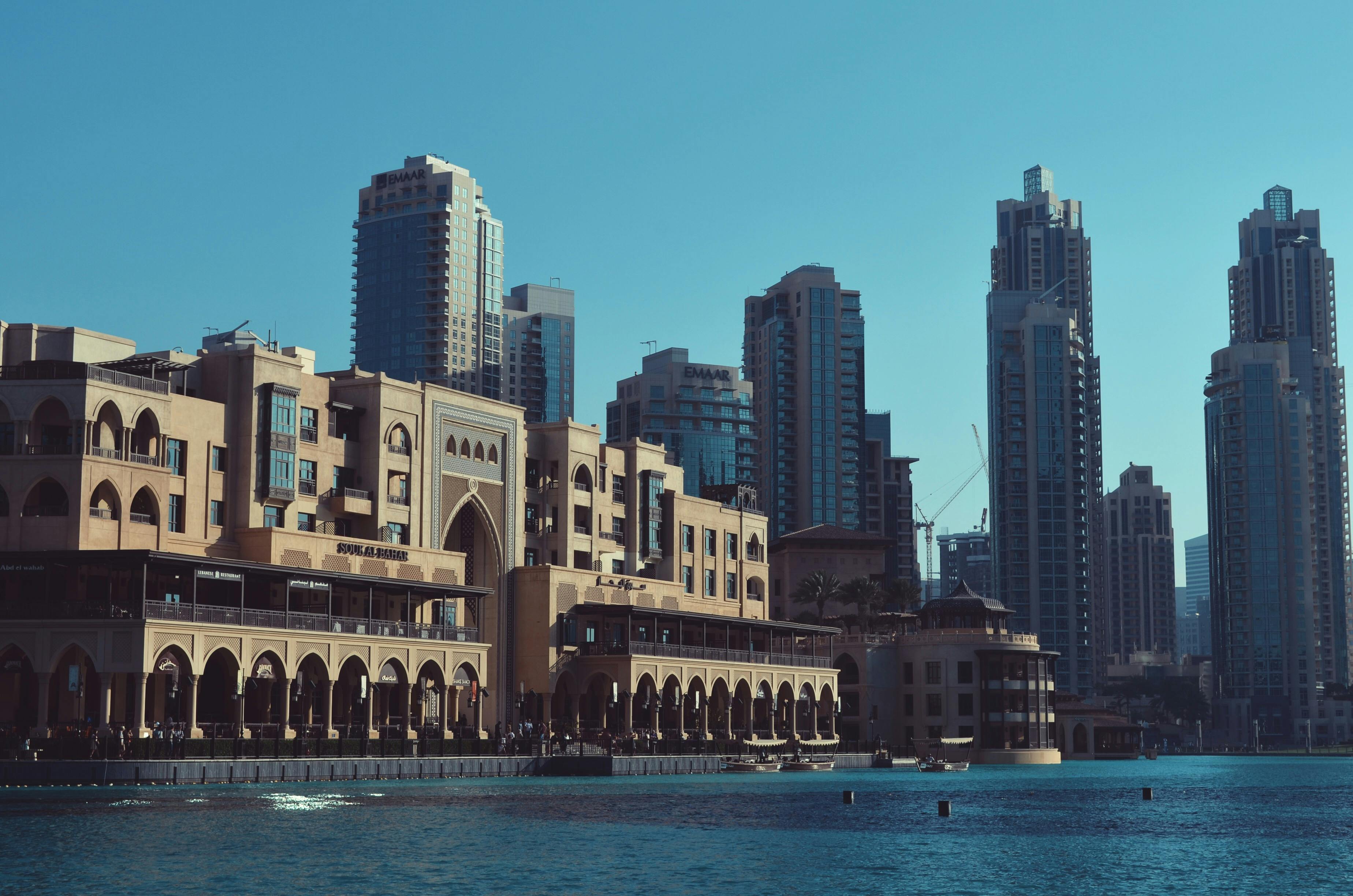
The conference rooms of Dubai's financial district sit empty this week. Not because of annual leave or a public holiday, but because Big Four accountants and Magic Circle lawyers have been ordered to work from their apartments whilst Iranian missiles streak across Gulf skies. For the estimated 150,000 British professionals who've built careers in the region, this disruption reveals the fragility of a strategic bet that has become indispensable to their firms' growth projections.
What's striking here is not just the immediate threat, but what it reveals about the dependence that London's professional services elite has placed on the Gulf. The region has become essential to offsetting stagnant demand in Western markets. That dependence has just become dramatically more complicated.
The Gulf Boom That Transformed Revenue Forecasts
Professional services firms have poured resources into Gulf expansion over the past five years, chasing the billions flowing from Saudi Vision 2030 and similar economic diversification programmes across the UAE and Qatar. These government-led initiatives to reduce oil dependency have generated an unprecedented pipeline of legal, consulting, and advisory work.
Enjoying this article?
Get stories like this in your inbox every week.

For context, Big Four firms now count Gulf offices amongst their fastest-growing territories. Magic Circle law firms have expanded their Dubai and Riyadh offices repeatedly, with some quadrupling headcount since 2019. The work ranges from privatisation mandates and infrastructure megaprojects to regulatory compliance for new financial services hubs.
That growth has required massive personnel commitments. Estimates suggest between 130,000 and 240,000 British nationals now live in the UAE alone, with a significant concentration in professional services roles in Dubai. Another 20,000 to 22,000 work in Qatar.
These aren't short-term assignments. Many have relocated families, signed multi-year contracts, and built their career trajectories around Gulf clients. The economics are compelling, with partners at international firms often negotiating more favourable tax treatment whilst billing rates for specialist legal and consulting work rival or exceed London rates.
Until this week, the risk calculus seemed manageable. Yes, the region had geopolitical tensions, but they rarely disrupted business operations in the UAE's carefully managed commercial centres.
When Duty of Care Meets Revenue Targets
Robin Hickman, head of region at Addleshaw Goddard for the Middle East, told reporters that 'the safety and wellbeing of our people and their families is our top priority,' adding that the firm has 'robust business contingency arrangements in place'. The firm has contacted staff on holiday in the region to provide support.
Other firms have activated similar protocols. Clyde & Co confirmed teams are 'operating in line with official guidance, including asking our people to work remotely'. Freshfields reported all colleagues safe with client work continuing 'as normal within the region and globally'.
KPMG International advised employees 'to follow local official advice, remain indoors and avoid travel'. Baker McKenzie asked colleagues 'to work remotely until further notice' following 'this weekend's developments'. The coordinated response suggests these contingency plans have been stress-tested, likely after previous regional tensions.
Yet the scale of this disruption differs from past events. Thousands of flights have been cancelled as airlines assess safety protocols. The Persian Gulf's maritime routes face restrictions, complicating any potential evacuation scenario.
High-earning professionals cannot simply be repatriated on charter flights when airspace is contested and airports are operating at reduced capacity.
Several firms declined to comment when contacted, including DLA Piper, PwC, and White & Case. Others, such as BCG, EY, and Bain & Company, had not responded at time of publication. The silence likely reflects the sensitivity of discussing security arrangements whilst events remain fluid, rather than absence of preparation.
The Strategic Recalculation Ahead
The immediate crisis will pass. Iranian strikes will cease or be contained. Air travel will resume. Professionals will return to their glass-walled offices overlooking the Gulf.
But the strategic questions will linger. Firms have spent years positioning the Gulf as a core growth market, essential to offsetting weakness in European and North American practices. That thesis assumes operational continuity, or at least that any disruptions will be brief and predictable.

What this week demonstrates is how quickly geopolitical developments beyond any firm's control can render those assumptions void. Partners who've been selling Middle East expansion to their equity committees will face harder questions about concentration risk. Talent teams will need to address concerns from professionals reconsidering whether Gulf postings align with their risk tolerance, particularly those with young families.
The firms with the most sophisticated approaches will likely treat this as a stress test rather than a reason to retreat. They'll refine their contingency planning, enhance their duty of care protocols, and communicate more transparently with staff about risk management. Some may consider spreading regional exposure across multiple Gulf states to reduce single-country concentration.
Clients, for their part, show little sign of slowing the project pipelines that drive demand for international advisers. Vision 2030 and its equivalents remain government priorities, regardless of regional security challenges. The question is whether firms can maintain the talent density required to service that demand when the cost of deployment now includes regular missile alerts.
This article is for informational purposes and does not constitute financial advice.
- Professional services firms face a critical reassessment of concentration risk in Gulf markets that have become essential to growth strategies, with partners needing to balance revenue projections against operational continuity assumptions
- Talent retention and recruitment for Gulf postings will become more challenging as professionals weigh personal risk tolerance against career advancement, particularly affecting families and long-term assignments
- Watch for firms to diversify regional exposure across multiple Gulf states and enhance duty of care protocols, treating this as a stress test rather than a signal to retreat from lucrative government transformation projects

Co-Founder
Multi-award winning serial entrepreneur and founder/CEO of Venntro Media Group, the company behind White Label Dating. Founded his first agency while at university in 1997. Awards include Ernst & Young Entrepreneur of the Year (2013) and IoD Young Director of the Year (2014). Co-founder of Business Fortitude.
Comments
💬 What are your thoughts on this story? Join the conversation below.
to join the conversation.