Williams F1's Tech Pivot: A Winning Strategy or Just Hype?
- Williams F1 secured fifth place in last year's constructors' championship after years at the back of the grid
- US private equity firm Dorilton Capital acquired Williams in 2020
- The team aims to return to race-winning form by 2028 as part of a multi-year rebuild
- 2026 technical regulations represent F1's biggest rule change in decades, creating opportunities for mid-pack teams
Peter Kenyon's career has traced the evolution of modern sport from merchandise to media rights to technology partnerships. His latest venture positions Williams F1 not as a racing team that happens to attract sponsors, but as a data infrastructure play that happens to field cars at 200mph. The question is whether computational tools can actually deliver the on-track performance that validates the entire commercial strategy.
Since US private equity firm Dorilton Capital acquired Williams in 2020, Kenyon has orchestrated partnerships with Atlassian, Anthropic, Barclays and others. These aren't traditional sponsorship deals. The Oxfordshire-based team that dominated racing through the 1980s and 90s before spending the last decade languishing at the back of the grid is attempting something more ambitious: positioning itself as a technology platform that competes in motorsport.
The pitch appears to be working commercially. Williams secured fifth place in last year's constructors' championship and convinced Carlos Sainz to leave Ferrari for a seat many would consider a step backwards. More tellingly, the team has attracted technology partnerships typically reserved for Silicon Valley startups rather than legacy motorsport brands.
Enjoying this article?
Get stories like this in your inbox every week.
AI tools meet wind tunnels
What makes Williams' strategy distinct from traditional sponsorship deals is the operational integration. According to Kenyon, partners like Atlassian and AI firm Anthropic aren't simply slapping logos on carbon fibre. They're embedding themselves in the team's technical infrastructure, from aerodynamic modelling to race strategy simulation.
Our tech partners are integral to our operation and growth. The ability to compete at the front of the grid for sustained periods will be tech-driven, rather than just engineering.
This represents a subtle but significant rhetorical shift. Engineering has always been the foundation of F1 success. What Kenyon is really selling is the idea that modern computational tools can compress development cycles and reveal performance gains that traditional methods miss.
Whether that proves accurate will become clearer when this year's race begins in Melbourne, where new technical regulations take effect that represent the sport's biggest rule change in decades. The 2026 regulations create a rare opening for mid-pack teams to leapfrog established leaders if they correctly interpret the new formula. Williams is betting that AI-enhanced simulation and data analysis will provide that edge.
The circus comes to town
Kenyon's broader argument is that F1 teams now compete for commercial partnerships not just against each other but against the top franchises across all sports. NFL teams, Premier League clubs and NBA franchises all pursue the same pool of technology sponsors with budgets in the tens of millions.
F1 has certain structural advantages in this competition. The sport visits 24 markets annually, creating what Kenyon describes as "the circus coming to town" effect where politicians, business leaders and entertainment figures converge. This built-in global footprint appeals to companies seeking worldwide brand exposure rather than deep penetration in a single market.
Football remains the world's most popular sport by total audience, but it lacks F1's geographic mobility. The Premier League has repeatedly explored taking competitive matches overseas, an idea that generates fierce resistance from supporters but won't disappear. The NFL's expansion into Europe demonstrates the commercial logic of bringing premium sporting products directly to international audiences rather than relying on broadcasting rights alone.
Williams is essentially offering technology companies a rolling trade show with guaranteed media coverage and association with high-performance engineering. For firms like Anthropic, which compete in crowded AI markets where brand differentiation matters, that proposition holds value beyond traditional advertising metrics.
When commercial success diverges from sporting results
What's interesting here is the ghost that haunts Kenyon's entire approach: Manchester United's trajectory since his departure. The club became arguably the most commercially successful football team on the planet whilst simultaneously declining as a competitive force. Revenue growth and trophy cabinets no longer moved in tandem.
Williams faces a similar danger. Securing technology partnerships and positioning as an innovation platform generates revenue and credibility, but F1 remains a performance meritocracy.
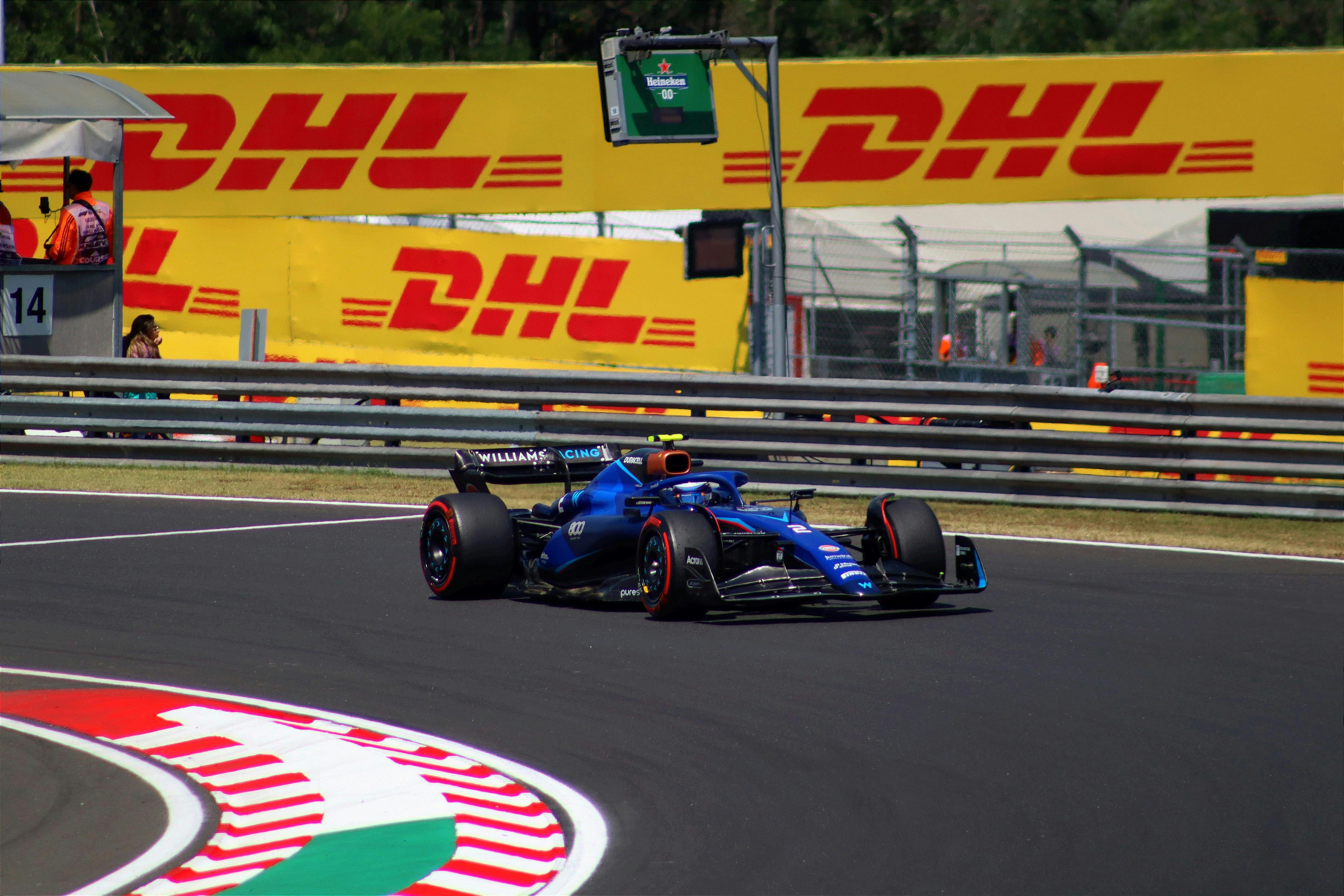
The team hasn't won a race since 2012. Their current ambition is to return to race-winning form by 2028, which Kenyon frames as part of a "genuine rebuild" rather than imminent transformation. That timeline matters because technology partnerships often demand tangible returns faster than multi-year sporting rebuilds deliver them.
If Williams remains mired in mid-pack mediocrity through 2027, even the most patient technology sponsors will begin questioning their investment thesis. The next 18 months will reveal whether Williams' tech-forward positioning represents genuine competitive advantage or sophisticated marketing that ultimately runs into the hard reality of chassis dynamics and power unit performance.
The 2026 regulations provide the test case. If Williams can genuinely compete at the front of the grid, it validates the entire model and likely triggers copycats across motorsport. If they remain in fifth place or slip backwards, it suggests that computational tools remain supplements to engineering excellence rather than replacements for it.
Either outcome will shape how sports teams position themselves to technology investors for the next decade. Williams is essentially running an experiment on whether legacy sporting brands can successfully rebrand as technology platforms. Kenyon's track record suggests he understands the commercial side of that equation. Whether the racing results follow will determine if others attempt the same transformation.
- The 2026 technical regulations will test whether AI-enhanced simulation and data analysis can actually deliver competitive advantage or whether they remain supplements to traditional engineering excellence
- Williams risks repeating Manchester United's pattern of commercial success diverging from sporting performance if on-track results don't materialise within the timeline technology partners expect
- How Williams performs over the next 18 months will shape whether other legacy sporting brands attempt similar repositioning as technology platforms rather than pure athletic competitions

Co-Founder
Multi-award winning serial entrepreneur and founder/CEO of Venntro Media Group, the company behind White Label Dating. Founded his first agency while at university in 1997. Awards include Ernst & Young Entrepreneur of the Year (2013) and IoD Young Director of the Year (2014). Co-founder of Business Fortitude.
Comments
💬 What are your thoughts on this story? Join the conversation below.
to join the conversation.