Wizz Air's Middle East Gamble Backfires: Short Sellers Pounce
- Short interest in Wizz Air surged from 9.59% to 14.61% during March, overtaking Greggs as the UK's most heavily shorted company
- The airline expects a €50 million hit from Middle East disruption, threatening to tip it into loss against a previous forecast range of €25 million loss to €25 million profit
- Shares have fallen more than 30% in the past month and over 40% across the past year, currently trading at 944.5 pence
- Heavyweight funds including Citadel, JP Morgan and Voleon Capital have piled into short positions against the Hungarian budget carrier
The short sellers smell blood. Wizz Air, the Hungarian budget carrier that once harboured ambitions of swallowing EasyJet whole, has overtaken even Greggs as the UK's most heavily shorted company after warning that fallout from the Iran conflict will likely push it into the red this year. What's revealing isn't simply that hedge funds are betting against an airline caught in geopolitical crossfire—they're doing so because Wizz Air entered this crisis in uniquely poor shape compared to rivals, with wafer-thin profit margins and what analysts describe as a weak balance sheet.

The crisis that exposed structural weakness
The company's admission last week that it expects a €50 million hit from the Middle East disruption threatens to tip it into loss territory, given management had previously forecast earnings somewhere between a €25 million loss and a €25 million profit. That's not a lot of room for error. According to the company's own statement to investors, roughly one third of that €50 million blow stems from cancelled Middle East services, whilst the remainder comes from what it terms 'adverse movement in macroeconomic factors' linked to the Iran conflict.
Translation: soaring fuel prices at precisely the moment an airline with minimal financial cushioning can least afford them. The particularly awkward truth for Wizz Air is that management appeared to recognise the risks months before the current crisis escalated. Back in July 2024, the airline announced plans to shutter its Abu Dhabi operations, citing 'geopolitical instability' in the region.
Enjoying this article?
Get stories like this in your inbox every week.
Wizz Air has come into this crisis with low profit margins and a weak balance sheet. This has left its earnings more vulnerable than those of the financially stronger and more profitable airline groups.
That admission looks prescient until you consider that Wizz had expanded aggressively into the Middle East in the first place, building operations that it then had to unwind when conditions deteriorated. Gerald Khoo, analyst at Panmure Liberum, puts it bluntly in his assessment of the carrier's position. The comparison is damning—whilst other carriers have absorbed the shock with relatively modest downgrades, Wizz faces the prospect of tipping from marginal profitability into outright loss on a single external event.
A retreat that came too late
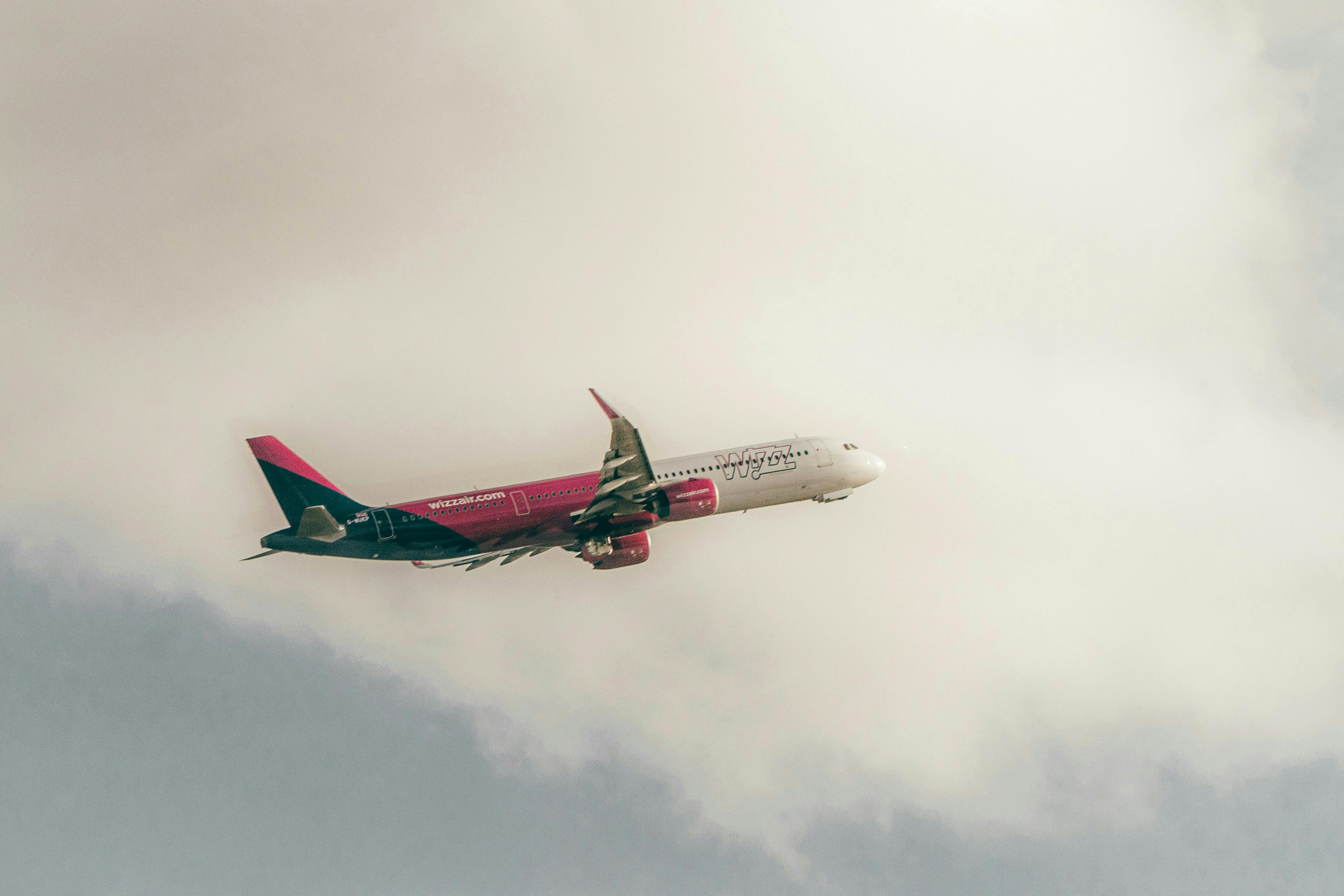
The airline has suspended all flights to and from Israel until 29 March, and grounded all services to Dubai, Abu Dhabi, Amman and Jeddah until September. Shares have cratered accordingly, down more than 30 per cent in the past month alone and over 40 per cent across the past year. The route suspensions represent a wholesale retreat from a region where Wizz had built meaningful capacity, now forcing an embarrassing unwind.
Short sellers don't simply target airlines facing temporary headwinds. They identify companies where structural weaknesses will be exposed under pressure. Wizz Air's recent history suggests exactly that vulnerability.
Failed ambitions and stretched finances
The carrier's rumoured attempt to acquire EasyJet never materialised, leaving it without the scale advantages that might have provided more resilience during disruption. Instead, it pursued geographic expansion into volatile regions without building the financial buffers that more conservative operators maintain. Dan Coatsworth, head of markets at AJ Bell, notes that Wizz was already attracting significant short interest before the Iran crisis intensified.
A rapid increase in the cost of energy and disruption to some of its travel routes is terrible news for near-term earnings. It puts Wizz Air in the eye of the storm and sentiment towards the company has gone from bad to worse.
The corporate communications, meanwhile, strike a tone that feels discordant with reality. The airline describes its route suspensions as providing 'enhanced flexibility' and 'exciting travel opportunities' through capacity reallocation to European summer destinations. This framing of forced cuts as customer benefits is standard corporate spin, but particularly jarring when the company simultaneously warns investors it's heading for potential losses.
What the smart money sees
The composition of short sellers matters. Retail investors might pile into short positions based on headlines. Sophisticated institutional funds like Citadel and JP Morgan typically bet against companies where they've identified deeper problems that won't resolve quickly. Their willingness to push Wizz Air above beloved British targets like Greggs in short interest rankings suggests professional money managers see structural issues beyond temporary route disruptions.
The airline industry has weathered geopolitical shocks before, and carriers with strong balance sheets typically emerge intact once tensions ease. Wizz Air's challenge is that it entered this period operating on margins so tight that a €50 million hit represents the difference between profit and loss. That's not a sign of operational resilience.
Middle East tensions show no signs of rapid de-escalation, and oil markets remain volatile. For an ultra-low-cost carrier that competes primarily on price whilst carrying minimal reserves, the combination of sustained fuel price pressure and cancelled routes in a region where it had built meaningful capacity creates a particularly uncomfortable squeeze. The CEO has suggested the impact from the Iran conflict may ease from April, but the short sellers have evidently concluded that Wizz Air's troubles extend beyond the news cycle.
The company's strategic choices have left it exposed in ways that financially stronger competitors have avoided. Whether management can prove them wrong depends on how quickly stability returns to the region, and whether the airline's European reallocation generates enough margin to offset its Middle East losses. The profit warning has also put renewed pressure on the wider airline sector, but neither a quick recovery nor sufficient margins look particularly certain at present.
- Institutional short sellers are betting on structural problems at Wizz Air that extend beyond temporary geopolitical disruption, focusing on the carrier's weak balance sheet and razor-thin margins that leave no room for external shocks
- The airline's aggressive expansion into the Middle East without adequate financial buffers has backfired spectacularly, forcing a wholesale retreat from the region whilst competitors with stronger finances absorb similar shocks with modest downgrades
- Watch whether Wizz Air's European capacity reallocation can generate sufficient margins to offset Middle East losses, and whether fuel prices moderate before the carrier burns through its limited reserves—the short sellers are betting the answer to both questions is no

Co-Founder
Multi-award winning serial entrepreneur and founder/CEO of Venntro Media Group, the company behind White Label Dating. Founded his first agency while at university in 1997. Awards include Ernst & Young Entrepreneur of the Year (2013) and IoD Young Director of the Year (2014). Co-founder of Business Fortitude.
Comments
💬 What are your thoughts on this story? Join the conversation below.
to join the conversation.