BA's Muscat Route Closure: A Commercial Pivot Amid Crisis
- British Airways has cancelled its emergency Muscat route after just one week of operation, citing "reduced demand"
- More than 170,000 registered British nationals remain across the Middle East region subject to airspace restrictions
- Approximately 45,000 British nationals have returned to the UK since early March through various repatriation efforts
- BA has suspended all services to Amman, Bahrain, Doha, Dubai and Tel Aviv through 28 March, with only skeletal Larnaca service continuing
British Airways has pulled the plug on its emergency Muscat route after just two final flights this week, citing "reduced demand" even as more than 170,000 registered British nationals remain scattered across a Middle East region still subject to airspace restrictions. The move strips away what had become a critical evacuation artery for Britons seeking exit routes from the Gulf. For an airline that spent the past fortnight positioning itself as part of the national emergency response, the pivot is sharp.
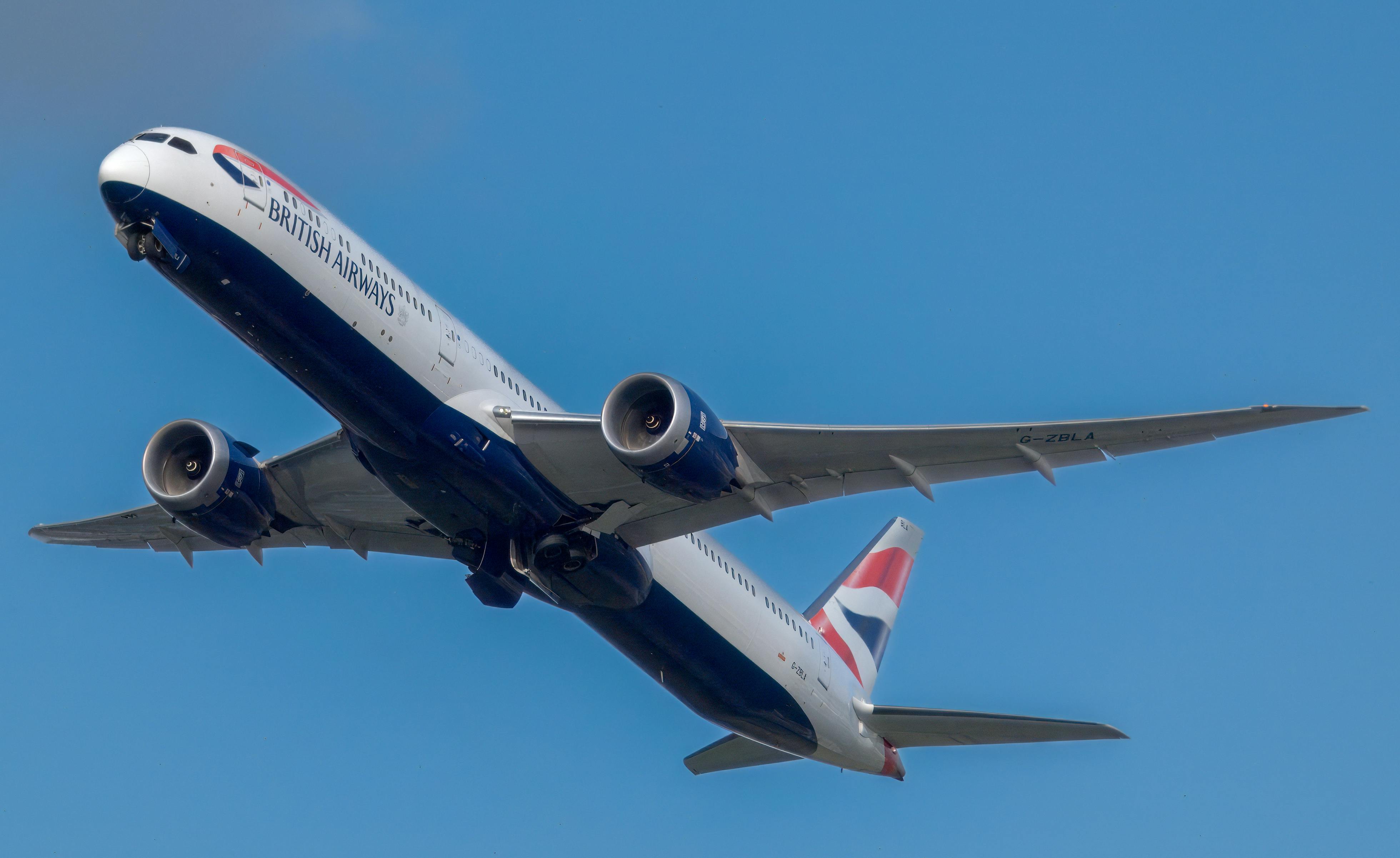
BA doesn't normally fly to Oman's capital—the service was stood up on 5 March purely as an emergency measure. Its cancellation after barely a week of operations suggests either a genuine collapse in passenger numbers or, perhaps more tellingly, that carriers are reverting to commercial logic even whilst the crisis rumbles on. The airline has simultaneously cancelled all services to Amman, Bahrain, Doha, Dubai and Tel Aviv through 28 March, with its seasonal Abu Dhabi route now suspended until October.
Only a skeletal service to Larnaca in Cyprus continues. For travellers still seeking exit routes from the region, the operational landscape is narrowing rapidly.
Enjoying this article?
Get stories like this in your inbox every week.
The repatriation arithmetic doesn't add up
According to Defence Secretary John Healey, around 45,000 British nationals have made it back to the UK since early March. That's a substantial airlift by any measure—government-chartered flights alone have operated multiple rotations from Dubai and elsewhere since late last week. But set that against the 170,000-plus Britons registered with authorities across the region, and the gap becomes harder to dismiss.
Either the vast majority are residents or dual nationals with no immediate intention of leaving, or there remains a sizeable cohort still seeking routes home as commercial capacity evaporates and government support scales back. What's striking is the mismatch between ministerial messaging and operational reality. Foreign Office sources have characterised commercial flights as "by far the most likely and the most rapid routes out" for remaining nationals.
That assessment sits awkwardly alongside the wave of cancellations rippling through airline schedules and the ongoing airspace restrictions across Qatar, Bahrain and parts of Saudi Arabia.

Gulf carriers running skeletal schedules under constraint
The region's big three carriers are maintaining threadbare operations, but under significant operational pressure. Emirates says it's running 11 daily flights across five UK airports this week, subject to airspace approvals that remain anything but guaranteed. Etihad has resumed limited Heathrow and Manchester services following what it termed "extensive safety and security assessments"—corporate phrasing that underscores just how abnormal the operating environment remains.
Qatar Airways is offering select Heathrow departures through Thursday, but passengers have been explicitly told not to turn up at Doha airport without confirmed rebooking. The airline's wider network remains suspended pending clearance from Qatar's Civil Aviation Authority, which has yet to signal when full airspace reopening might occur. Gulf Air has resorted to routing Bahrain-bound passengers through Dammam in Saudi Arabia, accessible by road from the island kingdom whose airspace remains shut.
These are workarounds born of necessity, not the "rapid routes" government ministers are pointing travellers towards. Earlier this week, incoming flights to Dubai were placed in holding patterns due to potential missile threats, according to flight tracking data. The planes landed safely, but the incident offers a window into why airlines might be reassessing their exposure to a region where the security picture can shift within hours.
What operators actually face
The discrepancy between official reassurances and on-the-ground constraints raises uncomfortable questions about the trajectory of support for stranded travellers. Government-chartered flights have done the heavy lifting over the past week, but the Foreign Office has opened a booking portal that suggests future provision will be selective rather than guaranteed. For British nationals still in the Gulf—whether long-term residents caught off-guard by the speed of deterioration or visitors unable to secure seats on oversubscribed flights—the calculus has shifted.
BA's withdrawal from Muscat removes an option that didn't exist a fortnight ago but had quickly become critical infrastructure.
Airlines are commercial entities, and the return to profitability-driven route planning is inevitable. The question is whether that transition is happening whilst meaningful alternatives remain in place. Carriers outside the immediate region are already adjusting.

Qantas is exploring European capacity redeployment, whilst Cathay Pacific has added London and Zurich frequencies as demand spikes and fares climb on routes bypassing Middle Eastern airspace entirely. The market is solving for travellers willing to pay premium rates and able to reach alternative departure points. It's less clear what happens to those without either luxury.
The Foreign Office maintains its advice against all but essential travel to Bahrain, the UAE, Qatar, Saudi Arabia and Kuwait. Airspace restrictions persist. The conflict continues to develop in ways that defy neat timelines.
Against that backdrop, "reduced demand" feels like an explanation that tells only part of the story.
- The gap between 45,000 repatriated nationals and 170,000 still registered in the region signals either widespread residential intent or a substantial population still seeking exit options as commercial capacity contracts
- Watch for further commercial carrier withdrawals as airlines revert to profitability calculations—government reassurances about "rapid commercial routes" may not match operational reality on the ground
- Alternative routing through non-Middle Eastern hubs is emerging for premium-paying travellers, but stranded nationals without financial flexibility or access to secondary departure points face an increasingly uncertain support landscape

Co-Founder
Former COO at Venntro Media Group with 13+ years scaling SaaS and dating platforms. Now founding partner at Lucennio Consultancy, focused on GTM automation and AI-powered revenue systems. Co-founder of Business Fortitude, dedicated to giving entrepreneurs the news and insight they need.
Comments
💬 What are your thoughts on this story? Join the conversation below.
to join the conversation.