Phil Spencer departs after 36 years at Microsoft, having overseen the $69 billion Activision Blizzard acquisition
Asha Sharma, an AI executive from Meta, takes over Xbox leadership with minimal public gaming credentials
Xbox has consistently lost console sales to PlayStation despite massive studio acquisitions
Gaming industry has announced tens of thousands of layoffs over the past 18 months as post-pandemic boom collapses
Phil Spencer spent 36 years building Xbox into a gaming powerhouse, oversaw the industry's largest acquisition at $69 billion, and pioneered a subscription model that changed how millions play games. Microsoft has now handed his job to an AI executive who appears to have played 29 games in the past month, all of them apparently after learning she'd be leading one of the world's three major console platforms. The appointment has split the gaming community down familiar battle lines, with both camps potentially being right.
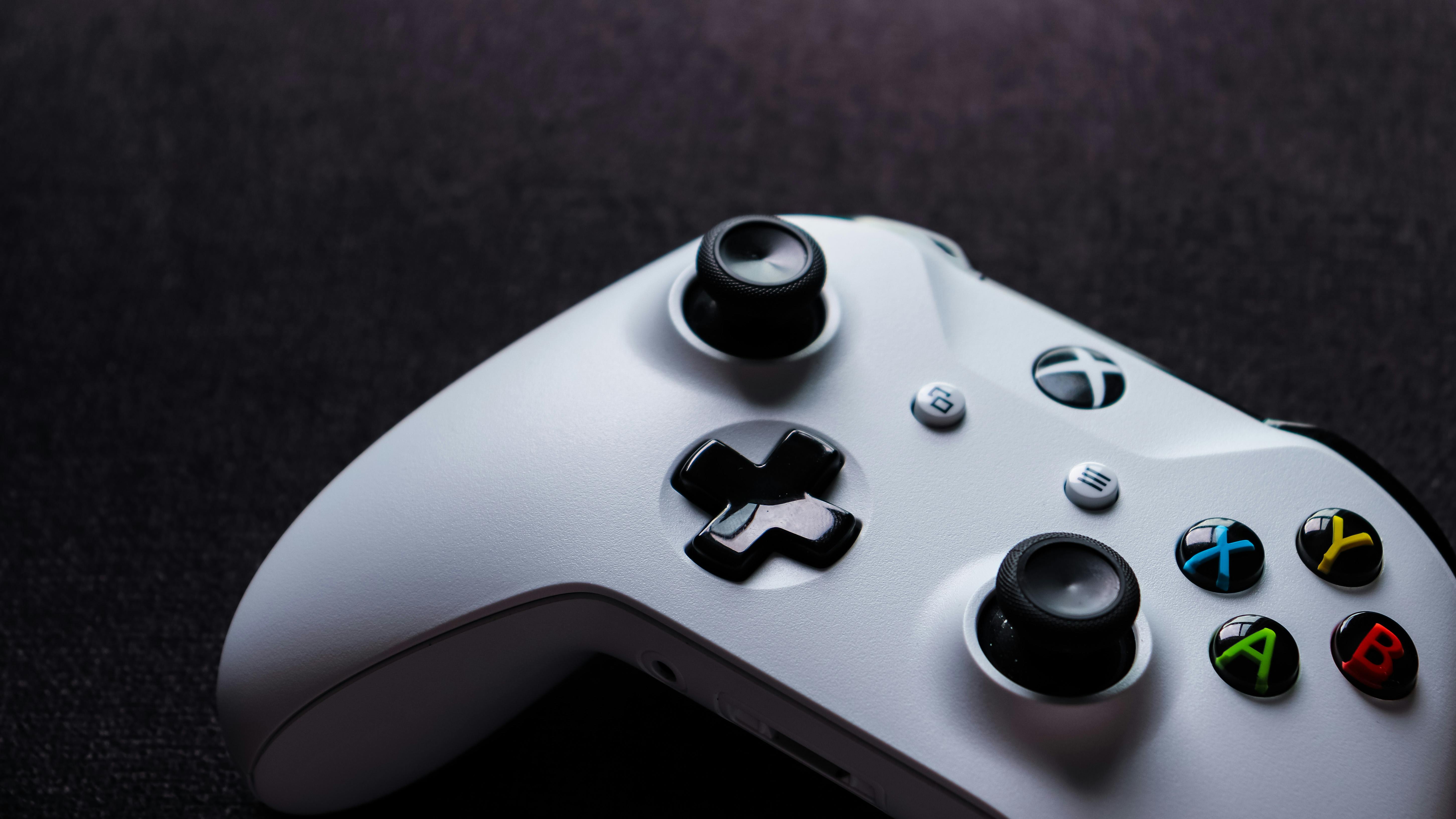
Gaming controller and console setup
The appointment of Asha Sharma, previously focused on Microsoft's artificial intelligence initiatives and a veteran of Meta, has split the gaming community. Some see a strategic masterstroke addressing Xbox's existential crisis. Others smell panic, or worse, the beginning of the end for a console brand that has already been bleeding relevance despite massive investments.
What's interesting here is that both camps might be right. Xbox's problems aren't the kind that traditional gaming expertise can solve, which makes importing an outsider either inspired or catastrophic, with little room in between.
Enjoying this article?
Get stories like this in your inbox every week.
The attention economy problem
The gaming industry's dirty secret is that it's losing the war for Gen Z's attention, and console gaming is taking the heaviest casualties. Development costs for major titles have ballooned whilst players increasingly drift toward free-to-play mobile games and short-form social content. When your primary competition is no longer Sony's PlayStation but TikTok's algorithm, hiring someone from Meta's ecosystem starts to look less bizarre.
When your primary competition is no longer Sony's PlayStation but TikTok's algorithm, hiring someone from Meta's ecosystem starts to look less bizarre.
Jez Corden from Windows Central, a publication that tracks Microsoft closely, suggested that Sharma's background at Meta is precisely the point. The gaming landscape, according to Corden, is "struggling to find its footing faced with competition from insta-gratification platforms like Instagram, and TikTok", and Microsoft has identified this as the core weakness requiring new expertise.
This analysis tracks with broader industry data. Publishers have announced tens of thousands of layoffs over the past 18 months as the post-pandemic boom has collapsed into squeezed margins. Traditional £60 console titles struggle to justify their price points when teenagers can get infinite entertainment from their phones at no cost.
Person playing video games on mobile device
Xbox isn't failing because Phil Spencer made poor decisions; it's struggling because the entire category faces structural challenges. Under Spencer's tenure, Xbox consistently lost the console sales battle to Sony's PlayStation despite acquiring Activision Blizzard, Bethesda, and other major studios. Game Pass, whilst innovative, hasn't translated into hardware dominance.
The company has increasingly abandoned platform exclusives, putting previously Xbox-only franchises like Halo onto competing platforms, a move that suggests Microsoft sees its gaming future beyond the console box itself.
The AI pivot nobody asked for
Sharma's appointment aligns perfectly with Microsoft CEO Satya Nadella's company-wide AI obsession, from the OpenAI partnership to Copilot integration across every product line. From a corporate strategy perspective, having an AI-focused executive oversee gaming makes internal sense. From a fan perspective, it feels like having a tax accountant run a Michelin-starred kitchen because both involve numbers.
Gaming journalist Vikki Blake, who writes for IGN and Eurogamer, told the BBC that Spencer's departure wasn't "completely shocking" given Xbox's recent struggles, though she admitted it would be "hard to imagine Xbox without Phil Spencer". That contradiction captures the moment: inevitable but jarring.
Sharma's public response to the backlash offers little reassurance. After fans mocked her Xbox profile showing 29 recently played titles, all apparently crammed into the past month, she pledged not to "flood our ecosystem with soulless AI slop". She insisted that "games are and always will be art, crafted by humans, and created with the most innovative technology provided by us."
Games are and always will be art, crafted by humans, and created with the most innovative technology provided by us.
The phrasing is telling. "Provided by us" positions Microsoft as the technology supplier rather than the creative force, which is either honest self-awareness or a fundamental misunderstanding of what makes gaming work. That "soulless AI slop" has already entered her vocabulary suggests she's aware of the minefield she's walking into, even if the footwork remains uncertain.
Victoria Phillips Kennedy from Eurogamer raised the obvious question: whether Sharma's background means "we see Xbox be more aggressive in its adoption of AI in the development pipeline". Given Microsoft's broader trajectory, that seems less a question of if than how aggressively and how soon.
What comes after the console
Microsoft has also promoted Matt Booty, previously corporate vice president of Xbox Game Studios, to chief content officer. Booty moved quickly to reassure staff that "there are no organisational changes underway for our studios", which is the sort of statement that convinces precisely nobody who has lived through corporate restructuring.
Modern gaming technology and artificial intelligence concept
The real story isn't whether Sharma can successfully lead Xbox as a console business, but whether Xbox as a console business is the point anymore. Microsoft's gaming revenue increasingly comes from software sales across platforms, from Game Pass subscriptions, and from mobile gaming through its Activision acquisition. The physical Xbox console represents a shrinking portion of a broader gaming empire that exists wherever screens and internet connections meet.
That makes Sharma's lack of traditional gaming credentials either irrelevant or disqualifying, depending on which version of Xbox's future you believe Microsoft is building toward. If the company is pivoting toward AI-enhanced game development, cross-platform services, and competing in the attention economy against social media platforms, her background makes strategic sense. If Xbox still matters as a console brand with exclusive titles and hardware sales, importing an AI executive looks like a category error of spectacular proportions.
Spencer's retirement after nearly four decades at Microsoft closes a chapter that saw gaming transformed from a niche division into a central pillar of the company's consumer strategy. Whether Sharma's appointment opens a new chapter or begins an epilogue will become clear within the next product cycle. The traditional console gaming audience is watching, sceptical, whilst Microsoft calculates whether that audience still represents the future or an increasingly expensive past.
Multi-award winning serial entrepreneur and founder/CEO of Venntro Media Group, the company behind White Label Dating. Founded his first agency while at university in 1997. Awards include Ernst & Young Entrepreneur of the Year (2013) and IoD Young Director of the Year (2014). Co-founder of Business Fortitude.