Serfaus-Fiss-Ladis offers 214 kilometres of piste, comparable to Kitzbühel or St. Anton, yet remains virtually unknown to British skiers
Six-day lift passes cost €394, roughly 10% cheaper than headline Austrian resorts which approach €450 during peak season
2,500 visitors, predominantly Dutch and German, gather weekly for drone light shows at 2,000 metres throughout the season
University of Innsbruck projections suggest resorts below 1,500 metres face increasingly unreliable natural snow cover within the next decade
The Dutch know something British families don't. Every Wednesday night at 9pm throughout the ski season, 2,500 visitors gather at 2,000 metres above the Tyrolean resort of Serfaus-Fiss-Ladis to watch drones paint the mountainside with light. They've booked out much of the accommodation across three interlinked villages that collectively offer 214 kilometres of piste, comparable terrain to Kitzbühel or St. Anton, yet remain virtually invisible to UK skiers.
This absence is worth examining. British families spend thousands each year fighting through overcrowded slopes at brand-name Austrian destinations, yet systematically overlook equally well-equipped alternatives an hour's drive away. The question isn't whether Serfaus-Fiss-Ladis represents good value, but rather understanding why such resorts remain off British radar, and whether that obscurity is sustainable or even desirable.
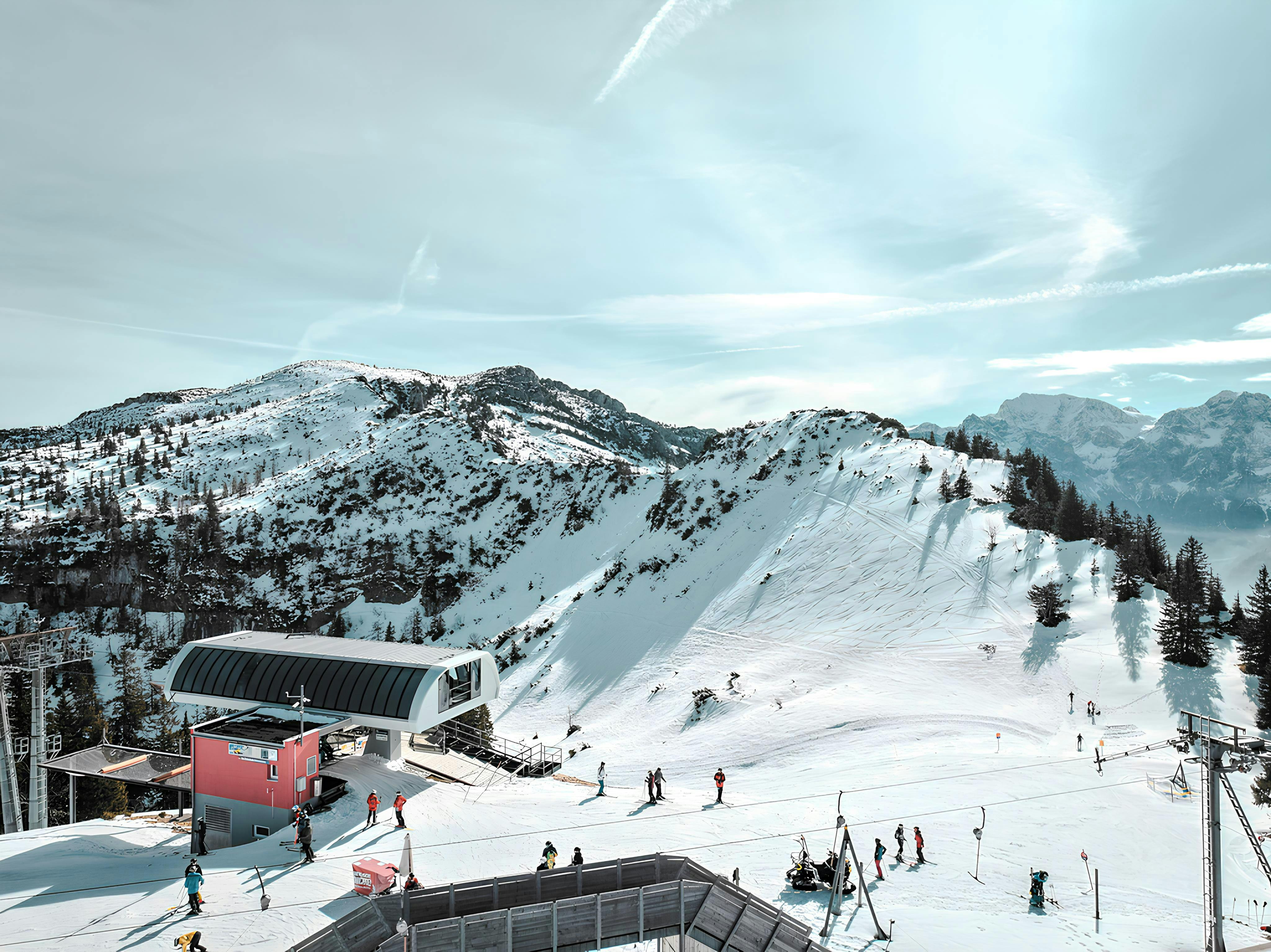
Mountain resort slopes with skiers in Austrian Alps
The stratification of Austrian ski tourism
Austrian ski destinations have sorted themselves into distinct tiers over the past two decades. St. Anton, Ischgl, and Kitzbühel dominate international marketing budgets and attract premium pricing. According to industry analysts, these resorts now command lift pass rates approaching €450 for six days during peak season, supported by aggressive promotion in UK, Scandinavian and North American markets.
Enjoying this article?
Get stories like this in your inbox every week.
Below this tier sits a second category: resorts with substantial infrastructure investment and diverse terrain that have captured strong regional followings — predominantly German, Austrian, and Dutch — without breaking through to British consciousness. Serfaus-Fiss-Ladis exemplifies this bracket. The resort operates modern lift systems, maintains extensive snowmaking coverage across its 214-kilometre network, and has invested in unusual amenities including an underground metro connecting accommodation to base stations.
The economics explain part of this divergence. Tour operators commit to accommodation blocks years in advance at major resorts, creating self-reinforcing cycles where marketing spend follows existing inventory. Breaking into new markets requires coordinated investment from resorts, airlines, and ground operators simultaneously — a chicken-and-egg problem that keeps smaller destinations regionally focused.
British skiers demonstrate stronger brand loyalty than Continental Europeans, returning to known quantities rather than experiment with unfamiliar options, even when objective metrics suggest comparable experiences at lower cost.
Cultural factors matter too. According to research from the Mountain Travel Symposium, British skiers demonstrate stronger brand loyalty than Continental Europeans. Families return to known quantities rather than experiment with unfamiliar options, even when objective metrics suggest comparable experiences at lower cost. The Dutch and German markets show greater willingness to explore based on specific amenities — childcare facilities, terrain parks, or elaborate evening entertainment programmes.
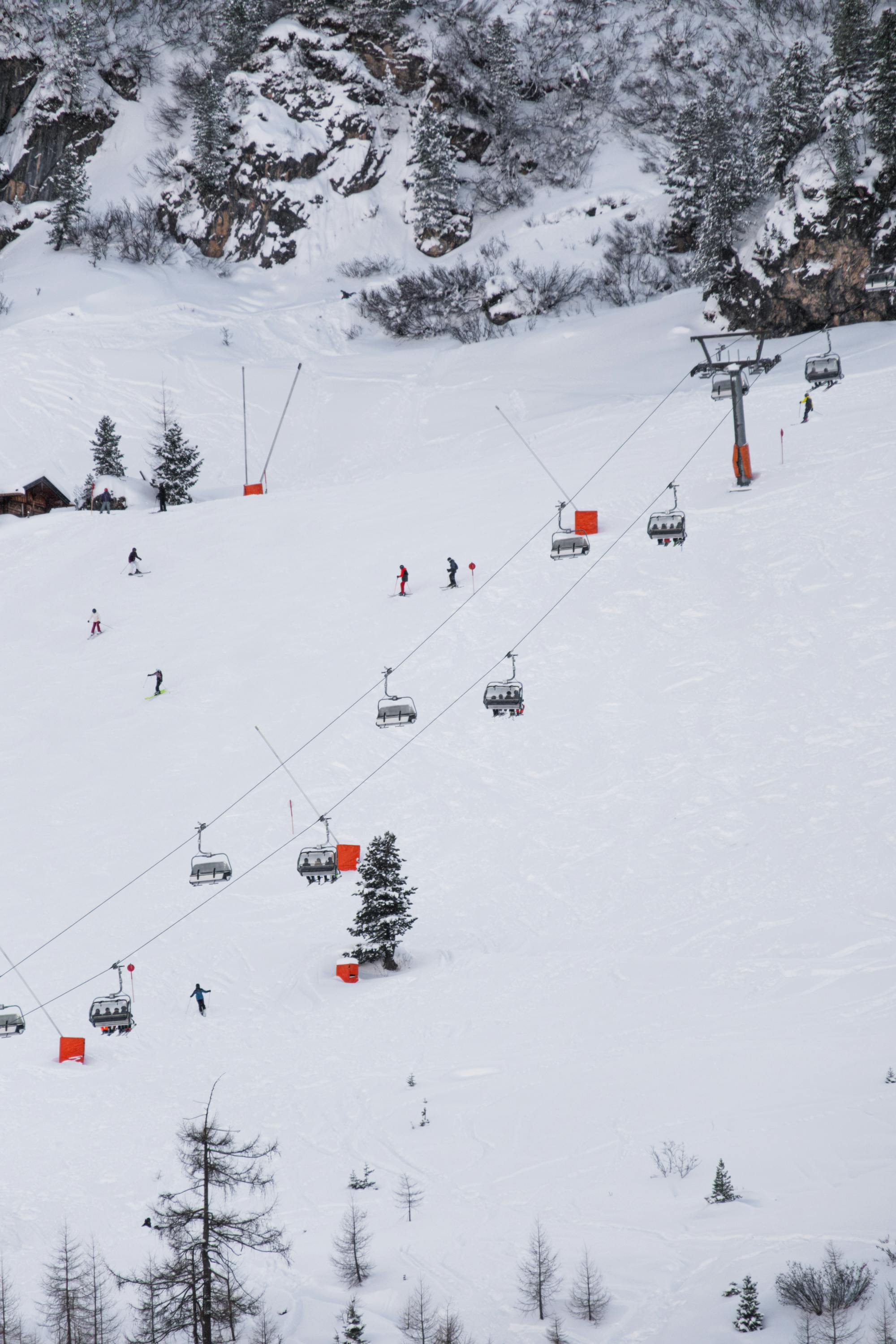
Ski lift infrastructure in snowy mountain terrain
The climate calculation nobody mentions
What promotional content rarely addresses is why certain resorts might deliberately limit their international profile. Serfaus-Fiss-Ladis operates with base villages at 1,400 metres, respectable but hardly high-alpine. The resort's own acknowledgment that snowmaking proved "essential this particular season" following weaker natural snowfall speaks to mounting pressure across mid-altitude destinations.
Climate projections from the University of Innsbruck's Institute of Geography suggest resorts below 1,500 metres face increasingly unreliable natural snow cover within the next decade. Heavy investment in snowmaking infrastructure — which Serfaus-Fiss-Ladis has clearly prioritised — provides short-term resilience but carries substantial operational costs and water resource implications.
Expanding international visitor numbers from markets like Britain where school holiday dates concentrate demand into narrow windows would amplify infrastructure strain during precisely those periods when natural conditions may prove most marginal.
Expanding international visitor numbers, particularly from markets like Britain where school holiday dates concentrate demand into narrow windows, would amplify infrastructure strain during precisely those periods when natural conditions may prove most marginal. There's an uncomfortable logic to remaining regionally focused: fewer visitors means more flexible operational planning and reduced reputational risk if poor snow forces partial closures.
The resort's top lift reaches 2,828 metres, offering decent vertical drop and higher-altitude terrain. Yet insufficient off-piste coverage during marginal conditions — a telling admission buried in otherwise enthusiastic reports — would frustrate British families booking months ahead, whilst regular visitors from Munich or Amsterdam can adjust timing based on weekly snow reports.
The value proposition that isn't
Positioning Serfaus-Fiss-Ladis as offering equivalent experiences to famous resorts at 10% lower lift pass costs oversimplifies trip economics dramatically. Lift tickets represent roughly 30% of total family ski holiday expenditure, according to figures from Crystal Ski Holidays. Accommodation, flights, equipment rental, and food constitute the majority.
Limited British tour operator presence means families must self-organise transport from Innsbruck, book accommodation directly, and navigate German-language rental shops. This adds logistical complexity and often eliminates the modest lift pass savings through less competitive flight routes and accommodation rates. The Dutch and German visitors who fill the resort benefit from shorter drives and established supply chains that British visitors lack.
Crowded ski slopes with multiple skiers descending mountain
What genuine alternative resorts offer isn't cheaper skiing — it's different crowding patterns. Enthusiastic descriptions of "skiers giving each other more space" reflect real quality-of-life improvements on slopes. But these advantages exist precisely because British skiers haven't arrived en masse.
The plea to "not tell anyone" and keep the resort quiet contradicts publishing promotional content complete with booking links. What advocates actually want is selective visibility: enough recognition to validate their discovery whilst maintaining the uncrowded conditions that made it pleasant. Austrian tourism boards want something else entirely — they want British wallets, just in controlled numbers that don't damage the core German-speaking customer base.
Whether resorts like Serfaus-Fiss-Ladis can thread this needle — attracting enough international visitors to justify infrastructure investment whilst preserving the relaxed atmosphere that distinguishes them from overcrowded alternatives — will define the next chapter of Alpine tourism. British families seeking better value might eventually force the issue, but they'll need to accept that hidden gem ski destinations flying under the radar won't stay that way once discovered.
Alternative Austrian resorts offer uncrowded slopes, but logistical complexity and self-booking requirements often eliminate advertised savings for British families lacking established tour operator infrastructure
Climate vulnerability at mid-altitude resorts below 1,500 metres may explain strategic reluctance to expand international visitor numbers during peak school holiday periods when snow conditions prove most marginal
Multi-award winning serial entrepreneur and founder/CEO of Venntro Media Group, the company behind White Label Dating. Founded his first agency while at university in 1997. Awards include Ernst & Young Entrepreneur of the Year (2013) and IoD Young Director of the Year (2014). Co-founder of Business Fortitude.