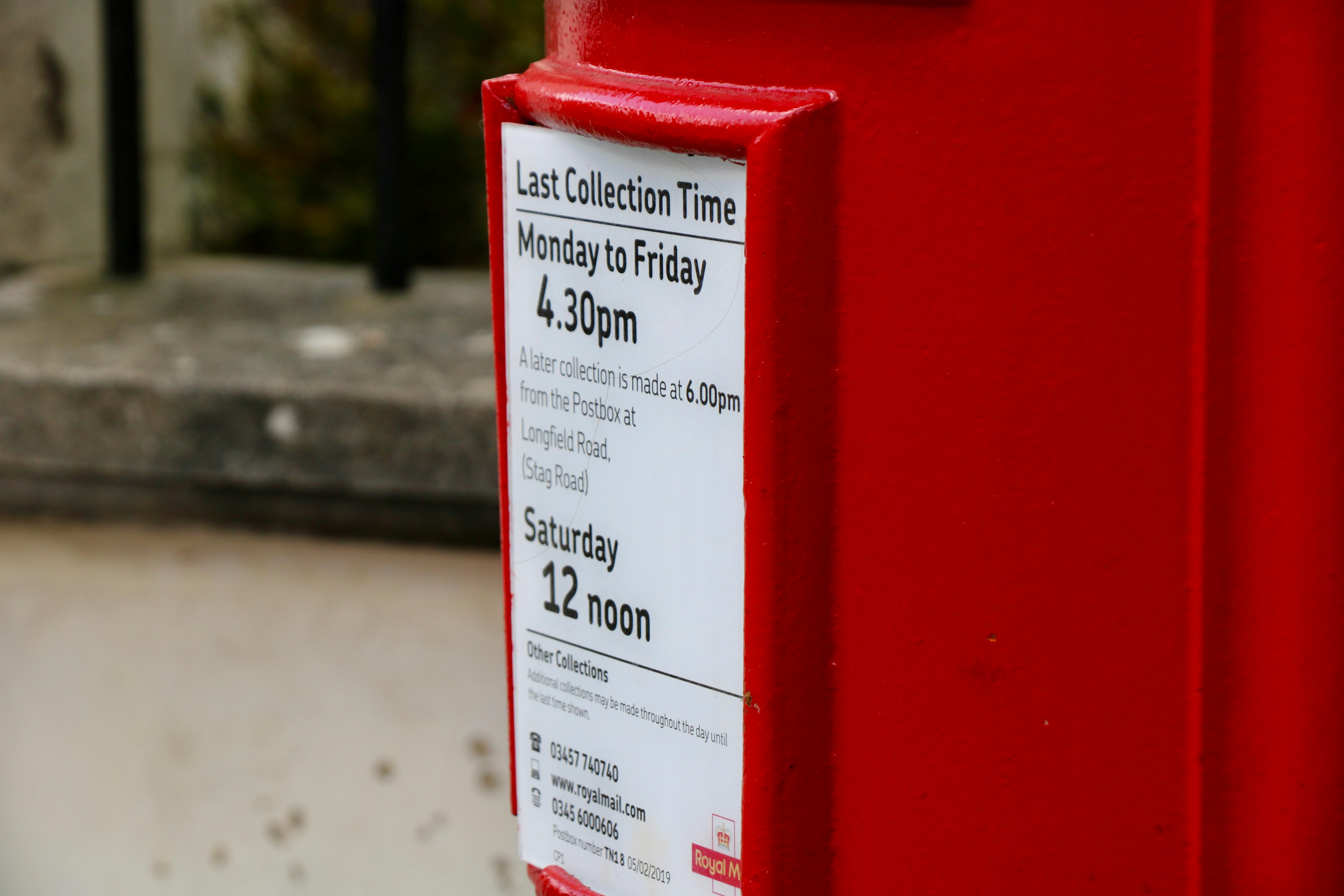
Royal Mail delivered just 77.5% of first-class post next-day between late September and November — 15.5 percentage points below the 93% regulatory standard
Second-class mail achieved only 91.6% delivery within three working days, missing the 98.5% Ofcom target by nearly seven points
The company receives an average of 15 applicants per role and maintains a 16-year average workforce tenure
Ofcom is consulting on reforms to the Universal Service Obligation that could eliminate Saturday deliveries for second-class post
Britain's postal service is haemorrhaging credibility. Royal Mail's delivery performance has collapsed to double-digit failures against regulatory standards, exposing a service systematically failing to meet its statutory obligations. The crisis has triggered an escalating blame game between management and unions, whilst millions of customers face a service that may deteriorate further.
Royal Mail delivery worker sorting post
Between late September and November, Royal Mail delivered just 77.5% of first-class post next-day — a staggering 15.5 percentage points below the regulatory standard of 93%. Second-class mail fared slightly better, but still missed the 98.5% target by nearly seven points, with only 91.6% arriving within three working days. The figures, which cover a two-month period critical for both business correspondence and personal mail, expose a service failing to meet legal requirements established by Ofcom.
For context, these aren't aspirational goals but statutory obligations. Royal Mail now faces potential regulatory fines at a time when it can scarcely afford them. Caught in the middle are millions of customers — both consumers and businesses — who rely on the postal service for everything from birthday cards to legal documents.
Enjoying this article?
Get stories like this in your inbox every week.
The two-tier workforce debate
According to CWU general secretary Dave Ward, the root cause is simple: a recruitment meltdown triggered by 2022 pay changes that created a two-tier workforce structure. The union claims these "low wages and poor conditions" for new starters, combined with what Ward describes as a "toxic managerial culture," have made postman positions fundamentally unattractive. This comes precisely when parcel volumes have surged following the pandemic.
Royal Mail contests this narrative vigorously. A company spokesperson points to what they characterise as "the best terms and conditions in our industry," noting the postal giant receives an average of 15 applicants for every role. The company emphasises its workforce's 16-year average tenure, contrasting its employment model with the 'gig economy' approach of most parcel delivery competitors, which offer "low pay, no sick pay, holiday or pensions."
Royal Mail can offer superior conditions compared to delivery-only rivals whilst simultaneously struggling to attract staff because those same conditions have eroded relative to what the postal service historically offered.
Postal worker delivering mail to residential address
What's interesting here is that both claims may be accurate. The 2022 changes appear to have created a divided workforce where newer employees work under markedly different terms than their longer-serving colleagues. This structure breeds resentment and makes retention challenging regardless of how the company's package compares to the broader logistics sector.
Chief executive Alistair Cochrane acknowledged the performance shortfall, stating that whilst the figures show improvements over the previous quarter, "our performance in letters is still not good enough." That phrasing reveals the scale of the problem: if 77.5% represents improvement, the preceding months must have been dire indeed.
Saturday deliveries on the chopping block
The proposed solution from Royal Mail management may prove more controversial than the problem itself. The company is pushing to eliminate Saturday deliveries for second-class post, a move that would fundamentally alter the Universal Service Obligation that has defined Britain's postal service since privatisation. Ofcom is currently consulting on reforms to the USO, and Royal Mail clearly views this as an opportunity to reduce costs by cutting what it considers an outdated commitment.
The CWU has warned that implementing these changes will "make matters worse and will result in Ofcom fining the company out of existence." The union believes service levels will deteriorate further if Saturday second-class deliveries disappear. If Royal Mail is already struggling to meet delivery targets across five or six days, reducing the delivery window might simply compress the same volume of mail into fewer days, potentially worsening delays rather than improving efficiency.
The days of assuming first-class post means next-day delivery are gone, at least for now.
Royal Mail's counter-argument centres on financial sustainability. The company argues it faces an unlevel playing field where competitors operate leaner models whilst Royal Mail bears the regulatory burden of universal service. The spokesperson's reference to engaging with government "on what needs to be done to level the playing field on employment rights in the delivery sector" suggests the company sees its current obligations as a competitive disadvantage in a race-to-the-bottom logistics market.
What comes next
Mail sorting facility with packages and letters
The immediate future looks grim for postal reliability. Ofcom's consultation on USO reforms will determine whether Saturday second-class deliveries survive, but that decision won't address the underlying capacity crisis producing double-digit delivery failures. Whether that crisis stems from a recruitment problem caused by wage structures, as the union insists, or from broader structural challenges in maintaining a universal postal service in an era of declining letter volumes, remains disputed.
What's certain is that Royal Mail's performance has fallen far enough below regulatory standards to trigger potential enforcement action. The company's financial position, already strained by the secular decline in letter volumes and intense competition in parcels, leaves little room for significant fines. That creates a volatile situation where regulatory pressure, union resistance, management cost-cutting, and customer dissatisfaction are all intensifying simultaneously.
Business users who rely on postal services for customer communications, invoicing, or legal correspondence should plan accordingly. Whether service levels return depends on a resolution that neither management nor union currently appears close to achieving. For small businesses particularly affected by the disruption, operational risk mitigation strategies may be necessary to protect customer relationships while the crisis continues.
Businesses relying on postal services for critical communications should implement contingency plans immediately — Royal Mail's delivery crisis shows no signs of rapid resolution
Watch Ofcom's USO consultation decision closely: eliminating Saturday second-class deliveries could compress delays into fewer days rather than improving efficiency
The fundamental tension between universal service obligations and commercial sustainability remains unresolved, suggesting continued volatility in postal service reliability throughout 2024
Multi-award winning serial entrepreneur and founder/CEO of Venntro Media Group, the company behind White Label Dating. Founded his first agency while at university in 1997. Awards include Ernst & Young Entrepreneur of the Year (2013) and IoD Young Director of the Year (2014). Co-founder of Business Fortitude.