What happened: from collapse to final closures
Claire's, the accessories and jewellery retailer aimed primarily at younger consumers, collapsed into administration in January 2026. The chain had traded from more than 100 UK locations at its peak, occupying units in shopping centres and high streets across England, Scotland and Wales.
The UK failure followed years of financial stress at group level. Claire's parent company filed for Chapter 11 bankruptcy protection in the United States in 2018, weighed down by debt accumulated during a leveraged buyout. The US business was subsequently acquired by Elliott Management, the hedge fund, which restructured the American operations. The UK arm, however, continued to face margin pressure from rising occupancy costs, weaker discretionary spending and competition from online jewellery and accessories sellers.
After the January administration, store closures proceeded in waves. Sources told the Guardian that staff at the remaining outlets had been asked to pack up final stock and equipment, with the last doors set to close formally on Tuesday 29 April 2026. No buyer emerged for the UK business as a going concern during the administration process.
The workforce impact and redundancy outlook
The final round of closures brings total job losses to approximately 1,000, according to the Guardian's reporting. Most of Claire's UK workforce comprised part-time retail staff, many of them younger workers for whom the chain served as an early employer.
Under UK redundancy rules, employees with at least two years' continuous service are entitled to statutory redundancy pay, currently capped at £643 per week of qualifying earnings. The administrators are expected to process claims through the Redundancy Payments Service, part of the Insolvency Service, where employees can also claim arrears of wages and outstanding holiday pay from the National Insurance Fund.
The scale of losses, while smaller than the 12,000 jobs shed when Wilko collapsed in 2023, is nonetheless significant for a sector already shedding headcount. Retail employment in the UK fell by 63,000 between 2019 and 2024, according to Office for National Statistics labour-market data, and discretionary retail has borne a disproportionate share of that decline.
Knock-on effects for landlords and high-street footfall
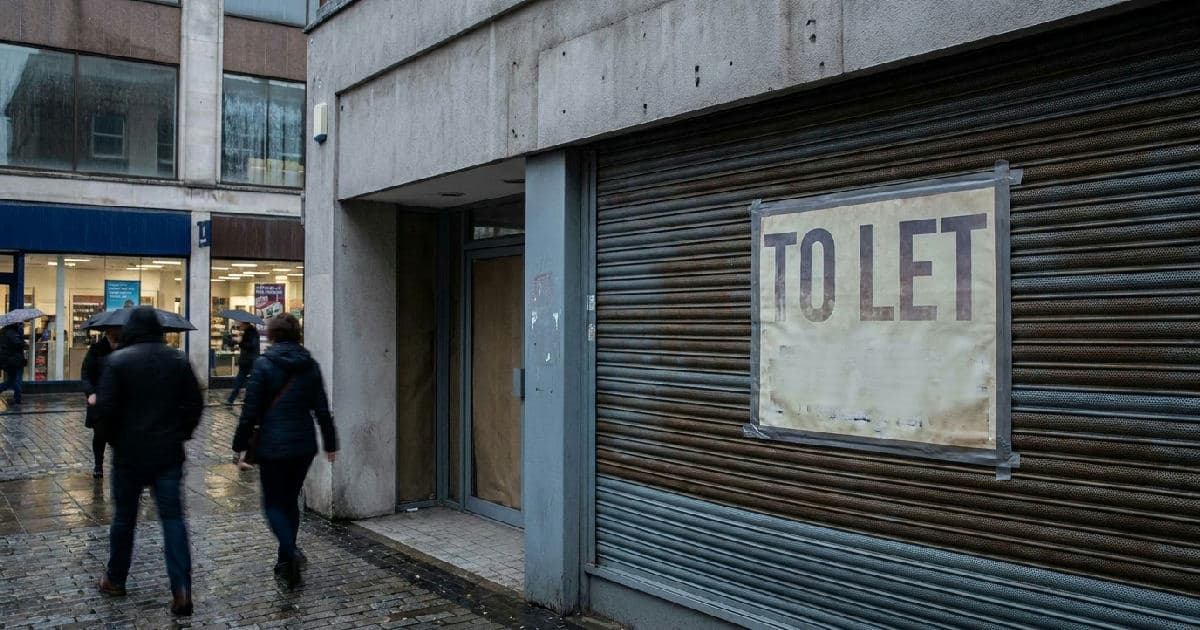
For commercial landlords, Claire's departure is the latest in a pattern of mid-market retail failures that has left town-centre portfolios pockmarked with voids. UK high-street vacancy rates stood at approximately 13.9% in late 2025, according to BRC and Springboard data. The addition of more than 100 Claire's units to the vacant stock will push that figure higher in the locations affected, many of which are secondary shopping centres already struggling to attract replacement tenants.
Claire's stores were typically small-format units of 500 to 1,500 square feet, often positioned near entrances or escalators in covered malls. That placement made them useful footfall drivers; their absence may reduce passing traffic for neighbouring retailers, weakening the case for existing tenants to renew leases at current rents.
Landlords with exposure to the affected locations face a familiar dilemma: re-let at lower rents, convert units to non-retail uses such as food and beverage or services, or accept prolonged vacancy. The restructuring history of Monsoon Accessorize, which entered administration in 2020 before being rescued by its founder with a significantly reduced store estate, illustrates how accessories retail has struggled to sustain traditional lease structures. Wilko's 2023 collapse, which left more than 400 empty stores, showed how quickly a single chain's failure can reshape landlord economics across dozens of towns.
Supplier and service-provider exposure
Smaller businesses in Claire's supply chain, including visual-merchandising firms, logistics providers and packaging suppliers, may face write-downs on outstanding invoices. Operators who supplied goods or services to the chain in the months before administration should already have submitted claims to the administrators, but unsecured creditors in UK retail insolvencies typically recover only a fraction of amounts owed. The experience of Wilko's suppliers, many of whom recovered pennies in the pound, according to Insolvency Service filings, offers a sobering precedent.
What operators in adjacent retail should watch next
Claire's exit does not occur in isolation. The broader pattern of discretionary-retail contraction has accelerated since the pandemic, driven by a combination of higher business rates, elevated energy costs, subdued consumer confidence and the continued migration of spending online. ONS retail-sales data shows that non-food store sales volumes in early 2026 remained below their pre-pandemic trend.
For SME retailers occupying units near former Claire's locations, the immediate risk is reduced footfall. The medium-term risk is that landlords, under pressure to fill voids, offer aggressive incentive packages to larger or discount-led operators whose presence may alter the tenant mix and customer profile of a centre.
Operators and finance directors in adjacent sectors, from beauty services to children's clothing, should reassess counterparty risk across their wholesale and retail relationships. Where a customer or partner occupies a segment with characteristics similar to Claire's, namely discretionary, fashion-led, youth-oriented, and dependent on physical retail, the probability of further failures remains elevated.
The British Retail Consortium has repeatedly called for reform of the business-rates system to ease the burden on physical stores. Until that structural issue is addressed, the economics of small-format, mid-market retail on the UK high street will continue to deteriorate, and the list of casualties will likely grow.