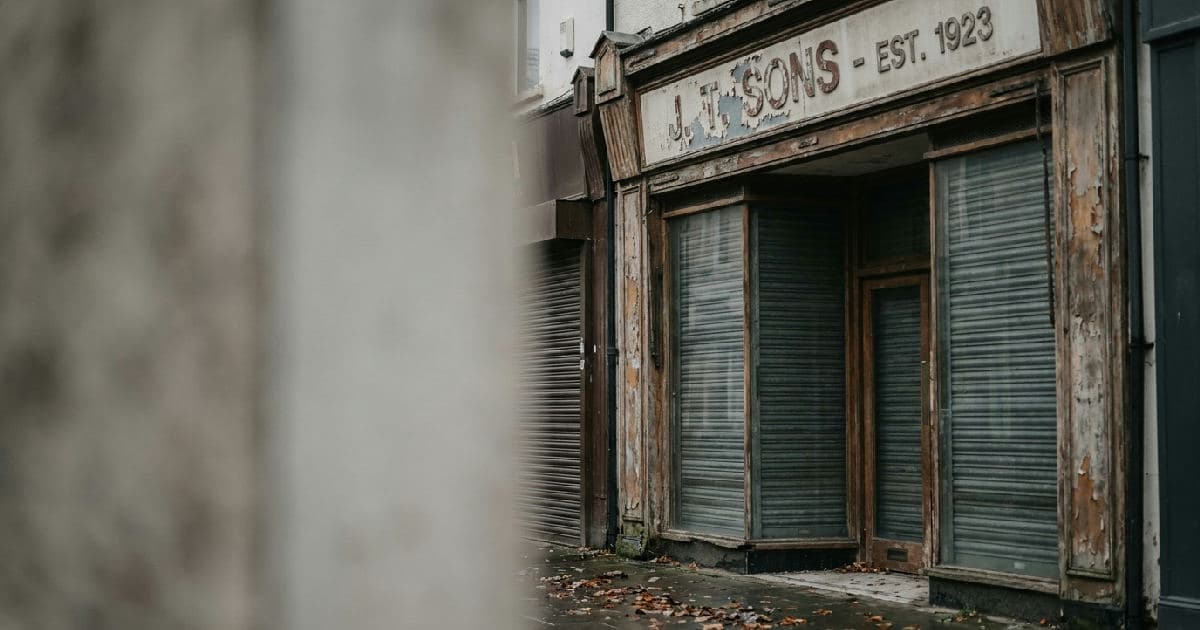
What TG Jones is planning
TG Jones emerged from the demerger of WH Smith's high street division in 2025. WH Smith retained its profitable travel retail operation, spinning off the loss-making or margin-thin town-centre estate under a new brand. The logic was familiar: shed legacy baggage, refresh the proposition, and give the high street business room to find its own footing.
That room has proved insufficient. According to London Loves Business, TG Jones is now preparing a major restructuring that could put up to 100 stores at risk of closure across the UK. The report, published on 30 April 2026, indicates that mounting cost pressures are behind the planned retrenchment. Specific timelines for store closures have not yet been confirmed publicly by the company.
The scale of the potential cuts is significant. WH Smith's high street estate numbered roughly 500 stores before the demerger. Losing a fifth of that footprint would represent one of the larger retail contractions of 2026 so far, with consequences for employees, landlords, and neighbouring businesses in affected towns.
Why a rebrand was never enough
Corporate rebrands in retail tend to follow a pattern. A struggling division is separated from its parent, given a fresh identity, and tasked with trading its way to viability. The theory is that a clean balance sheet and a distinct brand allow management to make decisions unencumbered by the parent's priorities.
The problem is that rebranding addresses perception, not economics. The core challenges facing high street general retailers remain unchanged: rising occupancy costs, weak footfall trends, and competition from online and discount operators. UK high street vacancy rates stood at roughly 13% to 14% heading into 2026, according to industry data, and two policy shifts have made the operating environment harder still.
First, business rates reform has not delivered the relief many occupiers hoped for. Second, the employer National Insurance contribution rise that took effect in April 2025 added directly to labour costs for retailers with large, often part-time, workforces. For a business already operating on thin margins, these are not pressures that a new logo can absorb.
The pattern is well established. Wilko collapsed in 2023, ultimately closing all 400 of its stores. The Body Shop entered a company voluntary arrangement (CVA) in 2024, shutting a substantial portion of its UK estate. In each case, the underlying economics of running mid-market physical retail in town centres proved unworkable at the scale the business had inherited.
TG Jones appears to be following the same trajectory, albeit through managed restructuring rather than outright failure. The distinction matters for creditors and employees, but the effect on the high street is similar: fewer occupied units, less footfall, and weaker trade for surrounding businesses.
Knock-on effects for high street operators
When an anchor or semi-anchor tenant vacates a high street pitch, the impact extends well beyond the empty unit. Footfall studies consistently show that clusters of vacancies depress passing trade for remaining occupiers. A town centre that loses a recognisable retailer like TG Jones may find that cafés, service providers, and independent shops in the immediate vicinity see reduced customer numbers.
Landlords face a direct hit. Vacant units generate no rent, incur empty-rates liability, and are harder to re-let in a market where occupier demand is already subdued. For smaller commercial landlords, particularly those with concentrated portfolios in secondary or tertiary high streets, the loss of a tenant like TG Jones can be material.
Local authorities, already grappling with constrained budgets, lose business rates income from closed stores and may face pressure to fund regeneration or place-management initiatives to prevent further decline.
The clustering problem
Retail geography research has long identified a tipping point at which vacancy rates become self-reinforcing. Once a critical mass of units sits empty, remaining tenants find it harder to justify their own presence, and new occupiers are deterred. With national vacancy rates already in the 13% to 14% range, some town centres are closer to that tipping point than headline figures suggest.
What SME tenants and landlords should do next
For SME operators in towns likely to be affected, the priority is information. Lease break dates, landlord obligations, and local authority regeneration plans all become more important when a major co-tenant is withdrawing.
Small business tenants should review their own lease terms. Those approaching a break clause may have the option to renegotiate rent or relocate to a stronger pitch within the same town. Those locked into longer leases should assess whether their landlord's financial position is stable; a landlord weakened by TG Jones's departure may become less responsive to maintenance and service-charge obligations.
Commercial landlords with exposure to TG Jones sites should be modelling the financial impact of vacancy now, rather than waiting for formal confirmation of closures. Engaging early with local business improvement districts (BIDs) or council economic development teams can open access to meanwhile-use programmes or rates relief that partially offset the cost of an empty unit.
More broadly, the TG Jones situation is a reminder that tenant concentration risk applies to high streets just as it does to investment portfolios. Operators whose trade depends heavily on footfall generated by a single neighbouring retailer are exposed every time that retailer reviews its estate.
The high street is not dying, but it is shrinking. Businesses that plan for that contraction, rather than hoping the next rebrand will reverse it, stand a better chance of remaining on the right side of the trend.