Trump's Iran Rhetoric vs. Reality: UK Businesses Brace for Oil Volatility
- Brent crude whipsawed through a $36 range on Tuesday, plummeting from nearly $120 to briefly touch $84 before settling around $92
- The Strait of Hormuz – through which roughly a fifth of global oil passes – has seen traffic "all but halted" for over a week
- Two-year gilt yields climbed from 3.5% before hostilities to peak at 4.15% on Monday before retreating to 3.91%
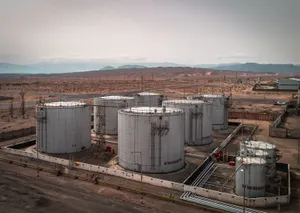
- Global oil stockpiles currently sit at five-year lows according to Saudi Aramco
Oil prices whipsawed through a $36 range on Tuesday as Donald Trump declared the US-Iran conflict "very complete, pretty much" – only for Tehran to immediately threaten blocking all regional oil exports and for the Strait of Hormuz to remain functionally closed. Brent crude plummeted from nearly $120 a barrel to briefly touch $84 before settling around $92, leaving UK businesses and households exposed to what one oil executive called an "incredibly twitchy" market that could spike again within hours.
The volatility exposes a dangerous gap between Trump's victory rhetoric and conditions on the ground. The Strait of Hormuz – through which roughly a fifth of global oil passes – has seen traffic "all but halted" for over a week, according to industry observers. Yet the US president told reporters he expected a "short-term excursion" before warning Iran via social media not to obstruct the waterway, threatening to hit the country "TWENTY TIMES HARDER" if oil flows stopped.
Iran's Islamic Revolutionary Guard Corps responded in kind, stating that armed forces would "not allow the export of a single litre of oil from the region" in response to what it termed "Trump's nonsense". For markets trying to price risk, the disconnect between claimed victory and continued threats creates precisely the conditions for violent price swings.
Enjoying this article?
Get stories like this in your inbox every week.
The inflation boomerang hits UK borrowing costs
British households are already feeling the secondary effects. Two-year gilt yields – a key determinant of mortgage pricing – had climbed from 3.5% before hostilities to peak at 4.15% on Monday as inflation fears extinguished hopes of Bank of England rate cuts. By Tuesday afternoon they had retreated to 3.91%, but the damage to expectations remains.
Just weeks ago, markets were pricing in potential rate cuts for 2025. That discussion has evaporated.
What's interesting here is how quickly the "inflation is beaten" narrative collapsed. Fixed-rate mortgage deals have already started repricing upwards, and any business with floating-rate debt faces renewed pressure on borrowing costs.
UK gas prices followed oil's trajectory, with month-ahead delivery dropping to 126 pence per therm from Monday's peak of 171p. But energy retailers who hedged at the higher prices will pass those costs through to consumers regardless, whilst those who waited gambled on precisely this volatility.
The strategic reserve dilemma
Chancellor Rachel Reeves told G7 partners the UK stood ready to support a coordinated release from International Energy Agency oil reserves, but the meeting concluded without commitment. The hesitation reflects an uncomfortable calculation: deploy reserves too early and you've lost your buffer if the situation deteriorates further.
Amin Nasser, chief executive of Saudi Aramco, warned of "catastrophic consequences" if the Strait remains blocked, noting that global oil stockpiles sit at five-year lows. His firm – the world's largest oil exporter – has every incentive to talk up supply concerns, but the underlying point stands. Draw down strategic reserves with inventories already depleted and there's little cushion for prolonged disruption.
If you believe Trump's assessment that the war is effectively over, reserves aren't needed. But if disruption continues, waiting risks letting prices spiral further before intervention.
Robin Mills, chief executive of Dubai-based Qamar Energy, framed the G7's dilemma with stark clarity. The problem is that belief in Trump's claims requires ignoring both Iran's response and the physical reality of halted tanker traffic. That's not a foundation for energy policy.
Markets exhale, but the tug-of-war continues
European equities rebounded sharply on the oil price retreat, with London's FTSE 100 climbing 1.3%, Germany's Dax up 2.1%, and France's Cac 40 gaining 1.4%. Asian markets had led the relief rally earlier in the session, with South Korea's Kospi surging 5.4% and Japan's Nikkei adding 2.9%.

Alberto Bellorin, founder of oil and gas investment firm InterCapital Energy, described the price drop as giving traders a moment to "exhale" whilst warning that markets remain in a "total tug-of-war". His expectation of continued volatility – prices spiking on escalation, falling on apparent de-escalation – captures the operating environment for any UK business with energy-sensitive costs.
For importers, manufacturers, logistics firms and retailers, forward planning becomes near-impossible. Hedge too aggressively at $115 and you lock in costs if prices collapse. Don't hedge and a return to triple-digit oil could obliterate margins. The uncertainty itself functions as an economic brake regardless of where prices settle.
The coming days will reveal whether Trump's confidence reflects genuine progress toward ending hostilities or premature optimism disconnected from Iranian intentions and regional realities. Until tanker traffic resumes through the Strait and supply normalises, UK businesses face an energy market where stocks and energy prices staged a remarkable reversal on a single social media post or military escalation. That's not a stable foundation for economic recovery, and gilt markets know it.
- The disconnect between political rhetoric and ground realities creates precisely the conditions for continued violent price swings that make business planning near-impossible
- Watch for tanker traffic resumption through the Strait of Hormuz as the critical signal – not presidential statements – that supply disruption is genuinely ending
- UK businesses with energy-sensitive costs face a brutal hedging dilemma where both aggressive protection and wait-and-see strategies carry potentially margin-destroying risks

Co-Founder
Multi-award winning serial entrepreneur and founder/CEO of Venntro Media Group, the company behind White Label Dating. Founded his first agency while at university in 1997. Awards include Ernst & Young Entrepreneur of the Year (2013) and IoD Young Director of the Year (2014). Co-founder of Business Fortitude.
Comments
💬 What are your thoughts on this story? Join the conversation below.
to join the conversation.