Oil Price Surge Derails Bank of England's Rate Cut Plans
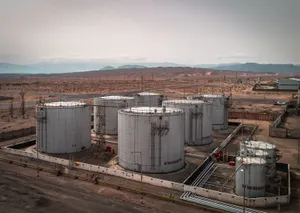
- UK firms expected inflation to settle at 3.3% in late February, but oil prices have since surged more than 10% following Middle East conflict
- A 20% rise in oil prices typically adds roughly one percentage point to inflation, potentially pushing CPI above 4% from the current 3%
- Bank of England rates currently stand at 3.75%, down from recent peaks, with further cuts now in jeopardy
- The MPC faces a policy dilemma: domestic inflation was improving steadily before the external energy shock disrupted recovery plans
The Bank of England's carefully constructed case for further interest rate cuts has been blown apart in a matter of weeks. What seemed like a straightforward path towards looser monetary policy in late February now looks hopelessly optimistic, as oil price surges triggered by Middle East conflict threaten to push inflation back above 4 per cent. For an institution still rebuilding credibility after badly misjudging post-pandemic inflation, the timing could scarcely be worse.
The Treasury's working assumption on energy shocks hasn't changed since the 1970s: a 20 per cent rise in oil prices typically adds roughly one percentage point to inflation. If current crude prices hold, that arithmetic would push the Consumer Prices Index back above 4 per cent, undoing months of hard-won gains. The most recent ONS reading showed inflation at 3 per cent.
After months of improving data, the Bank's Monetary Policy Committee was building momentum towards looser policy, with rates already down to 3.75 per cent from their recent peak. Those dovish members who'd been pointing to softening inflation expectations as justification for cuts now face a reality where global events can obliterate domestic progress in a matter of days. The Office for Budget Responsibility has already acknowledged this bind, noting that its forecasts for faster disinflation have become "more uncertain".
Enjoying this article?
Get stories like this in your inbox every week.
When forward guidance meets geopolitical chaos
What's particularly striking here is the speed at which the Bank's credibility problem has materialised. Central banks live and die by their ability to set expectations, to offer businesses and households a reliable sense of where borrowing costs are heading. Yet how can the Threadneedle Street team offer meaningful forward guidance when external shocks can render their carefully calibrated models obsolete within a fortnight?
How can the Threadneedle Street team offer meaningful forward guidance when external shocks can render their carefully calibrated models obsolete within a fortnight?
This isn't the first time oil price convulsions have derailed British economic recovery. The pattern repeats with depressing regularity across the 1970s oil shocks and both Gulf Wars. The UK economy's persistent vulnerability to imported energy inflation remains one of its structural weaknesses, and no amount of domestic monetary tightening can control supply disruptions in the Persian Gulf.

The policy bind tightens
Economists at the Institute for Fiscal Studies have warned that rate rises from the current 3.75 per cent "could not be ruled out", whilst analysts at Rabobank now expect rates to remain frozen at current levels for at least the next year. Both scenarios represent a sharp departure from the trajectory implied by the February survey data.
The dilemma facing the MPC is genuinely difficult. Strip out the energy component, and underlying domestic inflation had been improving steadily. The Bank's decision makers' panel showed businesses planning to raise prices at a softer pace. More encouragingly, the same survey revealed firms expected to grow employment over the coming year, marking the second consecutive month where hiring projections turned positive.
All of that suggests an economy where homegrown inflationary pressures were genuinely easing. Keeping rates elevated to combat imported energy inflation risks strangling that nascent recovery, potentially sacrificing employment growth to fight price rises that monetary policy cannot meaningfully influence. But the alternative carries its own risks.
If the Bank cuts rates whilst energy-driven inflation accelerates, it risks looking either reckless or impotent. Perhaps both.
What comes next
The February survey also indicated that business uncertainty had been declining, with company directors growing more confident about the outlook. That reading, too, will need heavy revision when the March data arrives. What's become clear is that the Bank's room for manoeuvre has narrowed considerably.

The case for further rate cuts, which looked straightforward three weeks ago, now depends entirely on how sustained the oil price surge proves to be and whether it feeds through into broader inflation expectations. If businesses and households begin pricing in higher inflation, the psychological element becomes self-fulfilling regardless of what crude does next.
The MPC's next move will reveal much about how it weighs domestic versus imported inflation, and whether it prioritises supporting growth over crushing every inflationary impulse regardless of origin. For an institution still rebuilding credibility after the post-pandemic inflation surge caught it flat-footed, there are no comfortable options. The Middle East conflict has seen to that.
Financial markets will be watching not just the rate decision itself, but the language around it. Any suggestion that the Bank feels hostage to external events risks further undermining confidence in its ability to steer the economy. Yet pretending it maintains full control would be an obvious fiction. The energy crisis could prevent the Bank of England from meeting its 2% inflation target for another year, and threading that needle whilst oil prices gyrate and geopolitical risks multiply may prove the MPC's sternest test since the immediate aftermath of the pandemic. Indeed, central banks may be forced to raise rates if energy-induced inflation persists, whilst analysis suggests inflation expectations remain anchored heading into the current crisis, though that offers little guarantee against future shocks.
- The Bank of England's credibility hinges on whether it can distinguish between temporary energy shocks and embedded inflation expectations, with forward guidance now hostage to geopolitical events beyond its control
- Watch for the MPC's language around external versus domestic inflation drivers in upcoming statements, as this will signal whether it prioritises supporting growth or maintaining its inflation-fighting credentials at all costs
- The UK's structural vulnerability to imported energy inflation exposes a fundamental weakness in monetary policy effectiveness, suggesting domestic rate decisions may prove largely irrelevant if oil prices remain elevated

Co-Founder
Multi-award winning serial entrepreneur and founder/CEO of Venntro Media Group, the company behind White Label Dating. Founded his first agency while at university in 1997. Awards include Ernst & Young Entrepreneur of the Year (2013) and IoD Young Director of the Year (2014). Co-founder of Business Fortitude.
Comments
💬 What are your thoughts on this story? Join the conversation below.
to join the conversation.