China's Consumption Push Lacks Credibility. Structural Issues Persist.
- China has set its lowest growth target since 1991 at 4.5–5% whilst pivoting policy toward boosting domestic consumption
- Chinese household consumption represents roughly 40% of GDP, compared with 60% in advanced economies
- Property values have declined for three consecutive years, eliminating the wealth effect that previously drove consumer spending
- Spring Festival travel revenue rose 19% year-on-year, but average spending per traveller declined sharply
Beijing is asking Chinese households to do something they've spent decades being structurally discouraged from doing: spend money. The country's leaders have set a growth target of 4.5–5% for this year, the lowest since 1991, whilst simultaneously rolling out a suite of policies aimed at boosting consumption. More paid annual leave, better childcare support, expanded services for the elderly—an "urban-rural resident income growth plan" that sounds impressive until you realise no details on scale or funding have been provided.
The pivot is significant. For the better part of four decades, whenever growth threatened to stall, China simply built its way out of trouble. Motorways, industrial parks, endless apartment blocks—the model worked brilliantly until it didn't. Property developers began defaulting, local governments found their coffers drying up, and home prices fell, taking with them the wealth effect that had underwritten consumer confidence for a generation.
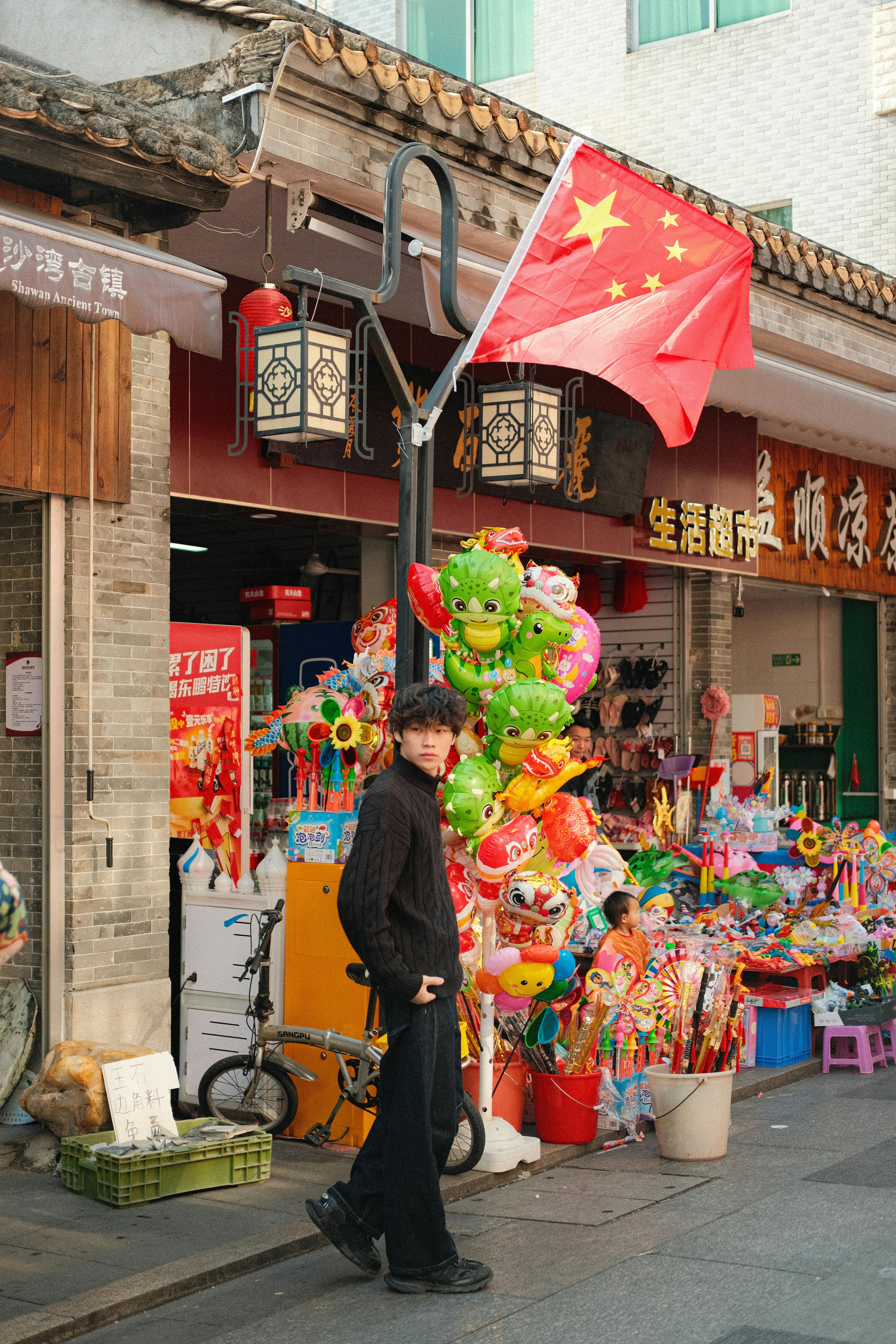
What's interesting here is the fundamental mismatch between the problem Beijing has identified and the solutions it's willing to deploy. Chinese household consumption sits at roughly 40% of GDP, compared with 60% in advanced economies. Closing that gap isn't a matter of tinkering around the edges. It requires either a massive redistribution of income from state-owned enterprises and local governments to households, or direct cash transfers on a scale that would make China's leadership deeply uncomfortable.
Enjoying this article?
Get stories like this in your inbox every week.
The credibility problem
The measures announced at this year's Two Sessions amount to Beijing officials describing their approach as "investing in people" whilst carefully avoiding actually giving people meaningful amounts of money. Data from the Spring Festival holiday illustrates the problem neatly. Authorities distributed billions of yuan in vouchers to encourage spending on transport and entertainment, yet average spending per traveller declined and cinema box office takings fell sharply.
This isn't consumer confidence. It's rational behaviour from families who've watched their primary store of wealth—property—lose value for three years running and have no reason to believe the government will catch them if things get worse.
Real estate once accounted for a quarter of China's economic activity when related industries are included. It served as both housing and savings vehicle, the bedrock of household balance sheets. When prices were rising, families felt richer and spent accordingly. That wealth effect has now reversed, and encouraging people to take their annual leave doesn't address the underlying crisis.
Gerard DiPippo of the RAND China Research Center described the situation bluntly in his assessment of the announcements: the narrative of a shift toward consumption-led growth is stronger than the policies currently supporting it. The online response suggests Chinese citizens have reached the same conclusion. On Weibo, users questioned the motive for promoting paid leave—"This is not to let you rest, it's to make you spend money," one wrote.
The export safety valve closes
Complicating matters further is the closure of the escape route that previously allowed China to avoid this reckoning. For years, when domestic demand proved insufficient to absorb excess production, manufacturers simply exported the surplus. Rising global protectionism and weakening demand for Chinese goods have made that increasingly difficult. Overcapacity in key manufacturing sectors is now a genuine problem, making domestic consumption critical at precisely the moment it's weakening.
Beijing hasn't abandoned its traditional playbook entirely. The upcoming 15th Five-Year Plan still emphasises advanced manufacturing and technology, with plans to embed artificial intelligence across the economy and strengthen industrial capabilities. Premier Li Qiang acknowledged the tension in the government work report, warning that "the imbalance between strong supply and weak demand is acute."
The question is whether doubling down on production whilst half-heartedly encouraging consumption represents a coherent strategy or an ideological paralysis. China's leaders remain cautious about large-scale household support, concerned that stimulus could increase debt levels that are already uncomfortably high. This caution might be defensible if the measures they've chosen as alternatives showed signs of working.
The question of execution
The structural challenges run deeper than weak consumer confidence. Property's collapse has destroyed both household wealth and local government revenues. The fiscal crisis isn't separate from the consumption crisis; they're the same problem viewed from different angles. Expecting families to spend when their primary asset is losing value whilst local governments lack the funds to provide robust social services requires a level of optimism that borders on magical thinking.
China isn't attempting to genuinely rebalance its economy toward household consumption. It's attempting to encourage spending whilst maintaining the structural conditions that suppress it.

DiPippo's assessment that current policy "stabilises the consumption share rather than actively increases it" gets to the heart of the credibility gap. The structural conditions that suppress consumption remain intact—low wages relative to corporate profits, weak social safety nets that necessitate high precautionary savings, and a financial system that channels resources to state-owned enterprises rather than households.
The shift from an economy defined by what it builds to one powered by consumer confidence requires more than policy announcements and aspirational income growth plans. It requires Beijing to transfer meaningful amounts of wealth and economic power from the state to households. Whether China's leadership is ideologically capable of taking that step remains the central question.
The measures announced at this year's Two Sessions suggest the answer is no, or at least not yet. Which means the world's second-largest economy is betting it can thread an impossibly narrow needle—encouraging consumption without the fiscal transfers that might actually work, stabilising growth without addressing the structural imbalances that created the slowdown in the first place. The 4.5–5% target looks increasingly ambitious against that backdrop.
- Beijing's consumption push lacks the fiscal transfers necessary to genuinely shift household behaviour—families need wealth restoration, not vouchers and annual leave policies
- The closure of the export safety valve combined with property market collapse creates a structural trap that modest policy adjustments cannot resolve
- Watch whether China's leadership proves ideologically capable of transferring meaningful economic power from state enterprises to households—current evidence suggests not

Co-Founder
Multi-award winning serial entrepreneur and founder/CEO of Venntro Media Group, the company behind White Label Dating. Founded his first agency while at university in 1997. Awards include Ernst & Young Entrepreneur of the Year (2013) and IoD Young Director of the Year (2014). Co-founder of Business Fortitude.
Comments
💬 What are your thoughts on this story? Join the conversation below.
to join the conversation.