Liberal Democrat leader Sir Ed Davey has called for the UK government to sue Donald Trump for $100 billion in damages following a US Supreme Court ruling that struck down tariffs imposed in April
The legal proposal is largely symbolic, as sovereign nations cannot sue each other in domestic courts and international trade disputes are handled through the WTO mechanism, which lacks enforcement power for such penalties
The intervention highlights growing political pressure on Keir Starmer's cautious diplomatic approach, which has yet to yield visible progress in UK-US trade negotiations
Davey contrasts Britain's accommodating stance with Canada under Mark Carney, who has adopted more combative rhetoric against US trade measures
Sir Ed Davey wants the British government to take Donald Trump to court for $100 billion. The Liberal Democrat leader's demand, made at his party's Scottish conference over the weekend, represents the most confrontational stance yet from any mainstream UK political figure towards the American president. Whether it constitutes serious foreign policy or calculated positioning is another matter entirely.
The call follows Friday's US Supreme Court ruling striking down tariffs Trump imposed last April. Davey seized on the decision as vindication that the president had acted unlawfully, arguing that Keir Starmer should now pursue damages for economic harm inflicted on British businesses. "It's the only language he understands," the Lib Dem leader told journalists in Edinburgh.
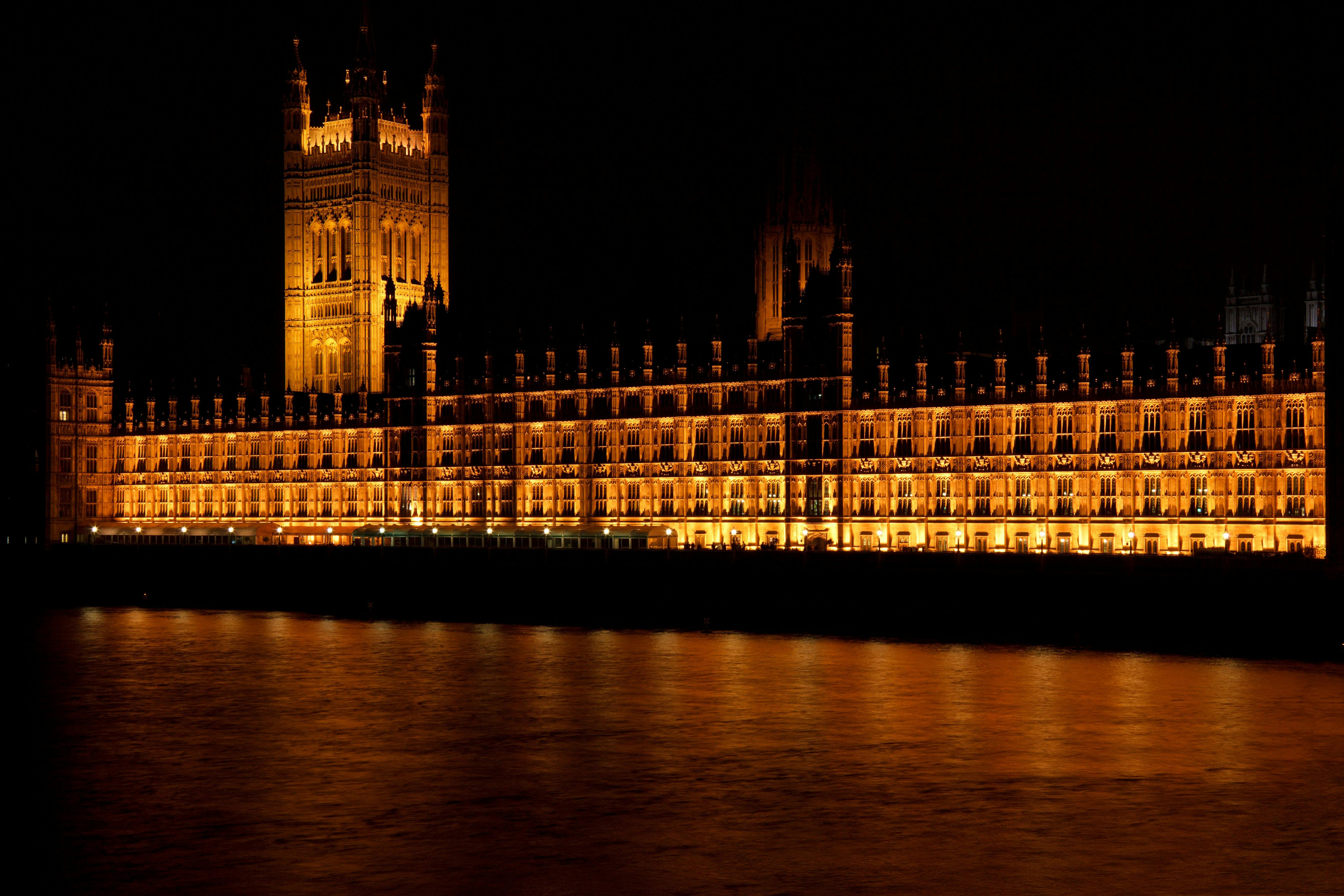
British government buildings and architecture in London
The $100 billion figure appears to be Davey's own estimate rather than any formal government calculation of tariff damage. No independent economic assessment has been cited to support the claim. What's more interesting here is not whether the number stands up to scrutiny, but what Davey's intervention reveals about the political space opening up to Labour's left on UK-US relations.
Enjoying this article?
Get stories like this in your inbox every week.
The legal reality versus the political signal
Sovereign nations cannot simply sue each other in domestic courts. The international legal architecture for trade disputes centres on the World Trade Organisation's dispute settlement mechanism, which has been severely weakened in recent years and lacks meaningful enforcement power. Even in cases where the WTO has ruled against member states, financial penalties of the scale Davey suggests are unprecedented.
The UK could theoretically file a WTO complaint regarding specific tariff measures deemed to violate trade rules. That process typically takes years, requires extensive documentation of harm, and results in authorisation to impose retaliatory tariffs rather than cash compensation. The idea of a $100 billion payout from Washington is, to put it mildly, fanciful.
Davey knows this. His legal background means he understands the mechanics of international trade law well enough to recognise that no such lawsuit will materialise.
The proposal is designed not as actionable policy but as a political marker: Labour's cautious diplomacy has failed, and someone needs to speak plainly about Trump's behaviour.
Starmer's shrinking middle ground
The Prime Minister has pursued what officials describe as a pragmatic approach since taking office. Avoid needless confrontation. Keep channels open. Work towards a bilateral trade agreement that could partially offset the economic cost of Brexit. This strategy has been undermined by two problems: Trump's unpredictability and the absence of visible results.
Business professionals in trade negotiation meeting
According to government sources, UK-US trade talks have continued at working level, but no breakthrough appears imminent. Trump has shown little inclination to offer Britain preferential treatment, despite the diplomatic capital Starmer has invested. The Prime Minister's calculated restraint, intended to preserve negotiating space, increasingly looks like acquiescence without reward.
Davey accused Starmer of having "achieved nothing in his trade negotiations" with Washington. The government has not publicly countered this characterisation with evidence of concrete progress. That silence is telling.
Canada offers an instructive contrast. Mark Carney, recently elected as Prime Minister, has adopted a more combative public stance towards US trade measures affecting Canadian exports. Davey cited this as the model Britain should follow, though the specific actions Canada has taken beyond rhetorical pushback remain unclear. What matters is the perception: other middle powers are pushing back whilst Britain seeks accommodation.
Political theatre with a purpose
Opposition parties exist partly to stake out positions the government cannot. Davey's lawsuit call serves that function whilst also addressing a genuine strategic question: if diplomatic appeasement yields no tangible trade benefits, what alternative posture makes sense?
The Lib Dems have historically positioned themselves as the most pro-European mainstream party in British politics. Davey used his Edinburgh speech to advocate for "a new EU-UK customs union" and closer economic ties with Commonwealth nations as alternatives to dependence on American goodwill. The anti-Trump rhetoric provides political cover for what is essentially an argument about post-Brexit trade strategy.
Davey branded the American president "the most dangerous, damaging US president of modern times" and warned against allowing "Trump's America to become Farage's Britain."
This positioning also allows the Liberal Democrats to draw contrast with Reform UK, whose leader Nigel Farage maintains close ties to Trump's circle. The framing is deliberate: a choice between European-aligned liberalism and American-style populism.
What the Supreme Court ruling changes
Friday's decision by the US Supreme Court creates new facts on the ground, though the specific tariffs struck down and their impact on UK exports remain unclear from the ruling itself. What matters is the precedent: Trump's tariff authority is not unlimited, and his administration can be constrained by domestic legal challenges.
International trade and shipping containers at port
That reality ought to inform British strategy. Rather than pursuing implausible lawsuits, the UK could coordinate with other affected trading partners on targeted WTO complaints against specific measures. European allies have experience mounting such challenges. The question is whether Starmer's government wants to be seen joining a coalition against American trade policy, or whether maintaining bilateral cordiality remains the priority.
The Supreme Court ruling also demonstrates that Trump faces meaningful domestic opposition to his trade agenda. That opposition comes from American businesses, import-dependent industries, and constitutional checks on executive power. Britain's leverage in this environment comes not from threats of legal action but from alignment with those domestic American interests that favour open trade.
Multi-award winning serial entrepreneur and founder/CEO of Venntro Media Group, the company behind White Label Dating. Founded his first agency while at university in 1997. Awards include Ernst & Young Entrepreneur of the Year (2013) and IoD Young Director of the Year (2014). Co-founder of Business Fortitude.