US Supreme Court struck down Trump's global tariffs in a 6-3 ruling, declaring his use of emergency powers unconstitutional
Trump immediately reimposed a 10% levy using Section 122 of the Trade Act, affecting UK exporters despite recent trade agreement
At least $130bn has been collected under the now-defunct legal authority, with refunds facing years of litigation
Section 122 permits tariffs for only 150 days, creating a late July deadline that virtually guarantees renewed brinkmanship
The champagne corks popped for approximately four hours. That's how long businesses had to celebrate the US Supreme Court striking down Donald Trump's sweeping global tariffs before the president unveiled a replacement 10% levy that leaves British exporters in precisely the same bind they faced before justices ruled against him. The whiplash was immediate and deliberate.
Minutes after a 6-3 Supreme Court majority declared his use of emergency powers unconstitutional, Trump signed fresh orders invoking Section 122 of the Trade Act—a legislative relic never before deployed—to reimpose duties on goods from nearly every trading partner. For UK businesses that spent months navigating Trump's tariff labyrinth, the court victory has proven entirely pyrrhic.
Legal documents and gavel representing Supreme Court ruling
What makes this particularly galling for British exporters is the timing. The UK recently concluded a trade agreement with Washington that reportedly required London to accept expanded US agricultural access and roll back digital services taxes. Those concessions remain in place whilst the promised tariff relief does not.
Enjoying this article?
Get stories like this in your inbox every week.
A White House official confirmed on Friday that countries with newly-minted trade deals, including Britain, will now face the 10% global rate whilst being expected to honour their commitments in full. The asymmetry could hardly be starker.
Britain delivered; Trump pocketed the wins and imposed tariffs anyway.
The Refund Mirage
Lawyers and state governors were quick to trumpet the Supreme Court's decision as a mandate for billions in refunds. Illinois Governor JB Pritzker dispatched an invoice to the White House demanding $9bn—roughly $1,700 per family in his state. California's Gavin Newsom crowed that Trump must "pay the piper" and return every dollar with interest.
The reality facing businesses is considerably bleaker. According to US government figures, Washington has already collected at least $130bn under the now-defunct legal authority. That sum represents enormous leverage for an administration openly hostile to refunding it.
Trump made his position unambiguous during Friday's White House remarks: expect protracted litigation. The Supreme Court majority opinion made no direct reference to the mechanics of reimbursement, punting that question back to the Court of International Trade. Justice Brett Kavanaugh, writing in dissent, called the situation a "mess"—an assessment few would dispute.
Business professionals reviewing financial documents and tariff implications
Diane Swonk, chief economist at KPMG US, warned that litigation costs alone could prove prohibitive for smaller firms. The calculus is brutal: spend perhaps tens of thousands pursuing a refund claim through years of court proceedings, or absorb the loss and move on. For many UK exporters, particularly mid-sized manufacturers, that's no choice at all.
Trump has effectively weaponised the judicial process itself, transforming an unconstitutional policy into a fait accompli for anyone lacking deep pockets and deeper patience.
A 150-Day Cliff Edge Approaches
The legal manoeuvre Trump selected comes with its own built-in crisis. Section 122 permits tariffs up to 15% for precisely 150 days, after which Congress must explicitly authorise their continuation. That puts the next cliff edge in late July—a tight timeline that virtually guarantees another round of brinkmanship.
Three scenarios present themselves. Congress could vote to extend the tariffs, though the legislative appetite for that remains unclear given the Supreme Court's forceful rejection of executive overreach. Trump could pivot yet again to alternative authorities, perhaps Section 232 or Section 301, which allow duties based on national security or unfair trade practices.
Or the administration could simply let the Section 122 tariffs lapse and immediately reimpose them under different justification—tariff whack-a-mole as governing strategy. The court left those provisions untouched, and Trump has wielded them before for sector-specific levies on steel, aluminium, and vehicles.
For British businesses, this perpetual uncertainty may prove more damaging than the tariffs themselves. Supply chains require predictability. Contracts get signed months in advance. Investment decisions hinge on stable cost structures.
Strategic Capitulation
The exemptions list in Trump's new proclamation offers cold comfort. Canada and Mexico retain broad carve-outs under the USMCA trade pact. Certain minerals, pharmaceuticals, electronics, and agricultural products receive unclear and potentially narrow exceptions.
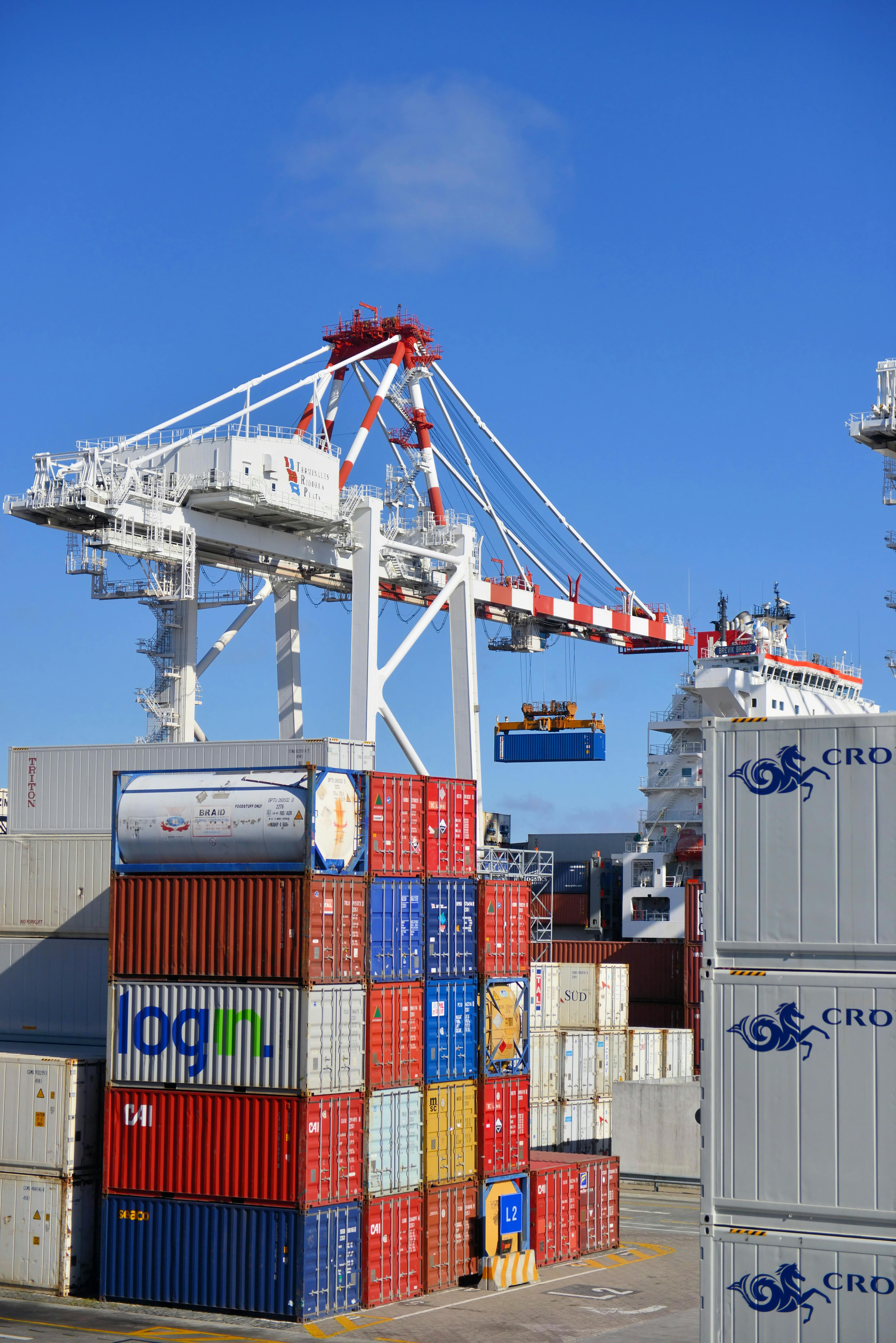
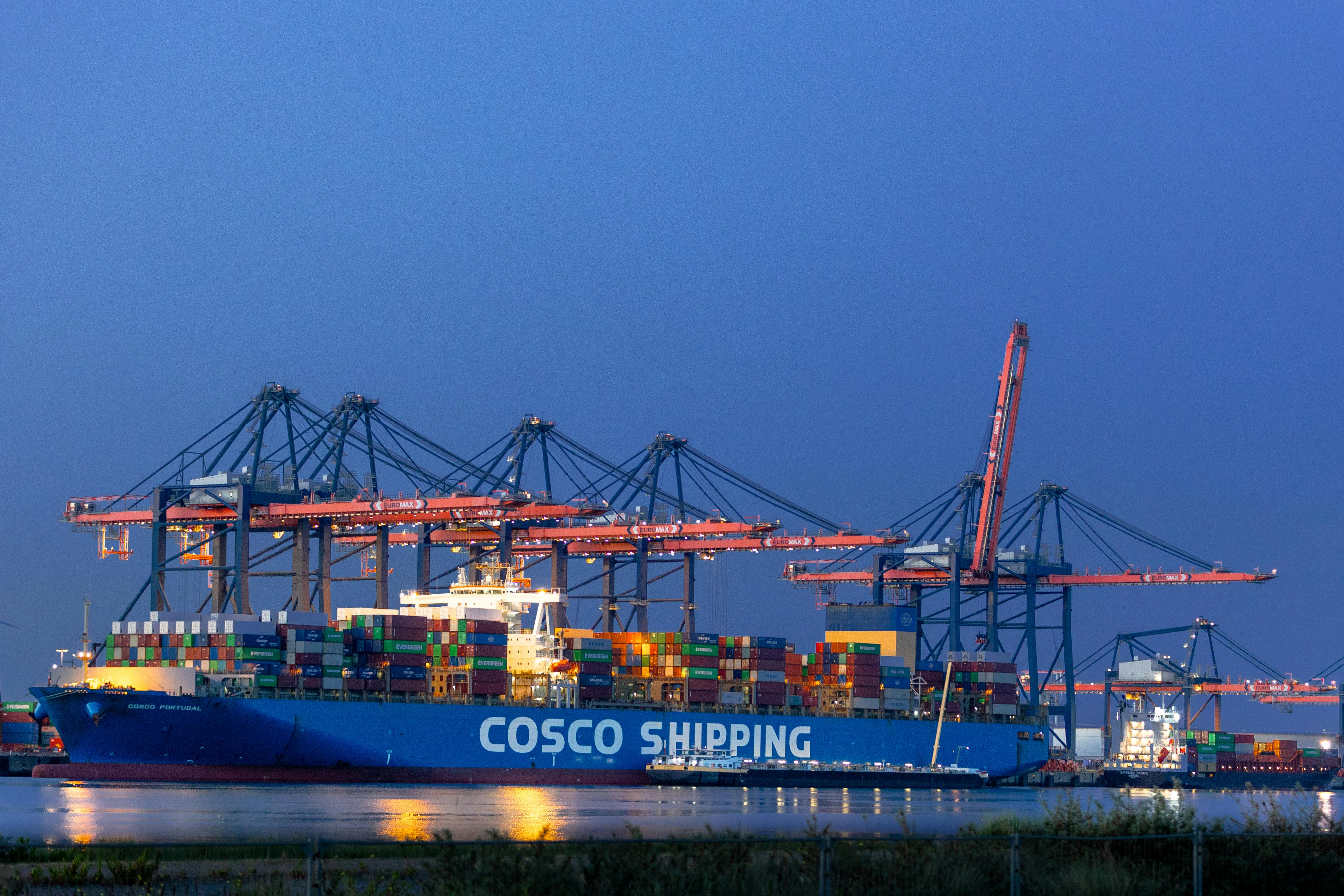

Global trade and shipping containers representing international commerce
The order's language is deliberately vague—"some agricultural products like oranges and beef"—leaving businesses to guess whether their specific goods qualify. Geoffrey Gertz, senior fellow at the Center for a New American Security, captured the moment precisely: "Things have only gotten more complicated and more messy today."
British firms now confront a choice between expensive outcomes. Pursue refunds through multi-year litigation with uncertain prospects, or accept the new 10% rate as the cost of accessing American consumers. Meanwhile, the concessions London granted to secure its trade deal remain fully enforceable.
The pattern suggests a deliberate strategy: exact maximum concessions during negotiations, then impose tariffs regardless using whichever legal authority hasn't yet been challenged. By the time courts catch up, billions have been collected and the next iteration is already in place. The message to future trading partners could hardly be clearer—deals with this White House aren't worth the paper they're printed on.
The Supreme Court ruling offers no immediate relief—UK exporters still face 10% tariffs whilst honouring all trade concessions made to secure the now-undermined agreement
Pursuing refunds on the $130bn collected means years of expensive litigation, putting the burden squarely on individual businesses rather than government
Watch late July closely: the 150-day Section 122 limit creates another crisis point where Trump must either secure Congressional approval or pivot to yet another legal justification for tariffs
Multi-award winning serial entrepreneur and founder/CEO of Venntro Media Group, the company behind White Label Dating. Founded his first agency while at university in 1997. Awards include Ernst & Young Entrepreneur of the Year (2013) and IoD Young Director of the Year (2014). Co-founder of Business Fortitude.