Trump raised proposed tariffs on UK goods from 10% to 15% via Truth Social after Supreme Court struck down previous tariff regime
US trade deficit reached approximately $1.2 trillion — a 2.1% increase and fresh record high despite tariff policy
At least $130bn (£96bn) in tariffs collected under now-unlawful emergency powers could be refunded to US importers
Section 122 emergency tariffs can only remain in place for approximately five months without Congressional approval
The WhatsApp messages started arriving at UK export departments early Saturday morning. Trump had posted again. This time, he was bumping his proposed replacement tariff from 10% to 15% — not through official channels, not through diplomatic communiqués, but via Truth Social, between attacks on Supreme Court justices he appointed himself.
For British businesses trying to ship goods to their largest single-country trading partner, the question isn't just about percentage points. It's about whether the commercial rulebook even exists anymore.
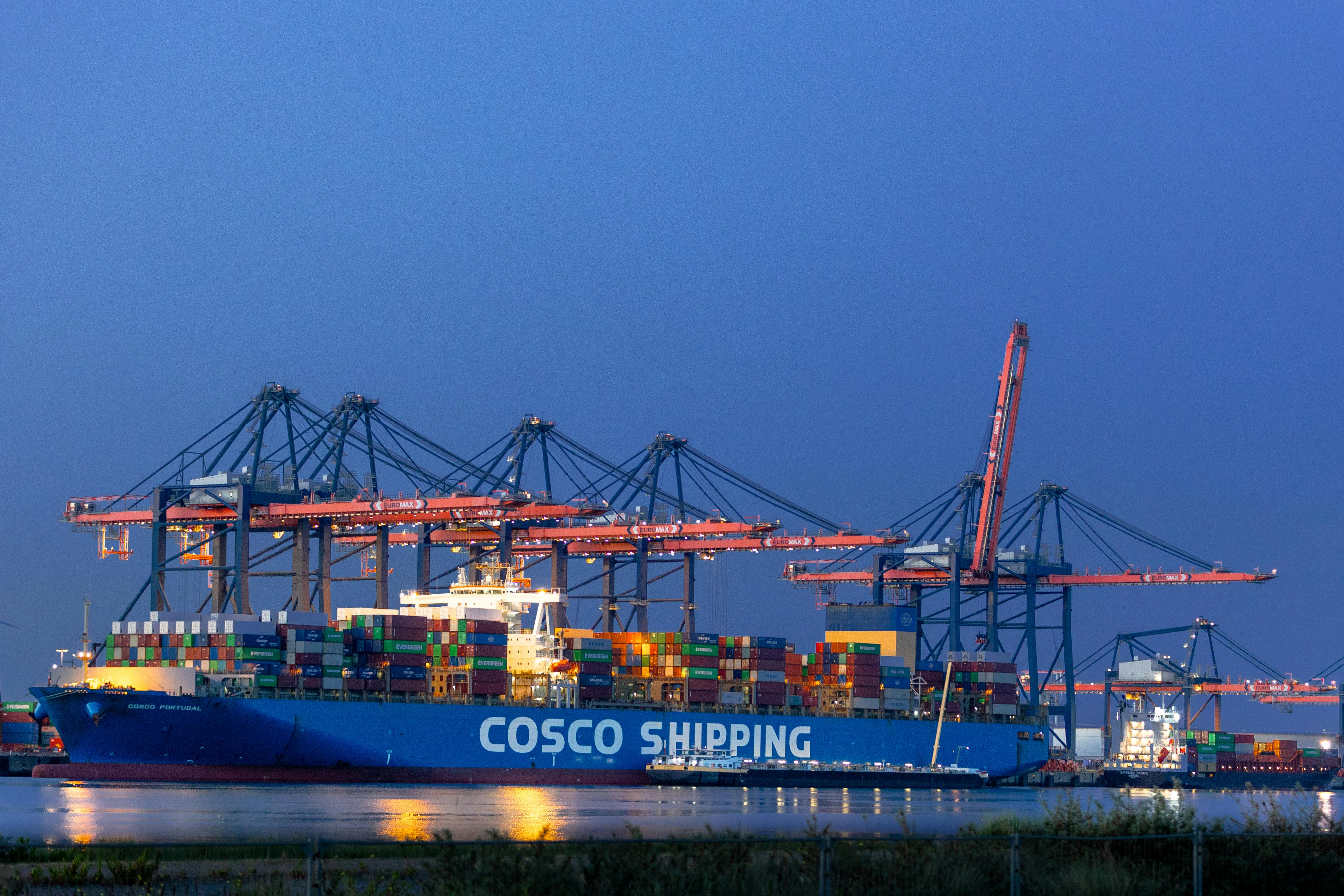
International trade and shipping containers
From Supreme Court Rebuke to Social Media Response
The latest upheaval follows Friday's Supreme Court ruling that struck down Trump's previous tariff regime as an illegal overreach of presidential power. In a 6-3 decision, justices found the president had exceeded his authority when imposing sweeping global tariffs under the 1977 International Emergency Economic Powers Act. Rather than accept the rebuke, Trump announced he would simply switch to a different legal mechanism — Section 122 of the 1974 Trade Act, a provision never previously used — and raise the rate by 50% for good measure.
Enjoying this article?
Get stories like this in your inbox every week.
Here's where it gets thorny for British exporters. The UK government had recently negotiated what it believed were sector-specific carve-outs covering steel, aluminium, pharmaceuticals, autos, and aerospace. Whitehall officials say these agreements represent the bulk of UK-US trade.
According to a White House official speaking on Friday, countries with previously negotiated deals would now face the global Section 122 tariff rather than their agreed rates. Yet the same official suggested sectoral agreements remain intact. The UK government has taken refuge in carefully worded optimism, stating it expects Britain's "privileged trading position" to continue whilst acknowledging it's ultimately "a matter for the US to determine" whether those deals still stand.
William Bain, head of trade policy at the British Chambers of Commerce, put it bluntly: he fears Trump's response to the Supreme Court ruling "could be worse for British businesses" than the regime it replaced.
Planning for the Unplannable
What's particularly maddening for UK exporters isn't just the tariff rate itself. It's the impossibility of planning when the commercial framework shifts with each presidential social media post. Finance directors can model a 15% tariff. They cannot model a system where negotiated agreements might hold, might not, or might be superseded by emergency declarations announced on weekends.
Business professional reviewing trade documents
The irony here is hard to miss. Section 122 allows these emergency tariffs to remain in place for approximately five months before requiring Congressional approval. Trump has essentially swapped a tariff regime the courts deemed unlawful for one that's explicitly temporary — creating maximum disruption whilst guaranteeing no medium-term certainty whatsoever.
For British manufacturers with US supply chains, this timeline is commercially useless. Five months barely covers the lead time for retooling production, renegotiating contracts, or securing alternative markets. The result is a holding pattern where businesses absorb the costs and uncertainty whilst waiting to see whether Congress extends the measures, whether Trump finds another legal mechanism, or whether the whole edifice collapses again.
Record Deficits Amid Tariff Theatre
Meanwhile, Trump continues to insist that tariffs encourage domestic production and reduce America's trade deficit. Yet figures released this week show the US trade deficit reached approximately $1.2 trillion — a 2.1% increase on 2024 and a fresh record high. The gap between imports and exports has widened precisely whilst tariffs were supposedly narrowing it.
Allie Renison, director at SEC Newgate and former UK government trade adviser, captured the broader chaos: "While it may seem like a good day for free trade, I think trade actually just got a lot messier."
She's right. The Supreme Court ruling hasn't restored order. It's created what she describes as a "much more of a patchwork approach" — a Byzantine system where most goods face 15% under Section 122, critical minerals and pharmaceuticals get exemptions, steel and aluminium tariffs imposed under separate legislation remain untouched, and individual countries may or may not retain their negotiated deals depending on which White House official you ask.
Financial analysis and economic data
The £100bn Refund Question
Buried in Friday's ruling is a detail with potentially explosive consequences. The Supreme Court's decision that the previous tariffs were unlawful opens the door for US importers to claim refunds on duties already paid. According to the most recent government data, the US has collected at least $130bn (roughly £96bn) using the now-struck-down emergency powers legislation.
Trump claimed on Friday that any refunds would face years of legal battles. Legal experts and business groups aren't so certain. The National Retail Federation, representing millions of American businesses, has already urged courts to "ensure a seamless process to refund the tariffs to US importers". Neil Bradley, chief policy officer at the US Chamber of Commerce, noted that swift refunds "will be meaningful for the more than 200,000 small business importers in this country".
If those refunds materialise quickly, American companies importing from Britain could see substantial injections at precisely the moment UK exporters face fresh tariff uncertainty. It would be a perverse outcome: British businesses absorbing costs and confusion whilst their US customers receive Treasury cheques for previous duties.
What happens next depends on variables that change by the hour. Whether the 15% rate takes effect on Tuesday as originally scheduled for the 10% tariff. Whether Congress agrees to extend Section 122 measures beyond five months. Whether the sectoral deals the UK negotiated survive contact with Trump's next social media outburst.
For British exporters, the only certainty is that there isn't any. And that's rather the point — when commercial rules become instruments of presidential pique, businesses stop planning and start hedging. UK companies shipping to America aren't just facing higher costs. They're facing the corrosive realisation that negotiated agreements mean nothing when the other party governs by weekend tweet.
British exporters face an unprecedented planning crisis where negotiated trade agreements can be superseded by presidential social media posts, making medium-term commercial strategy impossible
Watch whether Congress extends Section 122 measures beyond five months and whether US courts expedite the £96bn in potential tariff refunds to American importers
The real damage isn't the tariff percentage itself but the collapse of rule-based trade frameworks — when agreements
Multi-award winning serial entrepreneur and founder/CEO of Venntro Media Group, the company behind White Label Dating. Founded his first agency while at university in 1997. Awards include Ernst & Young Entrepreneur of the Year (2013) and IoD Young Director of the Year (2014). Co-founder of Business Fortitude.