Supreme Court ruling cuts average US tariff rate from 15% to 6%, but sectoral tariffs on steel, pharmaceuticals, and automotive products remain in force
US tariff revenues reached $240bn in 2024 before plateauing, undermining White House promises of "tariff dividend cheques" to American households
Average US tariff rates have tripled from roughly 2% pre-2025 to 6% even after the court ruling, representing a structural shift in American trade policy
Asian manufacturers in Vietnam and Thailand captured significant market share as US importers diversified away from heavily-tariffed Chinese suppliers
The Supreme Court has delivered what looks like a body blow to Donald Trump's tariff regime. In practice, it may have just made life considerably more complicated for British exporters and importers hoping for a return to predictability. What comes next could prove far messier than what came before.
Tuesday's ruling invalidates the president's use of emergency powers to impose reciprocal tariffs on individual countries. That theoretically cuts the average US tariff rate from roughly 15% to around 6%. But anyone running the numbers on their American supply chains shouldn't relax just yet.
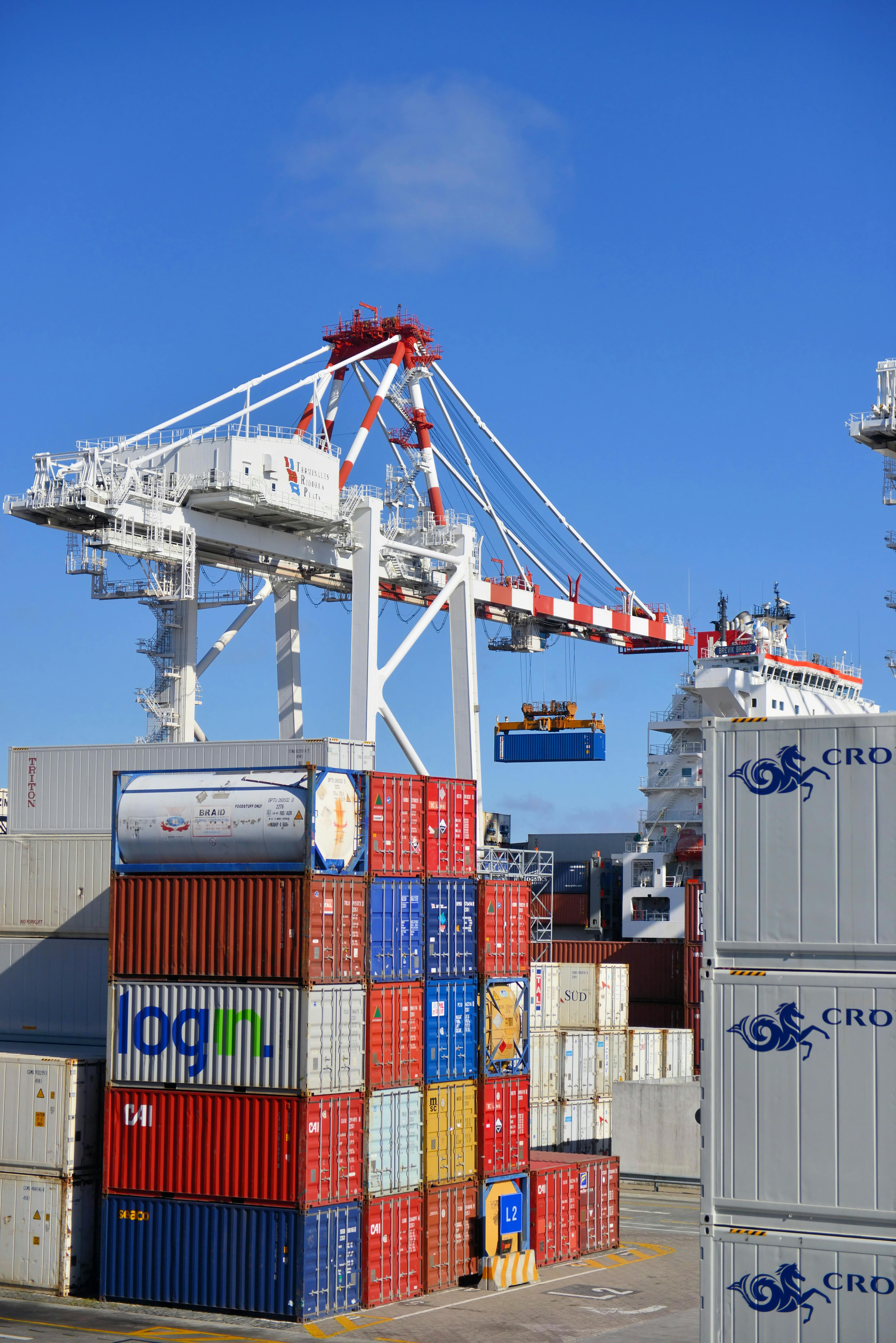

International shipping containers stacked at commercial port
The court decision leaves Trump's core trade architecture largely untouched. Sectoral tariffs on steel, pharmaceuticals, and automotive products remain in force under different legal authorities. For British businesses operating under the recent UK-US deal, most of those levies still apply.
For businesses trying to plan six or twelve months ahead, the replacement framework spells paralysis.
The opportunist's window
Between the current ruling and whatever replacement framework emerges, there's a narrow window where tariff rates sit materially lower than they've been since early 2025. Importers with the cash flow and warehouse capacity to front-load shipments could capture significant savings. That opportunity carries considerable risk.
Alternative legal mechanisms Trump might deploy could hit different product categories or countries with different rates. The White House has already demonstrated willingness to shift tariff structures rapidly in response to diplomatic negotiations or domestic political pressure. Plans for higher furniture tariffs were shelved recently, whilst levies on certain food imports have been reconsidered.
The arithmetic behind these potential concessions is straightforward. According to official figures, tariff revenues hit $240bn in 2024 before plateauing. The administration had floated the idea of "tariff dividend cheques" to American households.
As revenue growth stalls, that promise looks increasingly hollow. Cost-of-living considerations may force a more selective approach to which products bear the highest duties. British importers face a different calculation than their American counterparts.
Business executives reviewing trade documents and financial reports
Smaller UK businesses lack the purchasing power and supply chain flexibility that allowed major US importers to pivot quickly when tariffs first landed. Data from last year shows importers absorbed significant costs internally or along their supply chains, which is why American inflation remained relatively contained despite the tariff surge. That cushioning capacity isn't evenly distributed.
British businesses are making their own adjustments. UK-EU trade flows have strengthened noticeably over recent quarters, a trend that predates this ruling but which the continued US uncertainty will likely amplify. When your largest Anglophone trading partner proves this volatile regardless of formal agreements, the case for deepening European ties becomes harder to ignore.
Average US tariff rates tripled from roughly 2% to 6% even after stripping out the now-invalidated emergency powers tariffs. That's not a temporary shock to be weathered—it represents a structural change in how America engages with global commerce.
What remains uncertain is how existing carve-outs will evolve. Countries like Japan negotiated investment commitments in exchange for tariff relief under the emergency powers framework. Do those agreements still hold? Will the administration honour them through alternative legal structures?
Global trade routes and logistics network visualization
The ruling hasn't restored stability. It's replaced one form of volatility with another potentially more chaotic variety. British businesses that spent the past year adapting to Trump's trade architecture must now prepare for its evolution through murkier, less predictable legal channels.
The companies that navigate this successfully will be those treating the current lower tariff environment as a brief anomaly rather than a new equilibrium, whilst positioning for whatever framework emerges from the administration's response. The lesson isn't that Trump's trade war is ending. It's that uncertainty itself has become the dominant feature of US commercial policy.
Treat the current reduced tariff window as a temporary anomaly, not a new baseline—the administration will likely deploy alternative legal mechanisms that could create even greater complexity
Accelerate supply chain diversification strategies beyond the US market, particularly strengthening UK-EU trade relationships as American commercial policy volatility becomes structural rather than cyclical
Watch how the White House handles existing bilateral carve-outs negotiated under emergency powers—this will signal whether diplomatic agreements hold value or whether pure leverage determines tariff exposure going forward
Multi-award winning serial entrepreneur and founder/CEO of Venntro Media Group, the company behind White Label Dating. Founded his first agency while at university in 1997. Awards include Ernst & Young Entrepreneur of the Year (2013) and IoD Young Director of the Year (2014). Co-founder of Business Fortitude.