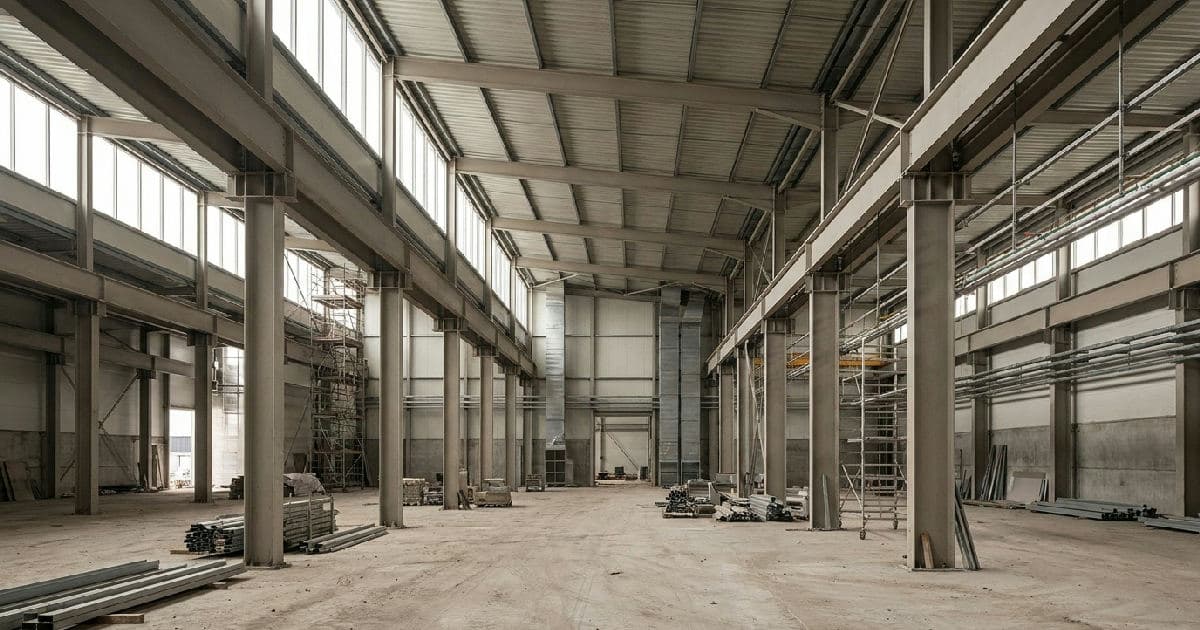
The Somerset site represents the UK's primary bet on domestic battery cell production for its automotive sector. With no operational gigafactory at scale anywhere in the country, the contractor dispute raises uncomfortable questions about cost governance on publicly subsidised mega-projects and the resilience of JLR's electrification strategy.
What went wrong at Bridgwater
The Bridgwater gigafactory, backed by £5.2bn in combined government and Tata investment, was designed to supply battery cells for JLR's new generation of electric vehicles. Both Agratas and JLR sit under the umbrella of Tata Sons, the Indian industrial conglomerate, making the project a vertically integrated play intended to de-risk battery supply for the British carmaker.
According to the Guardian's reporting on 20 June 2026, Agratas sacked its main building contractor after a budget mismatch emerged on the project. The precise scale of the cost overrun has not been disclosed publicly, nor has the identity of the dismissed contractor been confirmed in reporting to date. What is clear is that the gap between the contractor's projected costs and Agratas's budget envelope was large enough to make the relationship unworkable.
For a project of this magnitude, changing the principal contractor mid-build is not a routine procurement adjustment. It introduces re-tendering timelines, potential redesign of work packages, and the inevitable friction of onboarding a new main contractor to a partially completed site. Each of those steps carries its own cost and schedule risk.
The fact that this is, in effect, an intra-group governance failure makes the situation more striking. Tata's rationale for building its own gigafactory, rather than relying on third-party cell suppliers, was precisely to maintain control over cost, quality, and timing. A budget mismatch severe enough to warrant sacking the contractor suggests that control was not as tight as the corporate structure implied.
JLR's electric timeline and supply alternatives
JLR is planning to rely on the Agratas factory to supply batteries for its new electric models, according to the Guardian. The carmaker has staked significant strategic weight on the Bridgwater facility as a cornerstone of its electrification programme.
If the gigafactory slips materially, JLR faces a narrow set of contingency options. The most immediate would be sourcing cells from established Asian manufacturers, primarily in South Korea, Japan, or China. Companies such as Samsung SDI, LG Energy Solution, and CATL all operate at the scale required, but securing supply on short notice is neither cheap nor straightforward. Battery cell contracts are typically negotiated years in advance, and capacity at leading suppliers is heavily allocated.
There is also the question of tariffs and rules of origin. Under the UK-EU Trade and Cooperation Agreement, battery cells used in vehicles exported to the EU must meet increasingly strict local content thresholds. Sourcing cells from Asia rather than a UK gigafactory could expose JLR to tariff liabilities on EU-bound vehicles, eroding margins on models where profitability is already under pressure from the high cost of electrification.
A further option would be to draw on Tata's other battery investments. Agratas has been exploring sites in continental Europe, and Tata has broader industrial operations that could, in theory, provide interim supply. But none of those alternatives replicates the logistical advantage of a factory in Somerset supplying a carmaker with major assembly operations in the West Midlands.
Scale of the delay
Neither Agratas nor JLR has publicly quantified the expected delay. Construction projects of this complexity, once disrupted by a contractor change, rarely recover their original schedule without significant additional expenditure. Industry observers will be watching for any revised commissioning date, which would signal how far the timeline has shifted.
The subsidy question: accountability on public-backed projects
The £5.2bn backing for the Bridgwater gigafactory includes substantial public money, the structure of which was detailed in earlier Guardian reporting on 5 May 2026. When government funds underwrite industrial projects at this scale, the expectation is that rigorous cost discipline and milestone-based release of funds protect the taxpayer's interest.
The contractor dismissal raises pointed questions. Was the budget mismatch a failure of initial scoping, where the project's cost estimates proved unrealistic once construction began? Or did the contractor's costs escalate beyond the original tender, reflecting inflationary pressures in construction materials and labour? The answer matters because it determines where accountability sits.
If the original budget was set too low, that points to a governance gap at the project sponsor level, within Agratas and by extension Tata. If the contractor's costs ballooned, the question shifts to whether the procurement process was robust enough to lock in pricing and allocate risk appropriately.
Either way, the episode is a case study in the execution risk inherent in mega-projects. The UK government's industrial strategy depends on a small number of very large bets, gigafactories, semiconductor fabs, green hydrogen plants, each carrying concentrated risk. When one of those bets encounters trouble, the fallout extends well beyond the project boundary.
Parliamentary scrutiny of the subsidy terms and any milestone conditions attached to public funding is likely to intensify. Businesses tendering for large government-backed industrial builds should note the pattern: budget misalignment between principal and contractor can escalate rapidly from a commercial dispute into a political liability.
What this means for UK gigafactory ambitions
The UK currently has no operational gigafactory producing battery cells at automotive scale. Britishvolt, which had planned a facility in Blyth, Northumberland, collapsed into administration in 2024, leaving the Agratas project as the country's flagship domestic cell production initiative.
That concentration of ambition in a single project was always a vulnerability. The contractor dispute at Bridgwater has now made it visible. If the UK's sole gigafactory project slips by a year or more, the gap between domestic cell production capacity and the automotive industry's demand curve widens further.
Other European nations have moved faster. Sweden's Northvolt began production at its Skellefteå plant, and multiple gigafactory projects are under construction or in advanced planning across Germany, France, Hungary, and Poland. The UK risks falling further behind in the race to build a domestic battery supply chain, a strategic priority that successive governments have endorsed but that has proved difficult to execute.
For UK automotive suppliers and manufacturers beyond JLR, the Bridgwater disruption is a signal. Businesses that had factored domestic cell availability into their own electrification plans may need to revisit assumptions. Those in the Tata supply chain specifically should be assessing second-source options.
The broader lesson is sobering. Vertical integration, government subsidy, and strategic intent are necessary but not sufficient conditions for delivering complex industrial infrastructure on time and on budget. Execution discipline, from initial cost estimation through contractor selection to ongoing project governance, remains the binding constraint. At Bridgwater, that constraint has bitten.