Britain's Cashless Shift: A Convenience Revolution with a Poverty Premium
- 14% of small UK businesses stopped accepting cash in the past 12 months alone
- Half of cash-accepting businesses now spend over £50 monthly just to deposit takings, with 15% paying over £200
- Cash still accounts for roughly half of all in-store purchases across Britain
- One-fifth of businesses cite fraud concerns as their reason for going cashless, whilst another fifth point to security fears around theft and violence
Cash-accepting businesses are becoming an endangered species on Britain's high streets, and the economics of their decline threatens to punish the very customers who can least afford it. Research from Link, the UK's principal ATM network, reveals that 14% of small businesses have abandoned cash payments in just the past 12 months, a pace of change that could leave millions of shoppers stranded in a two-tier economy where choosing notes and coins means paying more.
The figures expose an uncomfortable irony at the heart of Britain's digital payments revolution. Whilst cashless retailers trim their operational costs by shedding the expense of banking deposits and security risks, those still handling physical currency face mounting charges that many will inevitably pass on to customers. Half of cash-accepting businesses surveyed by Link now spend over £50 monthly just to deposit takings, with 15% paying upwards of £200.
These aren't trivial sums for independent traders operating on thin margins. The result is a poverty premium dressed up as technological progress. Customers who rely on cash for budgeting—disproportionately benefit recipients, elderly pensioners, and those without bank accounts—find themselves corralled into a shrinking pool of retailers who must charge more to cover the costs their cashless competitors have eliminated.
Enjoying this article?
Get stories like this in your inbox every week.
The security question
Business owners cite multiple rationales for going cashless, according to Link's survey. Roughly a fifth point to fraud concerns, including counterfeit notes. Another fifth highlight security anxieties around theft, shoplifting, and violence against staff. Nearly as many report simply that customer demand has evaporated.
These aren't irrational fears, but the scale of actual counterfeit currency in circulation raises questions about whether perception has outpaced reality. For many retailers, card-only policies represent a convenient solution to an expensive problem: the collapse of accessible banking infrastructure. Bank branch closures have left traders with limited options for depositing cash, often requiring costly trips or reliance on Post Office counters with restricted hours.
The businesses abandoning cash are solving their own operational headaches whilst externalising the consequences onto the most financially precarious consumers.

The scale of exclusion
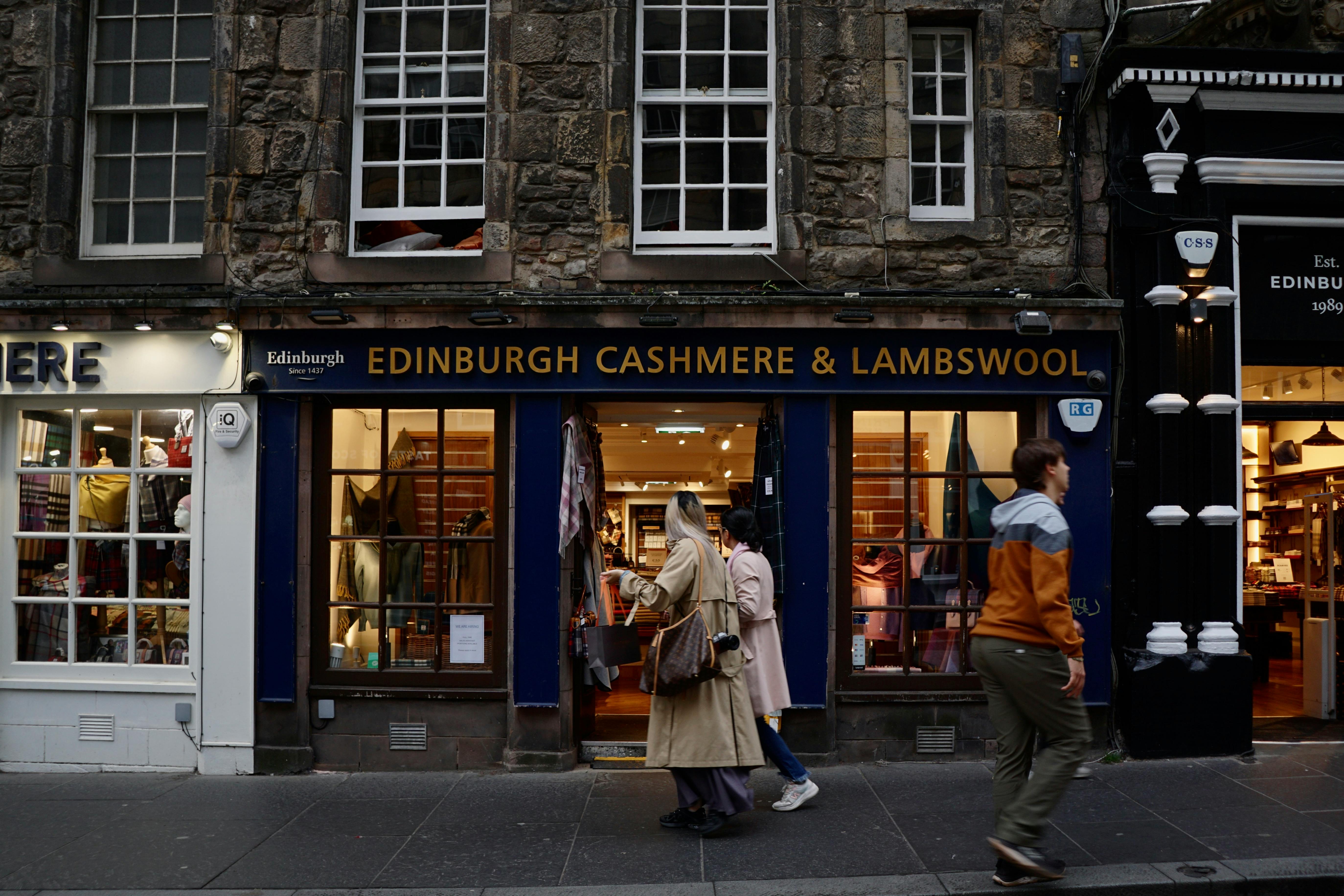
Despite the cashless acceleration, physical currency remains far from obsolete. Cash still accounts for roughly half of all in-store purchases in Britain, a figure that underscores the chasm between metropolitan payment habits and the reality in communities like Hastings, the East Sussex coastal town where Link conducted field research. There, fish and chip shops operate cash-only whilst cake boutiques demand cards, forcing shoppers to navigate an inconsistent patchwork based on each proprietor's preference.
The human impact is clearest among those living on fixed incomes. Benefit recipients, in particular, often use cash as a budgeting tool—withdrawing a set amount at the start of a payment period makes overspending impossible in a way that contactless tapping does not. Forcing these customers into card payments isn't just inconvenient; it undermines a practical money management strategy and funnels them toward retailers whose cost structures are increasingly uncompetitive.
Last year, the Treasury Committee warned about precisely this trajectory, flagging the absence of comprehensive data on cash acceptance and suggesting the government might need to mandate cash payment options for essential services. Some countries have already moved in that direction, implementing limited requirements that certain categories of retailer must accommodate physical currency.
What comes next
Britain currently allows shops and services to accept whatever payment methods they choose, a laissez-faire approach that assumes market forces will deliver optimal outcomes. The Link research suggests otherwise. When 14% of small businesses can abandon cash in a single year without regulatory friction, the pace of change may outstrip vulnerable populations' ability to adapt.
Without systematic monitoring, the point at which a critical mass of retailers has gone cashless could arrive before any intervention becomes feasible.

The lack of robust government data on cash acceptance—a gap the Treasury Committee specifically criticised—means policymakers are flying blind. Link's survey offers valuable insight, but it's precisely that: a survey of small businesses, not comprehensive official statistics. Without systematic monitoring, the point at which a critical mass of retailers has gone cashless could arrive before any intervention becomes feasible.
Financial inclusion advocates will push for mandatory acceptance rules, whilst business groups will resist additional compliance burdens. The tension between these positions isn't easily resolved, but doing nothing guarantees that Britain's shift toward digital payments will continue to redistribute costs downward to those with the least capacity to absorb them. The convenience revolution, left to its own devices, is building a poverty premium into the price of a loaf of bread.
- The rapid cashless transition is creating a two-tier retail economy where vulnerable customers who rely on physical currency face higher prices at the shrinking number of retailers who accept it
- Without government intervention through mandatory acceptance rules or systematic data collection, market forces alone will continue shifting payment costs onto those least able to afford them
- Watch for regulatory tension between financial inclusion advocates pushing for cash acceptance mandates and business groups resisting compliance burdens—the outcome will determine whether Britain's payment revolution exacerbates or mitigates economic inequality

Co-Founder
Multi-award winning serial entrepreneur and founder/CEO of Venntro Media Group, the company behind White Label Dating. Founded his first agency while at university in 1997. Awards include Ernst & Young Entrepreneur of the Year (2013) and IoD Young Director of the Year (2014). Co-founder of Business Fortitude.
Comments
💬 What are your thoughts on this story? Join the conversation below.
to join the conversation.