Spain's Migrant Regularisation: A Necessary Gamble or Political Misstep?
- Spain will regularise up to 500,000 undocumented workers starting April 2025 through a government decree bypassing parliament
- Foreign workers have accounted for half of Spain's economic expansion since 2022, with 14.1% of the country's 22 million workers now foreign-born
- A 2024 central bank report projects Spain will require approximately 25 million migrants over three decades to sustain its economy and social security system
- Spain's unemployment rate has dropped to an 18-year low whilst the economy expanded by nearly 3% last year, matching the combined growth of the UK, Germany, France and Italy
Pedro Sánchez's government is about to formalise the status of up to 500,000 undocumented workers, a move that sounds either admirably pragmatic or politically reckless depending on which side of Spain's polarised debate you occupy. Starting in April, foreign nationals who've been in the country for at least five months without a criminal record can apply for renewable one-year residency visas. The timing is striking: whilst France deploys naval vessels and Germany rewrites its immigration rulebook, Spain is opening the door wider.
The calculation is straightforward enough. Spain's unemployment rate has dropped to an 18-year low. The economy expanded by nearly 3% last year—matching the combined growth of the UK, Germany, France and Italy.
Foreign workers have accounted for half of that expansion since 2022, according to Elma Saiz, the minister for inclusion, social security and migration. Of Spain's 22 million registered workers, 14.1% are foreign-born. Strip them out and the maths simply doesn't work.
Enjoying this article?
Get stories like this in your inbox every week.

What makes this more than a feel-good story about regularisation is the scale of Spain's demographic challenge. A 2024 central bank report found the country will require approximately 25 million migrants over three decades to sustain its economy and social security system. That projection assumes no fundamental shift in Spain's economic model, but the direction of travel is clear: without sustained immigration, the country faces a slow-motion crisis of shrinking tax revenues and ballooning pension obligations.
The shadow workforce emerges
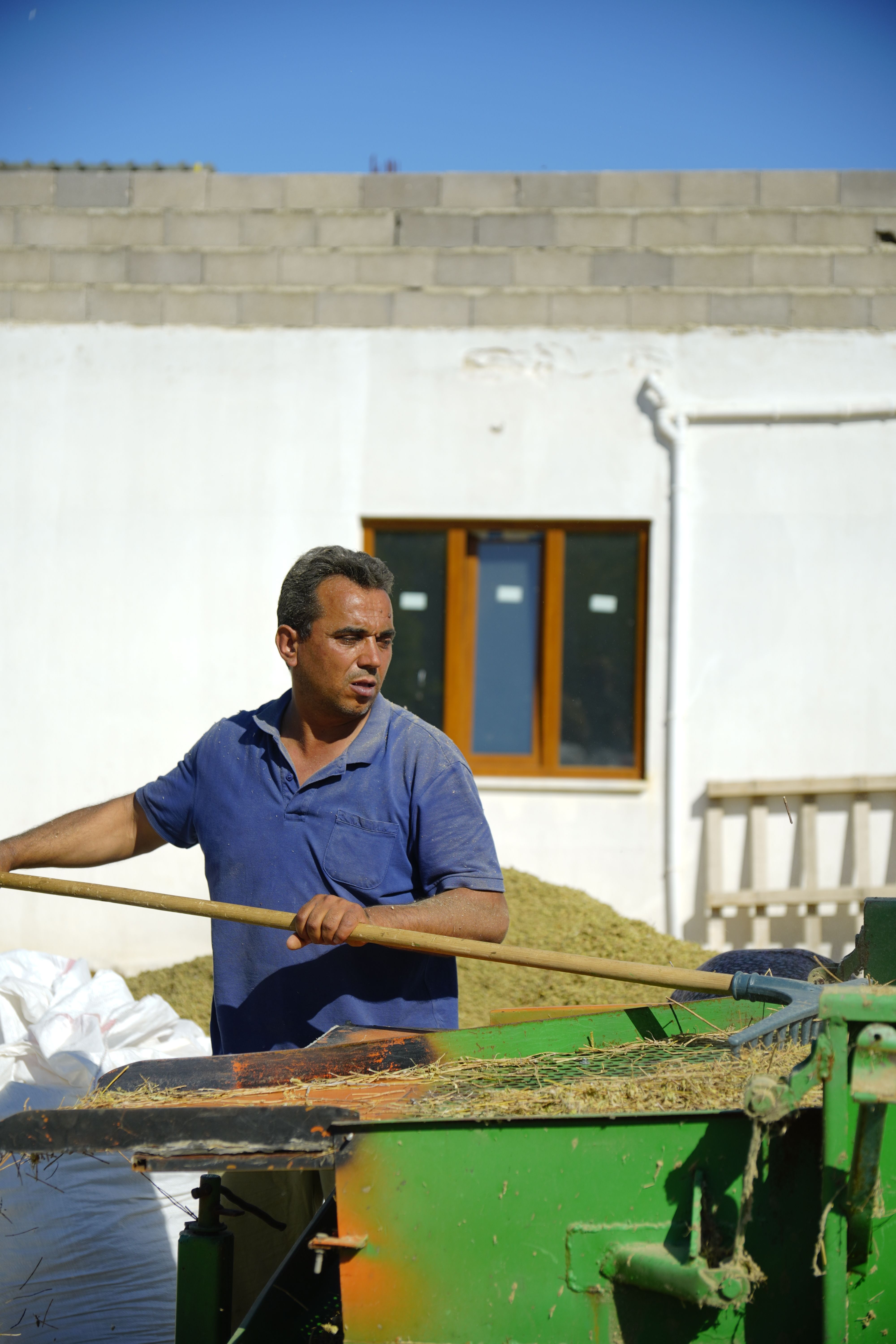
Agriculture tells the story most clearly. More than 250,000 foreign workers are formally registered in the sector, with thousands more operating without papers. Francisco José García Navarrete, representing the ASAJA farmers' association in Madrid, is blunt about the implications: "If we didn't have immigrant workers it would be a problem for us."
His organisation backs the scheme, though with reservations about implementation details—specifically whether regularisation will translate into stable, long-term contracts rather than precarious seasonal arrangements.
The government's initiative effectively acknowledges what employers have known for years: the shadow economy isn't a temporary aberration but a structural feature requiring formalisation.
Elderly care and hospitality depend equally on migrant labour, both documented and otherwise. These aren't peripheral sectors awaiting automation. Spain's ageing population means demand for care workers will only intensify, whilst tourism remains a cornerstone of economic activity.
What's interesting here is the coalition government's willingness to bypass parliament entirely, introducing the measure by decree. That's provoked criticism even from the CEOE, Spain's main business lobby, which otherwise supports "orderly" immigration. The decision suggests Sánchez recognises the political toxicity of a parliamentary debate that would hand the far-right Vox party a platform to amplify concerns about healthcare capacity, housing shortages, and security threats.
Political cost in a hardening Europe
Alberto Núñez Feijóo, leader of the conservative People's Party, has dismissed the scheme as evidence Spain lacks any coherent immigration policy. His party legalised more than 500,000 migrants between 2000 and 2001, and the Socialists formalised another 577,000 in 2005, but Feijóo argues the current political climate is fundamentally different. Vox leader Santiago Abascal claims the programme will create a "pull effect", drawing millions more migrants and overwhelming public services.
The government insists the clear timeframe—applications run from April through June—eliminates any perception of an open-ended invitation. But that argument requires considerable faith in how messaging travels across continents and through migrant networks.
A leaked report from Spain's National Centre for Immigration and Borders suggests between 750,000 and 1.1 million people may qualify, substantially higher than official estimates of 500,000. The gap between those figures hints at how little visibility authorities have into their own undocumented population.
Magnus Brunner, the European Commissioner for Internal Affairs and Migration, told the European Parliament that "obtaining a residence permit in the European Union is not a blank cheque".
Spain's divergence from the European mainstream creates genuine friction with Brussels. The concern is transparent: once regularised in Spain, migrants could theoretically relocate to other member states using freedom of movement provisions. Whether that's legally straightforward or practically feasible is beside the point. The perception alone is enough to set Spain on a collision course with governments in Paris, Berlin, and Rome.
The demographic arithmetic
Behind the political theatre lies an economic reality that other European nations will eventually confront. Spain's experience offers an early test case: can formalising a shadow workforce address labour shortages and demographic decline whilst containing political backlash? The central bank's projection of 25 million migrants over 30 years suggests this half-million regularisation is merely the opening move in a much longer game.

For individuals like Diana, a 40-year-old Peruvian who's spent two years doing occasional jobs without papers, the scheme represents access to banking, housing, and formal employment contracts. For Manuel, another Peruvian living off savings after an asylum rejection cost him his care work position, it means rejoining the labour market and contributing to social security.
Their stories reflect the experiences of undocumented foreign workers who view the policy as transformative for their daily lives and future prospects.
The polarised debate will intensify as April approaches, but the underlying question extends far beyond Spanish politics: whether Western economies can reconcile their need for labour with their voters' resistance to immigration. Spain is betting it can square that circle through selective regularisation and economic necessity. The rest of Europe is watching closely, if only to learn which mistakes to avoid when their own demographic arithmetic becomes unavoidable.
- Spain's regularisation programme represents a fundamental test case for whether Western democracies can address labour shortages through immigration whilst managing political opposition from nationalist parties
- The gap between official estimates (500,000) and leaked projections (750,000-1.1 million eligible migrants) reveals how little governments understand their own undocumented populations, complicating implementation and public messaging
- Watch for tensions between Spain and Brussels as other EU member states fear regularised migrants will use freedom of movement to relocate, potentially forcing a continent-wide reckoning with demographic decline and labour needs

Co-Founder
Multi-award winning serial entrepreneur and founder/CEO of Venntro Media Group, the company behind White Label Dating. Founded his first agency while at university in 1997. Awards include Ernst & Young Entrepreneur of the Year (2013) and IoD Young Director of the Year (2014). Co-founder of Business Fortitude.
Comments
💬 What are your thoughts on this story? Join the conversation below.
to join the conversation.