117 people visited Daventry Community Larder on a record Wednesday, up over 30% from the usual 80-90 weekly visitors
68% of people in poverty in the UK live in working households, according to Joseph Rowntree Foundation research from 2023
Community larder members pay £10 annually plus £5-10 per weekly shop, with no referral required
Real wages adjusted for inflation remain below 2008 levels for many sectors whilst housing, energy and food costs have climbed steadily
The Wednesday queue at Southbrook Community Centre in Daventry tells a story that employment statistics don't capture. Among the 117 people who turned up on a recent day were business owners, full-time workers, and families where both parents hold jobs. They weren't there for a community event—they were there to buy £10 worth of groceries because their wages no longer stretch to cover the weekly shop.
Jo Haywood, who runs the Daventry Community Larder, has watched the composition of her customer base shift dramatically. What began as a service primarily for benefit recipients and vulnerable residents has become something else entirely: a barometer for measuring how deep in-work poverty has cut into Britain's supposed middle class.
The larder model: neither food bank nor supermarket
Community larders operate in a different space from traditional food banks, and the distinction matters. Members pay £10 annually, then either £5 or £10 for each weekly shop, selecting from available stock rather than receiving predetermined parcels. No referral from a doctor, social worker, or Citizens Advice is required.
This positioning creates what amounts to a middle tier in Britain's food support infrastructure, sitting between supermarkets and emergency food provision. For working families experiencing what researchers call "food insecurity" rather than outright hunger, the model removes the stigma barrier that keeps many from seeking help until crisis point.
The Daventry operation runs three separate sessions each Wednesday: one for vulnerable residents, one for the general public, and a post-work slot specifically for employed people. That third category exists because enough working individuals needed it to justify dedicated opening hours.
Community food larder shelves stocked with groceries
When employment stops being a safety net
The presence of business owners and full-time employees at subsidised food services punctures the persistent myth that work guarantees financial stability. According to research from the Joseph Rowntree Foundation published in 2023, 68% of people in poverty in the UK live in working households. Real wages, adjusted for inflation, remain below their 2008 levels for many sectors.
Haywood, who first encountered the larder as a shopper before volunteering to run it for the past two years, sees the pressure manifest in real time. The 25 volunteers who staff the service know the economics from both sides. "Most of us started out as shoppers so we can empathise," she noted.
The food arrives via FareShare, the surplus redistribution charity that diverts items from landfill to community organisations. Stock includes tinned goods, packets, jars, plus chilled and frozen items—enough variety that families can construct actual meals rather than cobble together whatever happens to be available. Anything perishable that won't last another week goes to a farm in Long Buckby to feed livestock, completing a waste-reduction loop that at least salvages efficiency from necessity.
What the numbers actually measure
The surge to 117 daily visitors represents more than a statistical uptick for one Northamptonshire community centre. These figures function as a real-time economic indicator, tracking household financial pressure more immediately than employment statistics or consumer confidence surveys. People don't join a food larder on impulse.
Haywood frames this explicitly: "We're about combating social isolation, not just providing food during this financial crisis." That characterisation—"financial crisis"—comes from someone watching working people queue for subsidised groceries each week, not from an economist's model or a government press release.
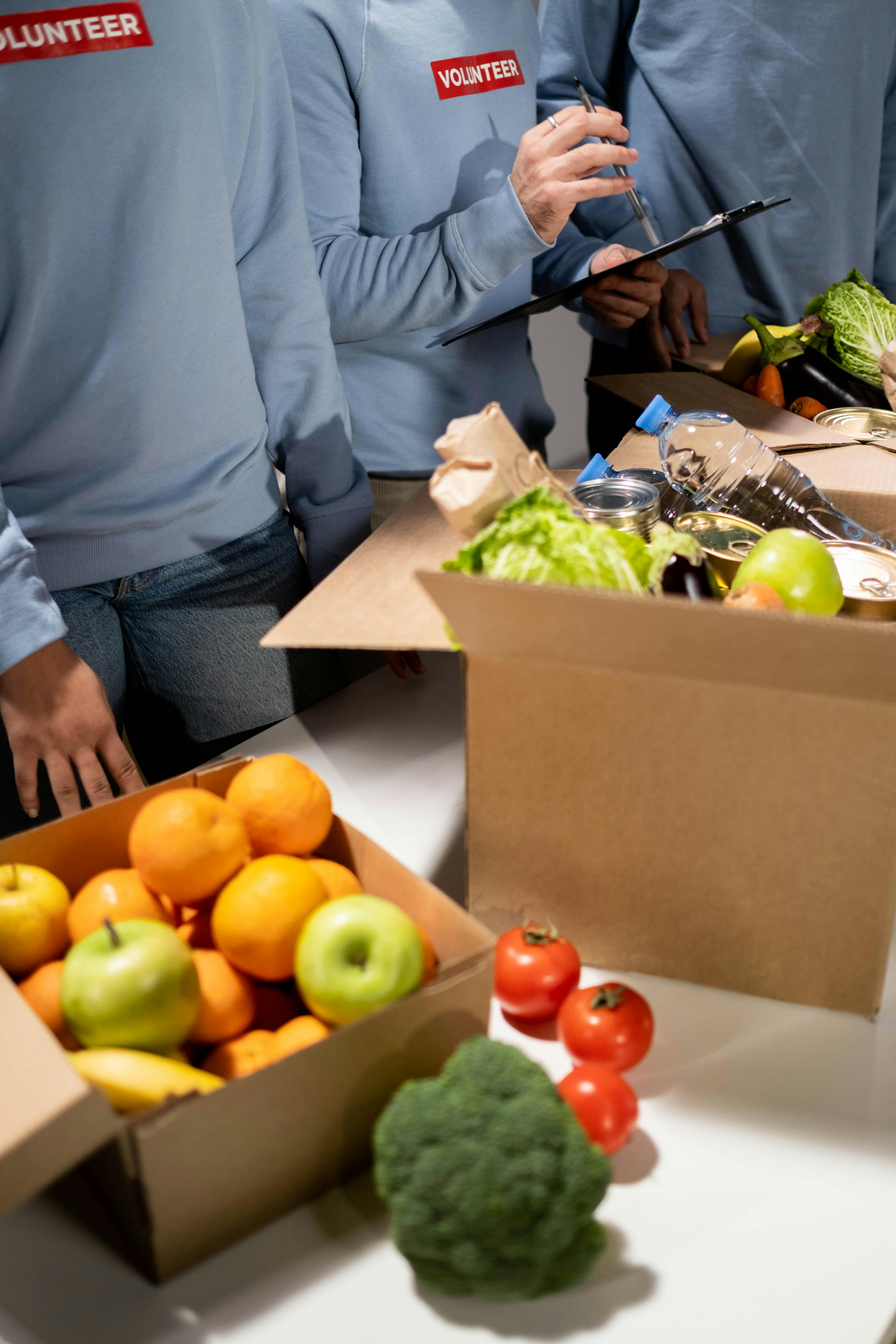
Volunteers sorting food donations at community centre
The question facing policymakers and businesses alike is what happens when employment no longer functions as a bulwark against poverty. If full-time work and business ownership don't generate sufficient income to purchase food at market prices, the entire social contract around employment needs examination. Companies may believe they're paying competitive wages while their workers are quietly visiting larders on Wednesday afternoons.
The traditional link between full-time employment and financial security has fractured, requiring urgent policy reassessment of in-work poverty and wage adequacy across all sectors
Community larders now function as real-time economic indicators, revealing household financial stress faster than official statistics—watch for further increases as elevated prices become permanent
Businesses must recognise that competitive wages on paper may still leave employees dependent on food subsidies, signalling a fundamental disconnect between compensation and living costs
Multi-award winning serial entrepreneur and founder/CEO of Venntro Media Group, the company behind White Label Dating. Founded his first agency while at university in 1997. Awards include Ernst & Young Entrepreneur of the Year (2013) and IoD Young Director of the Year (2014). Co-founder of Business Fortitude.