Brent crude jumped 4.5 per cent to $76.07 per barrel on Monday following unverified reports of an Iranian blockade
The Strait of Hormuz handles roughly one-fifth of global seaborne crude and similar proportion of LNG exports
Goldman Sachs estimates a month-long halt could send European gas and Asian LNG prices up 130 per cent to $25 per million British thermal units
India would see annual import bill rise $13–14 billion for every $10 increase in barrel price
Oil markets are scrambling to price in a 1970s-style supply shock after unverified reports that Iran's Revolutionary Guards have effectively closed the Strait of Hormuz to shipping. The waterway handles roughly one-fifth of global seaborne crude and LNG exports, yet Tehran has issued no formal closure order and the actual status of the strait remains murky. What began as reported VHF radio warnings has triggered a disconnect between geopolitical theatre and verifiable fact that is widening by the hour.
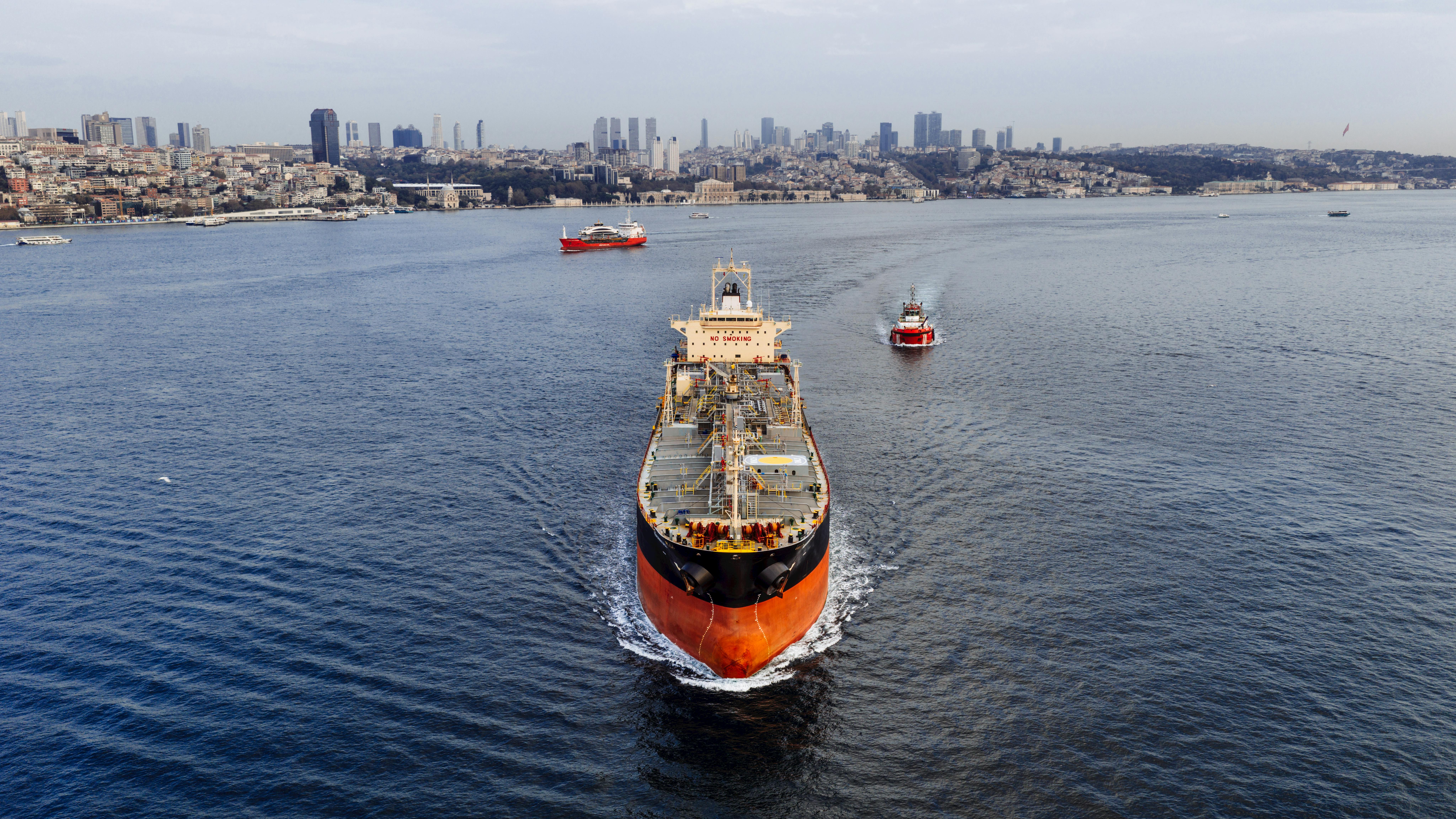
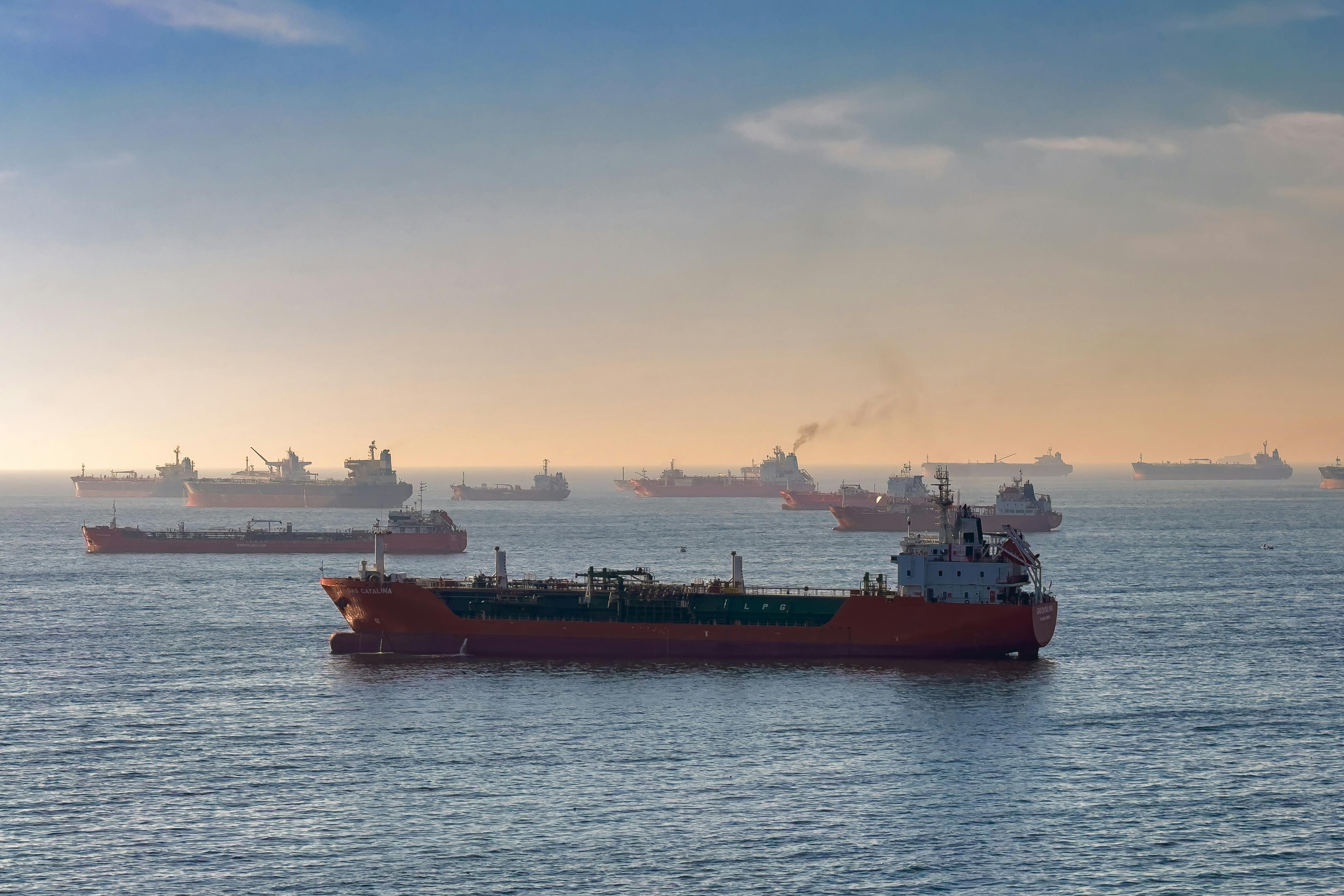
According to Reuters, an official from the EU's naval mission Aspides confirmed that vessels had received radio transmissions stating "no ship is allowed to pass the Strait of Hormuz," attributed to the IRGC. Marine tracking data shows hundreds of tankers dropping anchor in nearby waters. But Iran itself has not publicly confirmed any blockade order, and the claim of three tanker strikes rests entirely on IRGC sources with no independent verification.
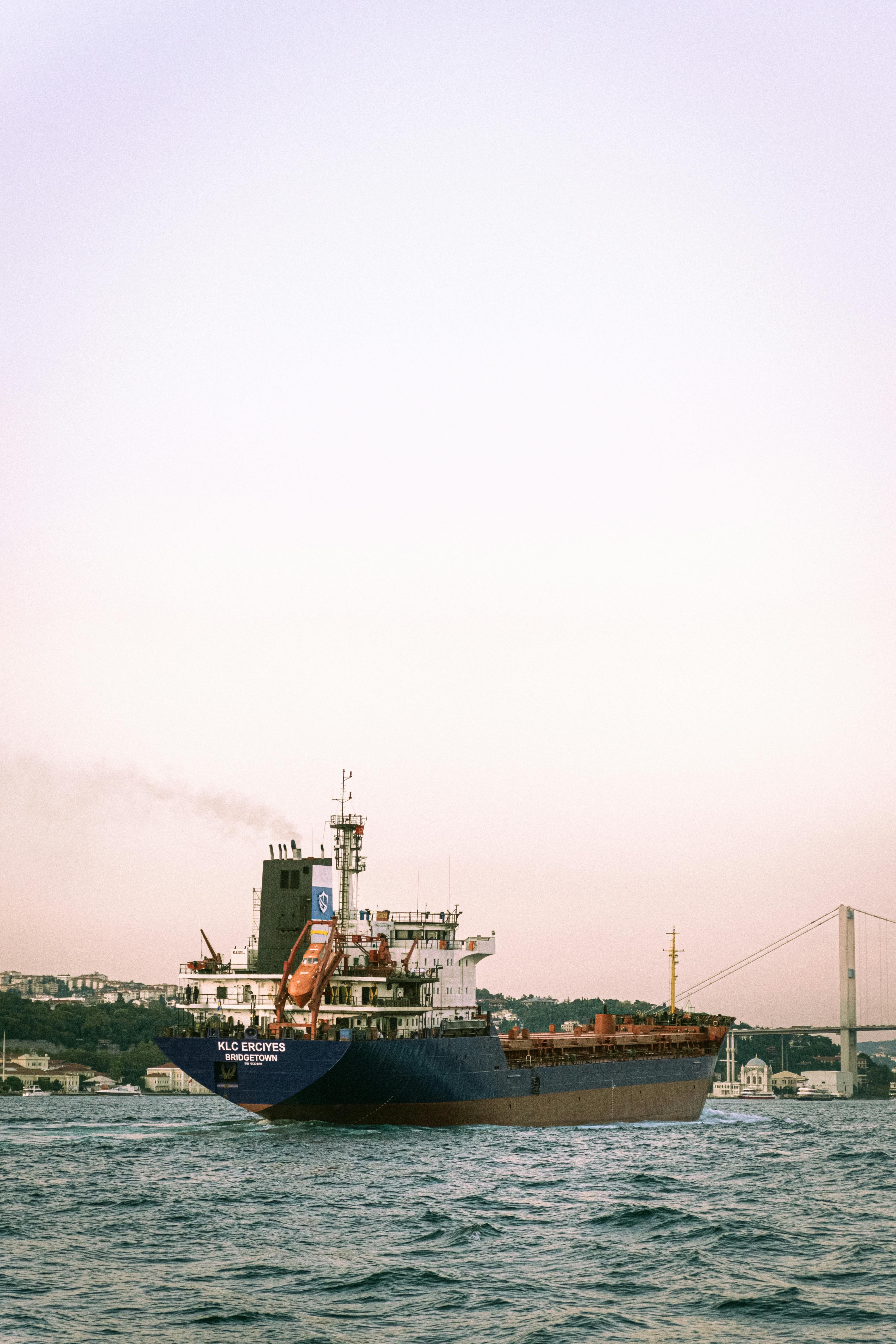
Oil tanker in strategic maritime shipping lane
This is not the first time Iran has threatened to close the strait. Over several decades, Tehran has repeatedly brandished the threat in response to sanctions, military pressure, or regional tensions. Each time, the threat has gone unfulfilled. The question facing markets is whether this instance represents a genuine escalation or another round of brinkmanship designed to demonstrate capability without triggering the economic and military consequences of actually following through.
Enjoying this article?
Get stories like this in your inbox every week.
The arithmetic of disruption
If the slowdown persists, the numbers become brutal quickly. According to Goldman Sachs, a month-long halt to shipping through the strait could send European gas prices and Asian spot LNG up 130 per cent to around $25 per million British thermal units. A disruption extending beyond two months could push European prices above €100 per megawatt hour, a level that would trigger demand destruction across industrial sectors and potentially tip the continent back into recession.
For import-dependent economies, the fiscal damage compounds fast. India, which relies on imports for roughly 90 per cent of its crude, would see its annual import bill rise by $13–14 billion for every $10 increase in the barrel price.
Japan and South Korea face similar exposure. The scale of potential losses dwarfs the symbolic production increase announced by OPEC+ over the weekend: an additional 206,000 barrels per day starting in April. That oil, assuming it materialises, would still need to transit the same chokepoint.
What's interesting here is how the supply response mechanism itself has been rendered largely irrelevant by geography. Traditional producer tools — tapping spare capacity, coordinating output increases — assume open shipping lanes. When the bottleneck is physical rather than volumetric, pumping more crude into the system achieves little beyond adding to the queue of stranded tankers.
China's perverse calculus
Beijing's position in this crisis is uniquely complicated. China purchases an estimated 1 to 1.5 million barrels per day of Iranian crude at steep discounts, oil that struggles to find buyers elsewhere under sanctions. A genuine closure of the strait would eliminate that supply advantage. But it would also inflict far greater damage on rival economies in Europe, Japan, and India that lack alternative pipelines or overland routes.
Global energy trading floor during market volatility
The calculus for Chinese policymakers becomes a question of net effect: does losing cheap Iranian oil hurt more than watching competitors absorb double-digit percentage increases in their energy import bills? The answer likely depends on duration. A brief disruption favours China. A prolonged closure starts to erode its own industrial margins and complicates its efforts to stabilise domestic growth.
Geopolitical analyst Jorge Leon at Rystad Energy described the situation as "the effective halt of traffic through the Strait of Hormuz, preventing 15 million barrels per day of crude oil from reaching markets." That phrasing — "effective halt" rather than "confirmed blockade" — captures the ambiguity. Shipping has slowed, insurers are reassessing risk, and shipowners are holding position. But the legal and operational status remains contested.
Comparing crises
Analysts at Wood Mackenzie have drawn comparisons to the 1973 Middle East oil embargo, when prices surged 300 per cent. Adjusted for inflation, that peak would equate to roughly $90 per barrel in current terms — a level that Monday's rally briefly approached before pulling back. But the parallel is imperfect. The 1973 shock was a coordinated embargo by multiple producers designed explicitly to weaponise supply.
The current situation involves a single chokepoint in a market with different supply dynamics, greater floating storage capacity, and alternative transit routes that, while expensive and time-consuming, do exist.
The UAE ordered its stock markets closed on Monday and Tuesday following reported Iranian strikes on airports, ports, and residential areas. Saudi Arabia's benchmark index fell more than 4 per cent when trading opened on Sunday. Kuwait suspended trading altogether. The financial contagion is spreading faster than any physical supply disruption has been confirmed.
Strategic petroleum infrastructure in Middle East region
Markets are pricing in catastrophe based on the possibility of prolonged closure, not the current reality. That gap between perception and verification will determine whether this becomes a brief volatility spike or something more structural. If naval forces secure shipping lanes and insurers regain confidence, prices could retreat as quickly as they rose.
Markets are pricing catastrophe based on possibility rather than confirmed reality — the gap between perception and verification will determine whether this becomes structural or a brief volatility spike
Traditional supply response mechanisms are rendered irrelevant when the bottleneck is physical geography rather than production capacity
The next 72 hours will clarify whether Iran has finally executed its decades-old threat or is engaging in another round of calibrated brinkmanship to demonstrate leverage
Multi-award winning serial entrepreneur and founder/CEO of Venntro Media Group, the company behind White Label Dating. Founded his first agency while at university in 1997. Awards include Ernst & Young Entrepreneur of the Year (2013) and IoD Young Director of the Year (2014). Co-founder of Business Fortitude.