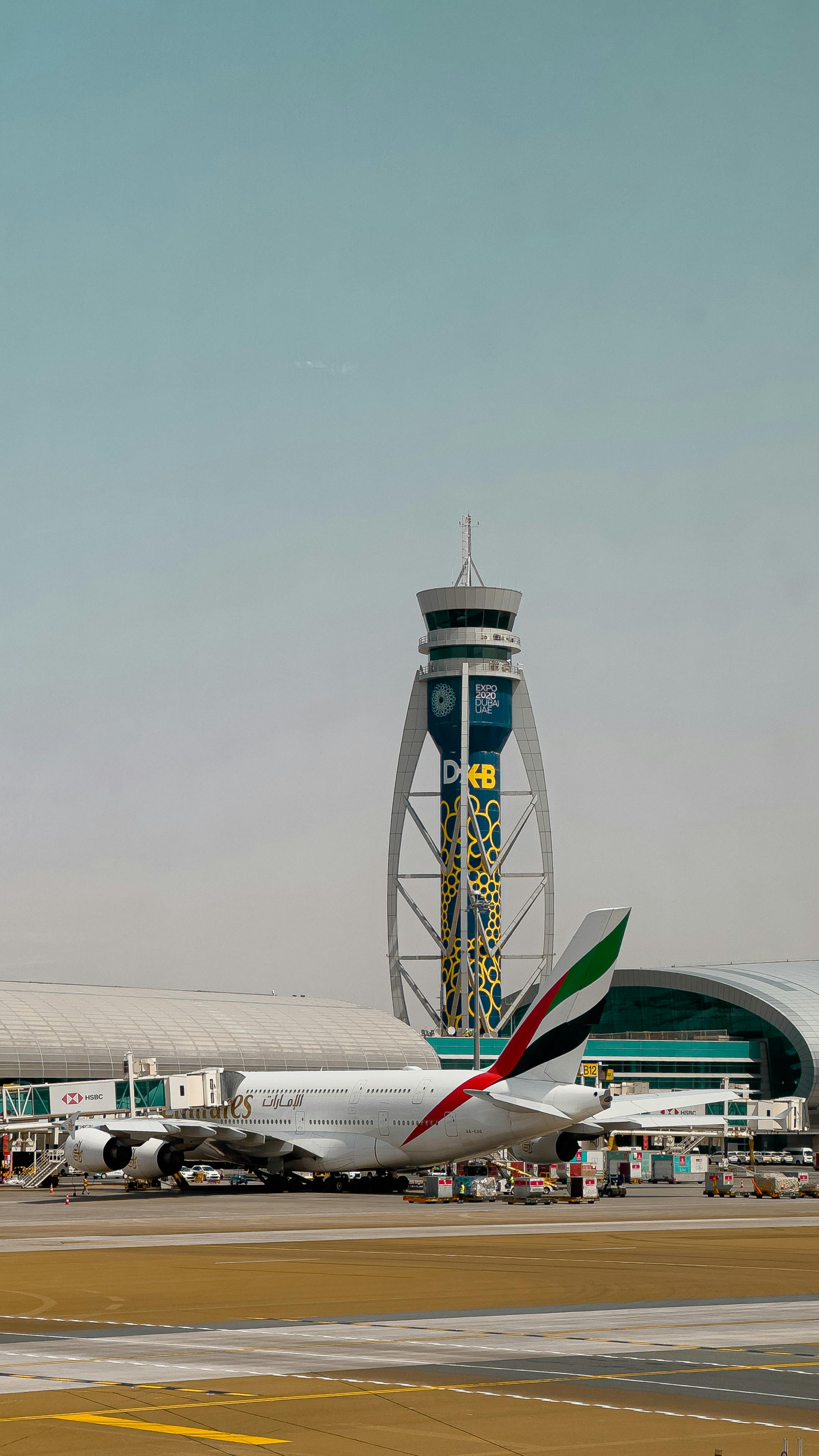
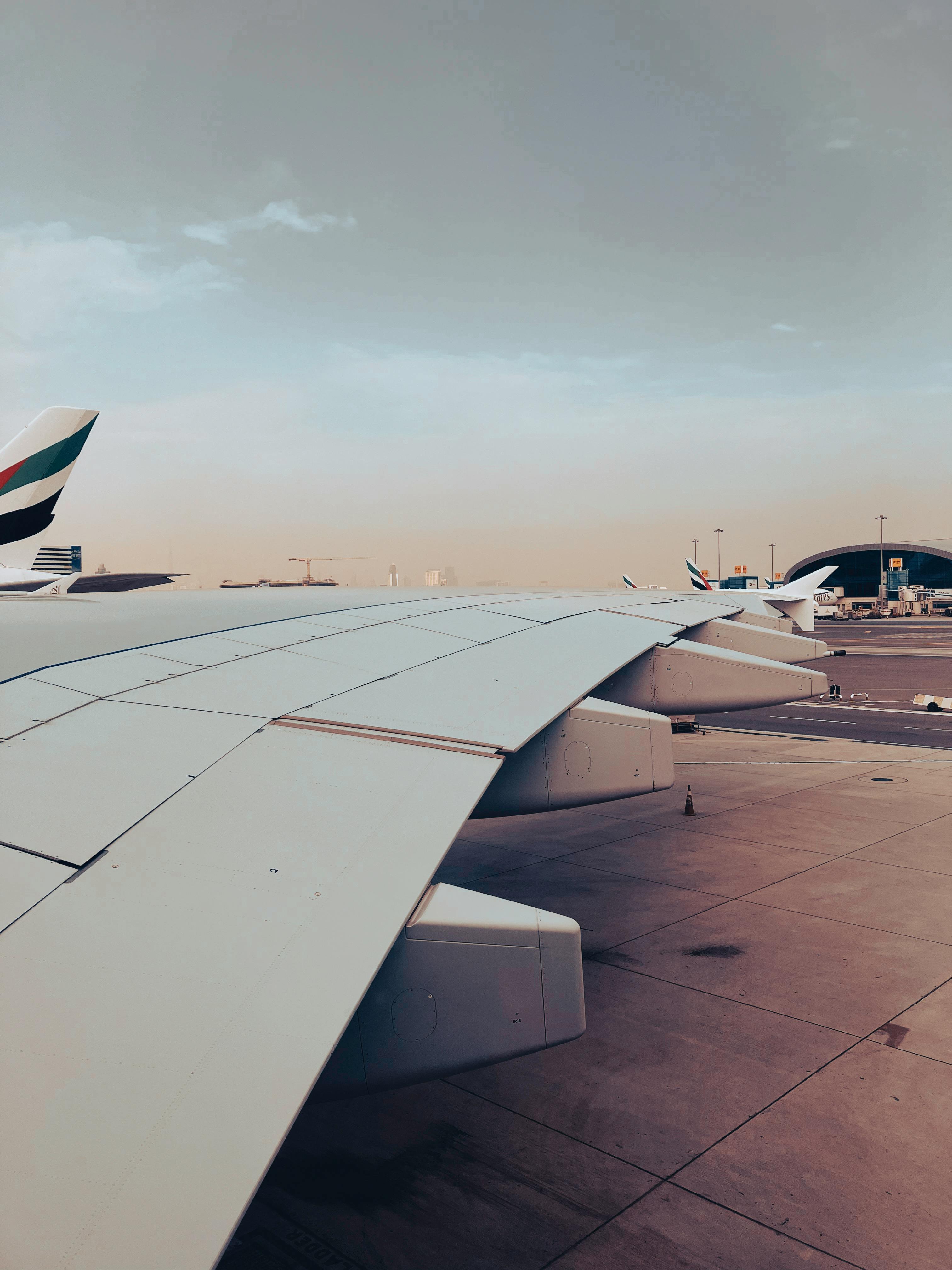
Dubai International Airport handled 87 million passengers in 2023 and suspended all operations until 13:00 GMT Monday
Emirates, Etihad, and Qatar Airways collectively carried over 120 million passengers in 2023, with 60% of Dubai traffic connecting through the hub
Over 76,000 UK nationals are registered in the UAE alone, with 94,000 total across affected Middle Eastern countries
Approximately 3,000 flights have been cancelled since the conflict began, with rerouting adding 60-90 minutes and £3,000-£5,000 in fuel costs per widebody aircraft
The world's most vital aviation corridor has ground to a halt. Iranian missile strikes responding to US-Israeli attacks have forced the closure of Dubai, Abu Dhabi, Doha, and multiple Gulf hubs, severing the primary artery connecting Europe and Asia. For an industry already operating on razor-thin margins, this isn't a regional disruption—it's a systemic breakdown of the infrastructure underpinning modern long-haul aviation.
Dubai International Airport suspended operations along with Abu Dhabi, whilst British Airways cancelled services to Tel Aviv and Bahrain through Wednesday. Emirates grounded all Dubai operations until 13:00 GMT Monday, and Etihad suspended Abu Dhabi departures until 02:00 local time. The human cost at the airports stands at one dead and 11 injured, with four injuries among Dubai International staff.
Airport operations disrupted by regional conflict
Airspace over Iran, Israel, Iraq, Qatar, Bahrain, Kuwait, and Syria remained shut on Sunday, with partial restrictions across the UAE and Saudi Arabia. Flight tracking data shows Europe-Asia traffic now routing via Saudi Arabia or the Caucasus, adding hours to journeys that represent billions in annual trade and passenger revenue. What makes this commercially catastrophic isn't the temporary closures—it's the collapse of the routing infrastructure that makes efficient long-haul aviation possible.
Enjoying this article?
Get stories like this in your inbox every week.
The Gulf Hub Model Breaks Down
Modern long-haul aviation depends entirely on Gulf hubs functioning as connection points. Emirates, Etihad, and Qatar Airways collectively carried over 120 million passengers in 2023, with Dubai alone serving as a transfer point for roughly 60% of its traffic. When that infrastructure goes dark, there's no simple alternative.
Dubai International Airport handled 87 million passengers last year, with roughly 60% of traffic connecting through the hub—when that infrastructure fails, the entire Europe-Asia corridor collapses.
Virgin Atlantic suspended London-Riyadh and London-Dubai services over the weekend whilst warning that flights to India, Saudi Arabia, and the Maldives would take significantly longer due to rerouting. The additional flight time translates directly to fuel costs, crew scheduling complications, and aircraft utilisation rates that make marginal routes suddenly unprofitable.
Passengers stranded as Middle East airspace closes
British passengers are caught in the immediate chaos. Thousands remain stranded across the region, with over 76,000 UK nationals registered with the Foreign Office in the affected countries—the majority in the UAE. The British government is reportedly considering evacuation options, though no official statement has been issued and the closed airspace makes any such operation logistically complex.
Richard and Hannah from London, en route to Oman via Bahrain, found themselves trapped after a drone attack on Bahrain's airport in the early hours of Sunday. Emma Belcher and her husband faced cancelled connections in Dubai whilst returning from the Maldives. These aren't outlier cases—they're indicative of the systematic failure occurring across the network.
Rerouting Costs Mount as Alternatives Strain Capacity
Airlines operating Europe-Asia routes now face a choice between grounding aircraft or adding substantial costs through alternative routing. The southern corridor through the Gulf typically offers the most efficient path for carriers serving destinations from Bangkok to Singapore. Forcing that traffic north through the Caucasus or south via Oman adds between 60 and 90 minutes to journey times.
That additional flight time compounds rapidly across a fleet. An extra hour translates to roughly £3,000-£5,000 in fuel costs per widebody aircraft, along with knock-on effects for crew duty times and aircraft turnaround schedules. For carriers already operating on thin margins—particularly post-pandemic—these aren't trivial sums.
Every additional hour of flight time translates to £3,000-£5,000 in fuel costs per widebody aircraft, with cascading effects on crew scheduling and aircraft utilisation that make marginal routes suddenly unprofitable.
Saudi airspace is absorbing some of the displaced traffic, with Riyadh and Jeddah serving as alternative routing points. But Saudi infrastructure wasn't designed to handle the volume typically processed through Dubai, Doha, and Abu Dhabi simultaneously. Slot availability becomes the limiting factor, potentially forcing some carriers to simply cancel services rather than attempt complex reroutings.
Airlines scramble to reroute flights around closed Middle East airspace
The closure's timing is particularly awkward. Spring travel between Europe and Asia typically peaks in March and April, driven by business travel recovering after the Lunar New Year period and leisure passengers taking advantage of moderate weather. Load factors on these routes commonly exceed 80%, meaning every cancelled flight represents substantial lost revenue that can't easily be recovered.
British Nationals Face Unclear Evacuation Timeline
The Foreign Office has escalated its travel warnings, advising against all but essential travel to Bahrain, Kuwait, Qatar, and the UAE. Those already present have been instructed to shelter in place. More severe restrictions apply to Israel and Palestine, where the Foreign Office warns against all travel.
The practical challenges are formidable. Military transport aircraft require negotiated airspace access, secure airport facilities, and ground logistics that take days to establish. With Iranian missiles targeting airports and US facilities across the region—footage circulated showing apparent strikes on American installations in Bahrain, though this remains unverified—creating safe conditions for evacuation flights isn't straightforward.
Meanwhile, commercial carriers face their own calculations about when to resume services. Qatar Airways committed only to providing an update at 06:00 GMT Monday, whilst Emirates' suspension extends through midday Monday. These rolling 12-24 hour windows reflect genuine uncertainty about when airspace will safely reopen rather than mere operational caution.
The broader pattern suggests this disruption will persist beyond the immediate weekend crisis. Airspace doesn't simply reopen the moment active hostilities pause—authorities require time to assess damage, restore navigation systems, and coordinate with military operations that may continue in restricted areas. Around 3,000 flights have been cancelled since the conflict began, with major travel disruption continuing across the Middle East as airlines assess when operations can safely resume. Previous Middle Eastern conflicts have produced airspace restrictions lasting weeks, not days, with cascading effects on global aviation networks that took months to fully resolve.
The Gulf hub model's vulnerability has been fully exposed—alternative routing infrastructure cannot absorb the volume typically processed through Dubai, Doha, and Abu Dhabi, creating a structural bottleneck in global aviation
Watch for cascading financial impacts on carriers operating Europe-Asia routes, where thin margins cannot absorb sustained fuel cost increases and reduced aircraft utilisation rates
Airspace closures following Middle Eastern conflicts typically persist for weeks rather than days, suggesting months of network disruption and potential route cancellations ahead
Former COO at Venntro Media Group with 13+ years scaling SaaS and dating platforms. Now founding partner at Lucennio Consultancy, focused on GTM automation and AI-powered revenue systems. Co-founder of Business Fortitude, dedicated to giving entrepreneurs the news and insight they need.