The FTSE 100 finished Tuesday virtually unchanged despite Trump's 10% tariff announcement and mounting AI valuation anxiety
Croda International surged 7% whilst ConvaTec climbed 10%, demonstrating strength in pharmaceutical and chemical sectors
The FTSE 100 contains zero of the "Magnificent Seven" US technology stocks, creating a different risk profile
JP Morgan CEO Jamie Dimon expressed high anxiety about economic cycles, drawing parallels to the 2008 financial crisis
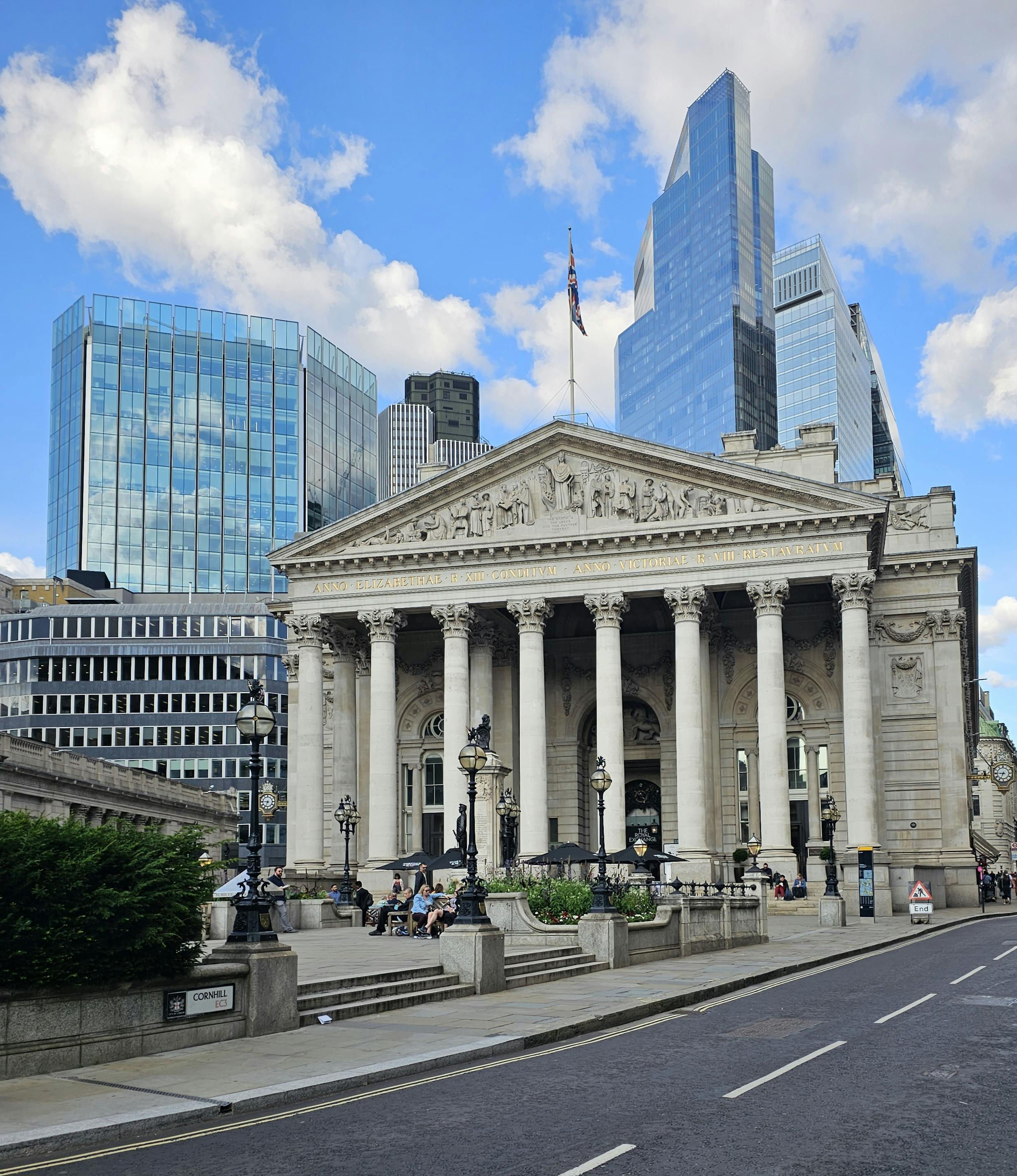
London's blue-chip index finished Tuesday virtually unchanged, absorbing the dual shock of Donald Trump's tariff escalation and mounting anxiety over artificial intelligence valuations that have rattled investors elsewhere. The FTSE 100's composition, long derided as a museum of old economy relics, appears to be functioning as unexpected ballast whilst tech-heavy indices confront a more turbulent reality. Traditional pharmaceutical and chemical manufacturers powered the index's resilience in a session that challenges conventional wisdom about Britain's market structure.
Stock market trading floor with financial data displays
When boring becomes defensive
The composition of Britain's benchmark index reads like a who's who of industries that venture capitalists actively avoid: oil majors, pharmaceutical giants, mining conglomerates, banks, and consumer goods manufacturers. Precisely zero of the "Magnificent Seven" US technology stocks call London home. For growth-hungry investors during the AI boom, this has been a source of frustration.
What's becoming apparent, however, is that the absence of exposure to inflated technology valuations creates a different kind of risk profile. According to Danni Hewson, head of financial analysis at AJ Bell, the FTSE 100 'dusted itself off' and 'flirted with another record close' despite substantial uncertainty emanating from Washington. That's not a coincidence.
Enjoying this article?
Get stories like this in your inbox every week.
Trump's implementation of 10 per cent tariffs, whilst lacking clarity on scope and specific trading partners affected, represents the kind of policy volatility that typically sends equity markets into convulsions.
JP Morgan chief executive Jamie Dimon chose the bank's annual investor day on Monday to voice concerns that have been percolating amongst more cautious institutional investors for months. His comments drew explicit parallels to the late 2000s financial crisis, though he stopped short of declaring an imminent AI bubble burst.
There will be a cycle one day, I don't know when [there] is going to be a cycle, I don't know what events will cause that cycle. My anxiety is high over it.
Coming from someone who helms America's largest bank, this constitutes more than casual observation. Dimon's anxiety centres on economic cycles broadly rather than AI specifically, but the timing is pointed. Infrastructure spending on artificial intelligence has driven valuations in US technology stocks to levels that invite comparison with the dotcom peak of 2000 and the pre-crisis exuberance of 2007.
Financial charts and analysis on computer screens
The FTSE 100, by virtue of having virtually nothing to do with this AI infrastructure arms race, finds itself insulated from whatever correction may or may not materialise. There's a certain irony in watching the index that's been criticised for technological irrelevance suddenly benefit from that very characteristic.
What the composition dividend actually means
London's benchmark carries heavy weightings in sectors that respond to different economic drivers than technology. Energy stocks move with commodity prices. Pharmaceutical companies operate on drug approval timelines and patent cliffs. Mining groups track Chinese construction demand and mineral supply dynamics.
This divergence matters more when correlations across asset classes increase during periods of stress. If concerns about AI valuations coincide with trade policy uncertainty and slowing growth, indices concentrated in technology face compounding pressures. The FTSE's exposure to energy, materials and healthcare creates natural diversification that isn't particularly exciting during risk-on environments but proves valuable when sentiment sours.
Whether this protection persists depends on how tariff policies evolve and whether they trigger broader economic disruption. Britain's pharmaceutical exporters aren't immune to trade barriers. Mining companies suffer when global growth expectations decline. The notion that old economy stocks provide complete insulation from macroeconomic turbulence is overstated.
The defensive rotation question
Portfolio managers who've spent two years justifying underweight UK equity positions to clients may need to revisit those allocations. If technology stocks face sustained pressure from valuation compression whilst geopolitical uncertainty remains elevated, defensive sector exposure becomes more attractive. The FTSE 100 offers that in concentration.
Recent performance doesn't vindicate the index's historical underperformance, but it does suggest that cycles eventually reassert themselves. Markets that race ahead on narrow leadership eventually face the consequences of that concentration. Britain's misfortune of lacking homegrown technology giants becomes a feature rather than a bug when that leadership falters.
Business professionals analyzing market data and trends
The test ahead isn't whether the FTSE can match one flat trading session during turbulence, but whether its composition provides genuine resilience through an extended period of volatility. Trump's tariff regime remains poorly defined, with details on scope and implementation still emerging. Dimon's cycle concerns may take months or years to materialise into actual market stress.
For British investors, the calculation is whether to embrace the defensive characteristics of their home market or maintain exposure to technology stocks that could still justify their valuations. The pound's recent movement against the dollar reflects some of this uncertainty, as currency markets respond to the shifting tariff landscape. Meanwhile, banking stocks have shown vulnerability amid tariff concerns, suggesting that not all traditional sectors are entirely immune to the current volatility.
Tuesday's session doesn't answer that question definitively, but it does remind the market that boring stocks occasionally have their moment.
This article is for informational purposes and does not constitute financial advice.
The FTSE 100's lack of technology exposure creates defensive characteristics that may prove valuable during periods of AI valuation uncertainty and trade policy volatility
Portfolio managers should reassess underweight UK equity positions if technology stocks face sustained pressure whilst geopolitical risks remain elevated
Watch for tariff policy details to emerge and monitor whether traditional sectors maintain resilience or succumb to broader economic disruption from trade barriers
Multi-award winning serial entrepreneur and founder/CEO of Venntro Media Group, the company behind White Label Dating. Founded his first agency while at university in 1997. Awards include Ernst & Young Entrepreneur of the Year (2013) and IoD Young Director of the Year (2014). Co-founder of Business Fortitude.