The RFU Council meets to approve Project Forge, ringfencing the Premiership at 10 teams before expanding to 12, then potentially 20 teams by 2040
Clubs would receive £33 million per season guaranteed, plus 26% of RFU profits before rugby investment under the new revenue-sharing arrangement
Two Premiership clubs, London Irish and Worcester Warriors, collapsed into administration within the past two years
Bath Rugby averaged around 13,000 spectators per match last season whilst Newcastle Falcons frequently drew fewer than 8,000
The RFU Council meets today to approve what might be the most ambitious restructuring in English rugby's professional era. Project Forge proposes ringfencing the Premiership at 10 teams before expanding to 12, then ultimately to as many as 20 teams by 2040, accompanied by a new revenue-sharing arrangement that will see clubs receive 26 per cent of RFU profits before rugby investment. For a competition that has watched two clubs collapse into administration within the past two years, the timing is either desperately necessary or wildly optimistic.
What's striking about this proposal is how it attempts to solve contradictory problems simultaneously. The immediate need is financial stabilisation. The long-term vision involves doubling the size of the league to match, or exceed, the Premier League's 20 teams. These aren't naturally complementary objectives.
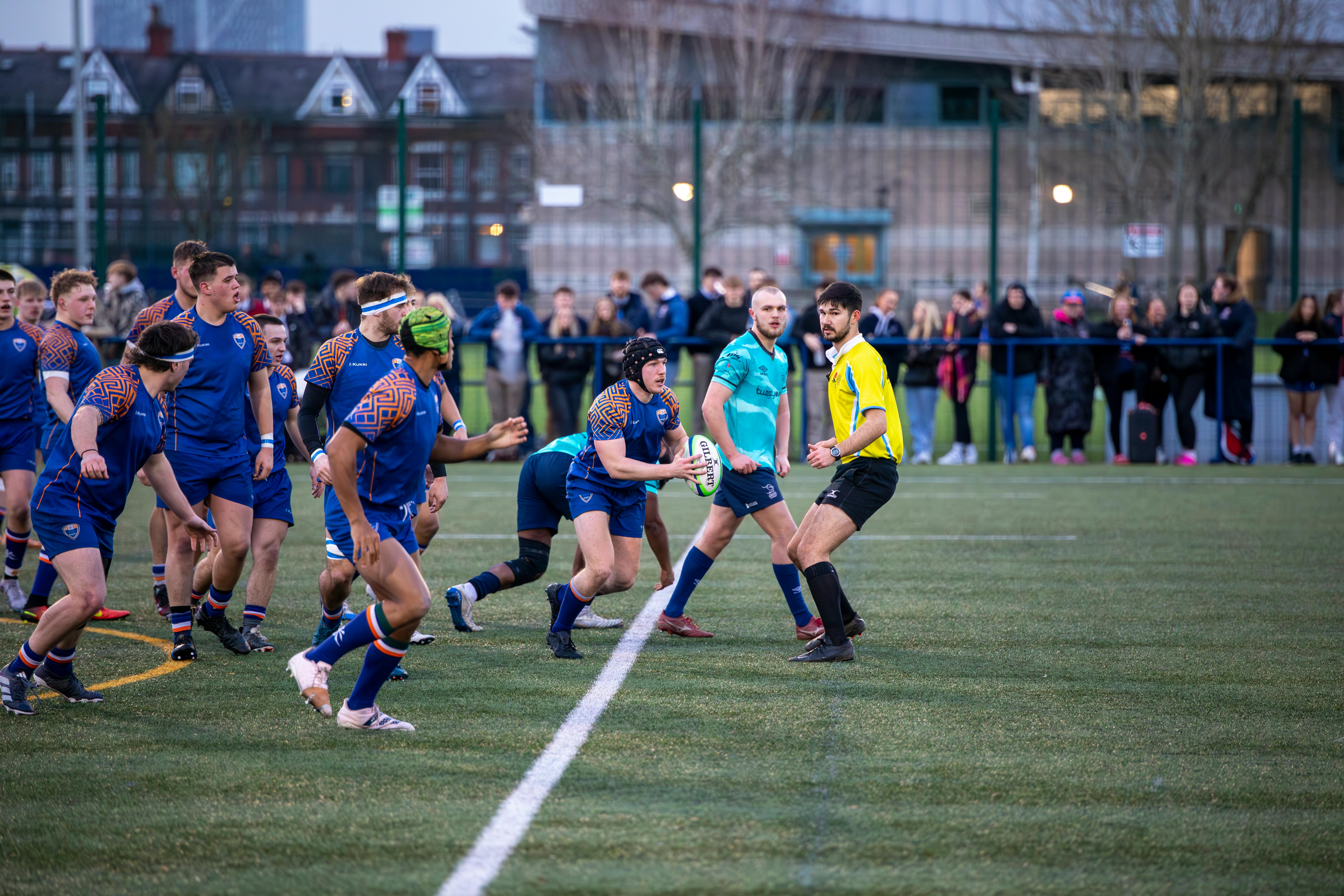
Rugby players in competitive match action
The case for a safety net
Ringfencing addresses a problem that became unavoidable when London Irish and Worcester Warriors ceased to exist as professional entities. Investors won't commit serious capital to clubs that face relegation into the Championship, where broadcasting revenues and commercial opportunities vanish almost entirely. The current 10-team structure with no relegation creates the stability required for clubs to pursue institutional investment without the existential risk of dropping out of the top flight.
Enjoying this article?
Get stories like this in your inbox every week.
Investors won't commit serious capital to clubs that face relegation into the Championship, where broadcasting revenues and commercial opportunities vanish almost entirely.
According to the terms being discussed, clubs in the initial ringfenced period would be guaranteed £33 million per season through the Men's Professional Game Partnership. That figure represents a floor, not a ceiling. The 26 per cent profit-sharing model means clubs benefit directly from growth in RFU revenues, theoretically aligning incentives between the governing body and professional franchises.
This financial architecture makes commercial sense for the existing 10 clubs. Whether it makes sense for English rugby as a whole depends on execution details that remain opaque, particularly around how grassroots funding will be protected when professional clubs take a larger slice of available revenues.
The expansion gamble
Expanding from 10 to 12 teams serves as an early test of whether ringfencing generates the confidence and investment promised. If Championship clubs or entirely new entities actively seek entry, backed by credible business plans and capital commitments, the model has succeeded. If expansion relies on resuscitating the corpses of London Irish and Worcester, it suggests the underlying financial problems haven't been solved.
Rugby stadium with spectators during a professional match
The 20-team aspiration for 2040, however, stretches credibility. Even those close to the proposals acknowledge this figure as aspirational to the point of fantasy. Consider the economics: the Premiership currently struggles to fill stadiums consistently at 10 teams. Bath Rugby averaged around 13,000 spectators per match last season; Newcastle Falcons frequently drew fewer than 8,000. Creating 10 additional professional franchises would require either discovering entirely new markets for rugby union or cannibalising existing fanbases.
Creating 10 additional professional franchises would require either discovering entirely new markets for rugby union or cannibalising existing fanbases.
Proponents argue these teams would pump tens of millions into regions currently without Premiership representation. The reality is more complex. Professional sports franchises don't simply appear because governing bodies wish them into existence. They require sustainable commercial foundations, broadcast appeal, and communities willing to support them financially. Rugby union, despite its heritage in certain regions, isn't association football. The talent pool is smaller. The fanbase is more concentrated geographically and demographically.
The Welsh question and URC complications
Some reports suggest Project Forge wouldn't target Welsh regions currently competing in the United Rugby Championship. This reflects commercial pragmatism rather than lack of ambition. The Welsh Rugby Union has commitments to the URC that don't expire for several years, and poaching Cardiff, Ospreys, or Dragons would require negotiations with multiple stakeholders across several jurisdictions.
Still, the strategic logic of incorporating Welsh teams becomes compelling if the Premiership expands significantly. A 20-team league spanning England and Wales could claim to represent a genuinely expanded market. Whether the WRU would abandon its Celtic partnerships for English arrangements remains doubtful, particularly given the political sensitivities involved.
Empty rugby stadium seating and pitch
What happens next
Today's expected approval by the RFU Council represents the easy part. The complex phase begins when expansion criteria are published and prospective entrants emerge, or fail to emerge. The tender process will reportedly include commitments to women's rugby and infrastructure standards, alongside financial viability assessments.
The 12-team expansion will serve as the critical indicator. If that expansion attracts well-capitalised bidders with credible business plans, the long-term vision gains legitimacy. If it doesn't, the 20-team aspiration will quietly disappear from planning documents.
English rugby has chosen financial security over sporting meritocracy in the short term. That's defensible, perhaps inevitable, given recent collapses. The expansion ambitions layered on top, however, risk repeating the mistakes that created the financial fragility Project Forge claims to address. The Premiership is betting it can stabilise and grow simultaneously. History suggests clubs should focus on getting the first part right before attempting the second.
This article is for informational purposes and does not constitute financial advice.
The 12-team expansion phase will be the crucial test of whether ringfencing attracts genuine investment or merely props up a fundamentally flawed model
Watch for published expansion criteria and the quality of bidders—credible business plans indicate success, whilst reliance on failed clubs suggests deeper problems remain unresolved
The trade-off between short-term financial stability and long-term sporting integrity may define English rugby for decades, with grassroots funding protection being the critical detail to monitor
Multi-award winning serial entrepreneur and founder/CEO of Venntro Media Group, the company behind White Label Dating. Founded his first agency while at university in 1997. Awards include Ernst & Young Entrepreneur of the Year (2013) and IoD Young Director of the Year (2014). Co-founder of Business Fortitude.