Gold briefly hit $5,280 per ounce on Monday morning, settling 0.7% higher at $5,140 as investors fled to safe havens
Trump's struck-down tariffs reportedly raised $130 billion (£96 billion), now in legal limbo with no clarity on refunds
New 15% global tariff imposed via executive order faces 150-day Congressional approval deadline, creating another cliff edge in mid-September

Gold prices rise and dollar dips after Trump declares 15% global tariff
🕐 Last updated: February 24, 2026
Enjoying this article?
Get stories like this in your inbox every week.
US dollar weakened 0.3% against both pound and euro whilst equity futures fell for S&P 500 and Dow Jones
The price of gold briefly touched $5,280 per ounce on Monday morning, a near-record high that signals something significant: investors are genuinely spooked. This wasn't a gentle drift upwards. This was a scramble.
The catalyst was a weekend of extraordinary policy whiplash in Washington. The US Supreme Court struck down Donald Trump's sweeping tariff regime on Friday evening, only for the president to immediately retaliate by imposing a fresh 15% global tariff via executive order. Richard Hunter, head of markets at Interactive Investor, captured the mood perfectly when he described the situation as an "unholy mess".

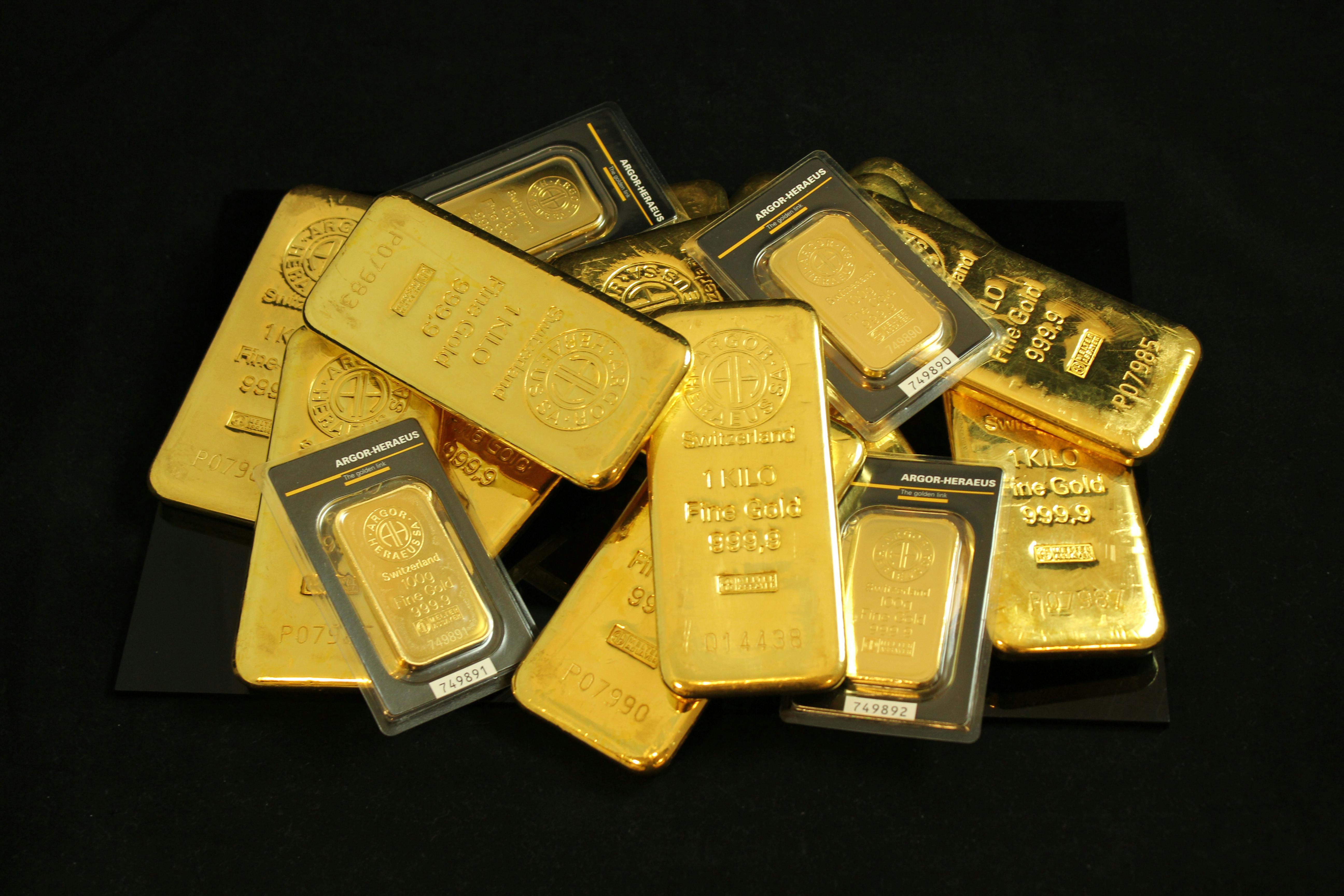
Gold bars representing safe haven investment during market turmoil
For British businesses attempting to navigate supply chains, pricing strategies, and investment decisions, the mess is now three-dimensional. The tariffs that were in place have been struck down. The tariffs that existed before might need refunding. The new tariffs are supposedly in effect now, but only for 150 days unless Congress approves them.
Nobody knows which rules actually apply to goods currently sitting in shipping containers mid-Atlantic.
The safe haven surge
When gold moves like this, markets are sending a clear message. The commodity settled around 0.7% higher at $5,140 per ounce by early London trading, whilst the dollar weakened roughly 0.3% against both the pound and the euro. These aren't the patterns you see during routine policy adjustments.
These are crisis indicators, not routine policy adjustments, and the speed of repositioning suggests institutional money was waiting for an excuse to de-risk.
Gold typically rallies when investors lose confidence in other assets or anticipate sustained volatility. What's interesting here is the speed. The Supreme Court ruling came late Friday; by Monday morning, investors had already repositioned.
US equity futures fell for both the S&P 500 and Dow Jones, pointing to further losses when Wall Street opened Monday afternoon. German carmakers BMW and Volkswagen dragged the Dax index down around 0.4%, though the FTSE 100 and France's Cac 40 remained relatively flat by mid-morning. British investors, it seems, have already priced in a certain level of chaos from across the Atlantic.

Financial markets trading screens showing market volatility
The £96bn question nobody can answer
Trump's original tariffs, imposed under emergency powers legislation known as the International Emergency Economic Powers Act, have reportedly raised around $130 billion (£96 billion) according to some market analysts. That figure is now in legal limbo.
The Supreme Court ruling made no reference to whether those collected tariffs would need refunding. Hunter noted that even if refunds materialise, it's unclear whether they would flow back to the companies that paid the levies or to consumers who ultimately bore the cost through higher prices. Given that most businesses passed tariff costs directly to customers, the prospect of widespread consumer rebates seems remote at best.
British firms that import American goods or export to the US face an impossible planning exercise. Do they adjust pricing based on the struck-down tariffs being refunded? Do they prepare for the new 15% levy? What happens in 150 days when that deadline expires?
Finance directors attempting to model scenarios for the second half of 2025 are essentially guessing. Russ Mould, investment director for AJ Bell, pointed out that Trump's 150-day Congressional approval requirement "creates yet another cliff edge". That takes us to mid-September, just in time for the autumn budget season, when British businesses typically finalise their annual planning.
What this means for UK businesses and consumers
The immediate impact is straightforward: uncertainty depresses investment. Companies postpone expansion plans, delay hiring decisions, and hold cash rather than committing to long-term supply contracts. That feeds through to slower growth, which ultimately affects employment and wage growth in the UK.
Inflation is the other concern. If Trump's new 15% tariff sticks, American import prices rise. Given the interconnected nature of global supply chains, that flows through to British consumers even on goods not directly sourced from the US. Manufacturing inputs, technology components, agricultural products — all potentially affected.
Finance directors attempting to model scenarios for the second half of 2025 are essentially guessing, facing an impossible planning exercise with no clear answers.
Business executives reviewing financial strategy documents
For pension funds and investors, the gold rally is a warning light. Safe haven flows of this magnitude typically precede broader market corrections. Anyone with exposure to US equities or dollar-denominated assets needs to watch carefully. The FTSE's relative stability on Monday suggests British markets may be somewhat insulated, but that won't last if Wall Street experiences sustained losses.
The legal landscape remains opaque. Trade lawyers will spend months unpicking which contracts are enforceable under which tariff regime. Disputes over refunds could take years to resolve. Meanwhile, businesses need to make decisions now about pricing, sourcing, and inventory management.
Trump's decision to impose the new tariffs via executive order, bypassing the normal legislative process, guarantees further legal challenges. The 150-day clock is supposedly ticking, but whether courts will allow even that timeframe to stand is anyone's guess. European governments are reportedly "scrambling" to determine whether their negotiated deals with Washington remain valid.
The gold market is pricing in prolonged turbulence, not a quick resolution. That's the signal British businesses should heed. This isn't a temporary blip requiring tactical adjustments. This is structural uncertainty that demands fundamental reassessment of US supply chain dependencies and dollar exposure. The scramble for safe havens suggests professional investors have already reached that conclusion.
This represents structural uncertainty, not a temporary blip — British firms must fundamentally reassess US supply chain dependencies and dollar exposure rather than make tactical adjustments
The mid-September Congressional deadline creates another cliff edge precisely when UK businesses finalise annual planning, compounding strategic uncertainty
Gold's safe haven surge typically precedes broader market corrections, suggesting professional investors expect prolonged turbulence rather than quick resolution

Ross Williams
Co-Founder
Multi-award winning serial entrepreneur and founder/CEO of Venntro Media Group, the company behind White Label Dating. Founded his first agency while at university in 1997. Awards include Ernst & Young Entrepreneur of the Year (2013) and IoD Young Director of the Year (2014). Co-founder of Business Fortitude.
Comments
💬 What are your thoughts on this story? Join the conversation below.
to join the conversation.