UK exports to the United States totalled £188 billion in 2023, making America the UK's largest single-country trading partner
Trump imposed a 10% global tariff on Friday night, then raised it to 15% on Saturday following a Supreme Court ruling that struck down his original emergency powers framework
Britain had secured preferential 10% rates with sector-specific exemptions, but the legal validity of these arrangements is now uncertain
The British Chambers of Commerce warns of an additional 5% tariff increase on a "wide range" of exports not covered under existing arrangements
The £15,000 order a Manchester precision engineering firm spent three weeks negotiating with a Texas distributor now hangs in limbo. Not because the specifications changed or the price became uncompetitive, but because nobody — not the exporter, not the importer, not even the British government — can say with certainty what tariff rate will apply when the shipment clears US customs next month.
Welcome to the new reality for UK exporters to America, where a Supreme Court ruling on Friday and Donald Trump's immediate 15% global tariff response on Saturday have shredded the clarity British businesses thought they'd secured. The irony is sharp: Britain was held up as a template for pragmatic Trump engagement after securing preferential 10% rates and carve-outs for steel and automotive sectors. That supposed diplomatic triumph now looks more like a provisional arrangement scribbled on the back of an envelope.
Business professionals reviewing documents with concern
Education Secretary Bridget Phillipson's appearance on Sunday morning political shows offered the standard ministerial reassurance: high-level talks ongoing, strong relationship with Washington, confidence that preferential arrangements will continue. Yet her admission that businesses face "uncertainty" understates the problem facing exporters who cannot price quotes, cannot lock in contracts, and cannot tell their American customers what the final landed cost will be.
Enjoying this article?
Get stories like this in your inbox every week.
The legal vacuum behind the reassurances
The specifics matter here. Trump's original tariff structure, implemented under emergency powers legislation in April, established a baseline 10% rate for most countries, with Britain securing that lower threshold alongside sector-specific exemptions. The Supreme Court struck down that legal framework on Friday, finding the emergency powers justification invalid.
Trump's response was immediate: a 10% global tariff imposed via executive order on Friday night, then raised to 15% on Saturday through a Truth Social post describing the court's decision as "ridiculous, poorly written and extraordinarily anti-American". What remains unclear is whether Britain's negotiated carve-outs — agreed under the previous, now-invalidated framework — carry any legal weight under this new structure.
Officials are "understood to believe" the changes will not affect most UK-US trade, according to government sources. That phrasing should worry anyone running a business.
The British Chambers of Commerce, representing 50,000 UK firms, was more direct. William Bain, the organisation's head of trade policy, warned of an additional 5% tariff increase on a "wide range" of exports not covered under existing transatlantic trade arrangements. That suggests sectoral exposure varies considerably, and that businesses need detail, not reassurance.
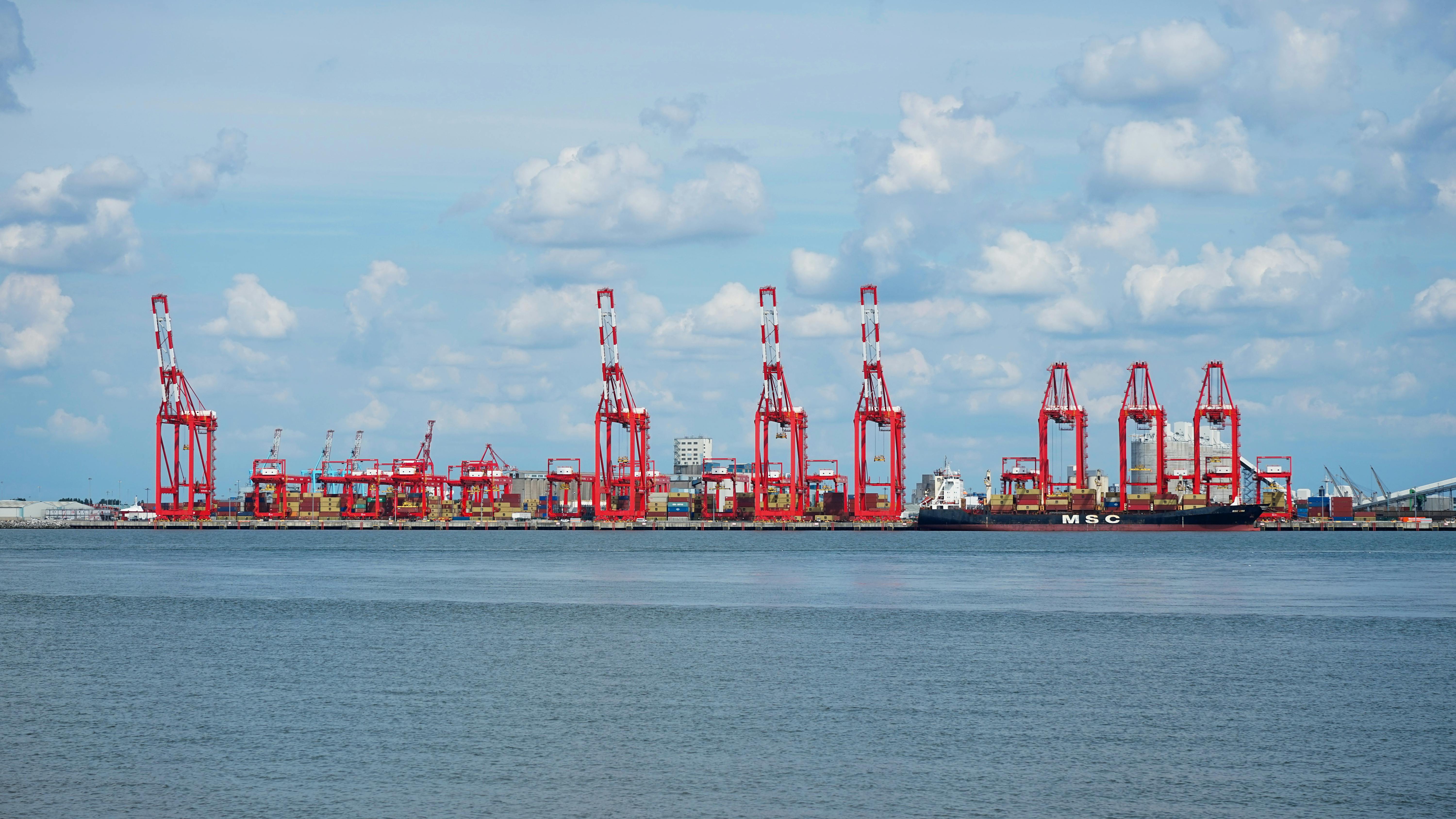
Shipping containers at international trade port
Pricing in chaos
For British exporters, this marks the second major tariff upheaval in as many weeks. The original reciprocal tariff announcement in April forced finance directors to model various scenarios. The UK's 10% deal in early May provided brief relief. Friday's Supreme Court ruling and Trump's weekend response have reset the board entirely.
What's often missed in Westminster's focus on high-level diplomacy is the operational reality for exporters. A Sheffield manufacturer quoting on a six-month US contract must factor in shipping costs, currency fluctuations, and tariff rates. The first two variables have established risk management tools. The third has become a moving target controlled by presidential social media posts and judicial rulings.
The competitive implications extend beyond absolute costs. If Britain genuinely retains preferential treatment while other exporters face the full 15%, UK firms gain margin advantage. But that requires certainty the government cannot currently provide. A Birmingham component supplier competing against German and Italian rivals for a Chicago manufacturer's business cannot credibly claim lower tariff exposure when the legal basis for that claim remains undefined.
Britain's exports to the United States totalled £188 billion in 2023, making America the UK's largest single-country trading partner. Even a five percentage point tariff differential on a fraction of that trade represents hundreds of millions in additional costs, compressed margins, or lost contracts.
What happens next
The gap between ministerial confidence and business anxiety reflects a fundamental mismatch. Politicians operate in the realm of relationship capital and ongoing negotiations. Exporters operate in the realm of signed contracts and cleared customs declarations.
Phillipson's emphasis on conversations "right to the very, very highest levels" and Britain's "strong relationship" with Washington might prove accurate. But "might" doesn't help a Leeds textile exporter deciding whether to accept a contract with payment terms extending into August.
Factory worker in British manufacturing facility
The government's task now is translating diplomatic comfort into legal certainty. That means published guidance specifying which UK exports qualify for preferential rates, under what legal authority those rates apply, and how long businesses can rely on that framework before the next Trump announcement or court ruling.
British businesses have demonstrated remarkable adaptability through Brexit disruption, Covid supply chain chaos, and energy price shocks. They will adapt to this as well. What they cannot do is operate efficiently in an environment where UK firms are left in limbo after a court overrules many US tariffs and their own government responds with assurances rather than specifics.
The next fortnight will reveal whether Britain's "special relationship" translates into concrete tariff certainty or remains a diplomatic talking point while exporters price in a risk premium for American chaos. For the precision engineering firm in Manchester, that distinction determines whether the Texas order proceeds at a reduced margin or gets cancelled entirely.
UK exporters cannot reliably price contracts or predict landed costs until the government provides published guidance on which sectors retain preferential treatment under Trump's new tariff structure
The competitive advantage of Britain's supposed "special deal" evaporates without legal certainty, leaving UK firms unable to leverage lower rates against European rivals
Watch for concrete customs guidance within the next fortnight — anything less than specific sectoral clarification means businesses must price in a chaos premium that could cost hundreds of millions in lost contracts
Multi-award winning serial entrepreneur and founder/CEO of Venntro Media Group, the company behind White Label Dating. Founded his first agency while at university in 1997. Awards include Ernst & Young Entrepreneur of the Year (2013) and IoD Young Director of the Year (2014). Co-founder of Business Fortitude.