Wayve has secured £1.1bn from Microsoft and Nvidia, valuing the British AI startup at £6.4bn
The company will launch robotaxis in London later this year through a partnership with Uber
Wayve's approach uses AI that learns from real-world driving data rather than pre-mapped routes
The UK faces a £16.3bn backlog in road repairs, creating uniquely challenging conditions for autonomous vehicles
A British artificial intelligence startup has secured £1.1bn from Microsoft and Nvidia with a contrarian bet: that if its self-driving technology can master London's chaotic streets, medieval road layouts, and crater-sized potholes, it will have a critical edge over rivals trained on America's orderly grid systems. The question is whether Britain's notoriously challenging road conditions will prove to be a bug or a feature in the global race for autonomous vehicles. Within months, two of the world's most significant autonomous vehicle programmes will be competing directly on British streets.
Autonomous vehicle technology and sensors
Wayve, founded in 2017 and now valued at £6.4bn, is preparing to launch robotaxis in London later this year through a partnership with Uber. The timing puts it on a collision course with Waymo, Alphabet's self-driving unit, which announced plans to begin UK operations in September. Within months, two of the world's most significant autonomous vehicle programmes will be competing directly on British streets.
The stakes extend well beyond London. Wayve's approach differs fundamentally from most competitors: its AI learns from real-world driving data collected by sensors, rather than relying on meticulously pre-mapped routes. This technique could prove either brilliantly adaptable or dangerously unpredictable. The company's chief executive Alex Kendall claims the technology handles potholes and other road hazards without difficulty, though no independent verification of these capabilities has been made public.
Enjoying this article?
Get stories like this in your inbox every week.
Training grounds or proving grounds?
Kendall argues that mastering London's driving environment represents a harder technical challenge than navigating American cities, where autonomous vehicles have operated on a trial basis for several years. He has a point. The capital's road network evolved over centuries rather than being planned, creating a tangle of narrow lanes, unexpected junctions, and cycling infrastructure that appears to have been designed by committee after a long lunch.
Add to this Britain's frequently appalling road maintenance—the Asphalt Industry Alliance reported in 2024 that local authorities face a £16.3bn backlog in road repairs—and you have conditions that would challenge even experienced human drivers.
If Wayve's AI can reliably navigate these obstacles, the technology may transfer more readily to developing markets with similarly challenging infrastructure than systems honed on San Francisco's relatively predictable streets. Yet this optimistic framing glosses over significant questions. China has allowed autonomous vehicles in multiple cities for years, accumulating vast quantities of real-world data across diverse urban environments.
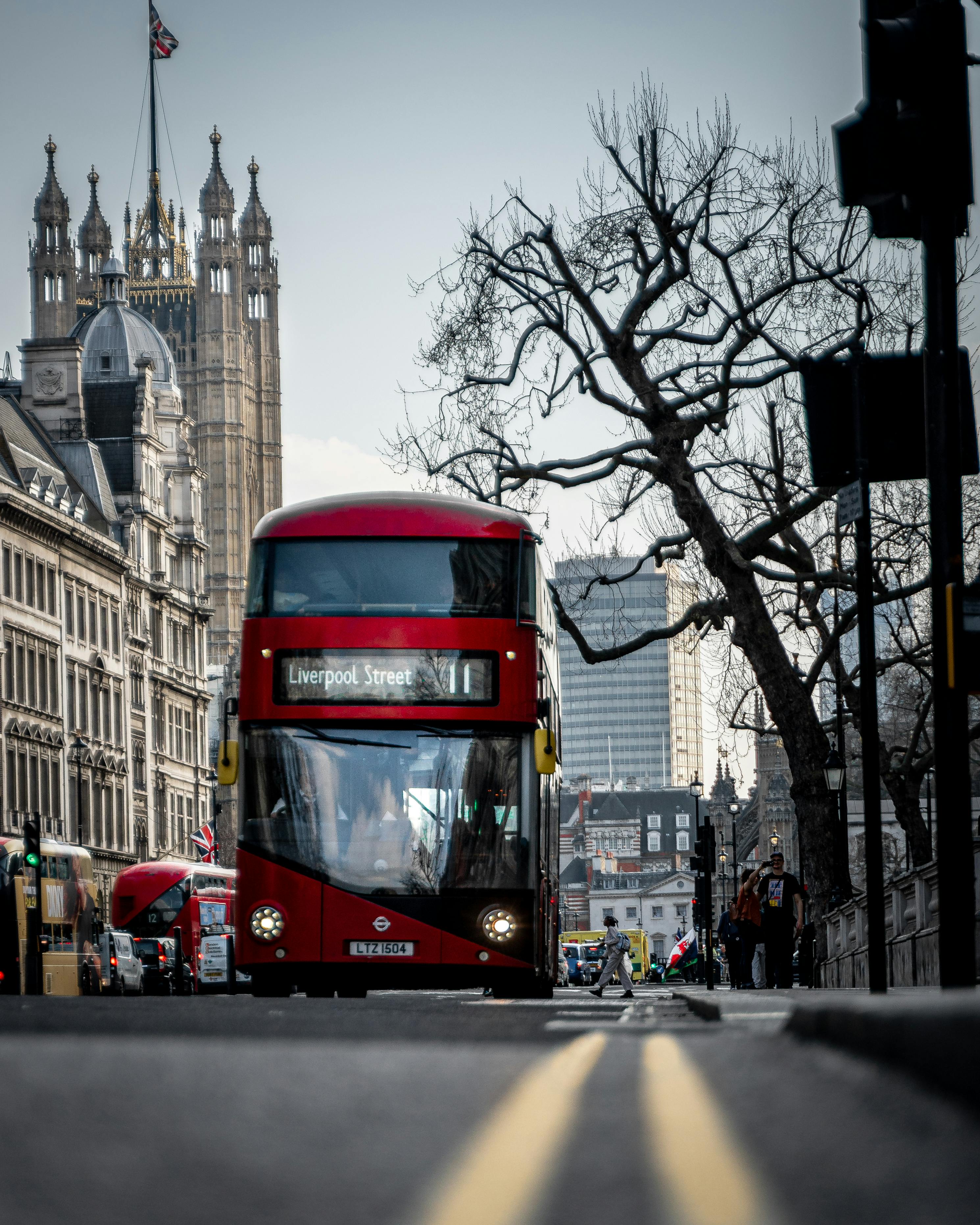
London street traffic and urban driving conditions
Waymo has operated commercial robotaxi services in Phoenix and San Francisco, building a safety record and regulatory relationships that Wayve lacks. The British startup may be tackling a harder problem, but its rivals have already solved easier ones and are generating revenue whilst doing so.
The regulatory wildcard
The £1.1bn funding round—amongst the largest ever for a British technology company—signals that investors including two American tech giants believe autonomous driving is approaching commercial viability. Rachel Harris, a supervising associate at Simmons & Simmons, described the investment as evidence that "autonomous driving technology is reaching commercial maturity", though this assessment reflects legal opinion rather than established industry consensus.
What's genuinely unclear is whether British regulation will accelerate or obstruct deployment. Harris identified this as "the critical question" facing the sector. The UK government has expressed ambitions to position Britain as a leader in autonomous vehicle regulation, but the framework remains incomplete. Unlike some American states and Chinese cities that have established clear pathways for testing and deployment, British operators are navigating a patchwork of existing road traffic laws never designed for vehicles without human drivers.
This regulatory ambiguity cuts both ways. A clear, innovation-friendly framework could attract further investment and testing. Continued uncertainty will push companies towards jurisdictions that have already established workable rules. Uber's involvement may accelerate regulatory clarity—the ride-hailing giant has considerable experience lobbying transport authorities and substantial incentive to see autonomous vehicles deployed, given they eliminate the company's largest cost: human drivers.
The valuation gap tells its own story
Wayve's £6.4bn valuation sounds impressive until you compare it with Waymo, which analysts estimate is worth between £30bn and £45bn based on recent private market transactions. That gap reflects the reality that Waymo is already operating commercial services, has driven millions of autonomous miles, and benefits from Alphabet's deep pockets and technical infrastructure. Wayve has impressive technology and ambitious plans. Its American rival has a functioning business.
Chinese competitors present an even more formidable challenge. Baidu's autonomous driving unit has logged extensive testing hours across multiple Chinese cities and is entering the British market through a partnership with Lyft.
Future of transportation and autonomous vehicles
Chinese firms benefit from supportive government policies, vast domestic testing grounds, and experience navigating complex urban environments that rival anything London can offer. Kendall's prediction that "all cars will be autonomous in the future" represents the industry's aspirational thinking rather than a settled forecast. Plenty of automotive executives and technology analysts remain sceptical that full autonomy will arrive as quickly as boosters suggest, particularly given the persistent challenges of handling edge cases and unpredictable human behaviour.
The coming months will provide a genuine stress test. If Wayve's robotaxis successfully navigate London's streets whilst Waymo simultaneously deploys its competing service, Britain will become an unexpected front in the autonomous vehicle wars. Whether the British startup's home-turf advantage and adaptive AI prove sufficient against better-funded, more experienced rivals in the driverless car industry will determine not just Wayve's future, but whether Britain can sustain a meaningful position in an industry dominated by American and Chinese giants. The potholes may be the least of the obstacles ahead.
Britain's challenging road conditions may either provide Wayve with a competitive advantage in adapting to diverse global markets, or prove irrelevant against rivals with more commercial experience and regulatory relationships
Regulatory clarity remains the critical wildcard—without a coherent framework, Britain risks losing its autonomous vehicle ambitions to jurisdictions with established pathways for deployment
Watch the London launches closely: the simultaneous deployment of Wayve and Waymo later this year will reveal whether innovative technology can overcome a massive experience and valuation gap in a market dominated by American and Chinese competitors
Multi-award winning serial entrepreneur and founder/CEO of Venntro Media Group, the company behind White Label Dating. Founded his first agency while at university in 1997. Awards include Ernst & Young Entrepreneur of the Year (2013) and IoD Young Director of the Year (2014). Co-founder of Business Fortitude.