Everton's new stadium handles 11Gb bandwidth, 205TB matchday data, and 18,000 simultaneous wi-fi connections through multi-million pound infrastructure investment
Champions League finals require approximately 1.5Gbps bandwidth per camera across 40+ cameras—150 times Ofcom's "decent" domestic broadband standard
British venues have mandated digital ticketing and cashless payments without ensuring underlying network infrastructure can reliably support them
Mobile network upgrades remain constrained by planning system bottlenecks and local objections to new masts across the country
British sports stadia and festival sites have spent the past five years systematically eliminating analogue options. Paper tickets? Largely gone. Cash payments? Increasingly banned at concession stands. Yet the digital infrastructure meant to replace these systems routinely collapses under the weight of matchday crowds, creating a peculiar trap: you must use your phone to access services, but operators cannot guarantee your phone will actually work.
The dysfunction isn't trivial. When Everton Football Club opened its new stadium at Bramley-Moore Dock, the connectivity specification told the real story about what modern venues require. According to Phil Davies, the club's IT director, the facility handles 11Gb of bandwidth and shifts 205TB of data on matchday whilst supporting 18,000 simultaneous wi-fi connections. That infrastructure didn't materialise by accident.
Most British venues, particularly older stadia and temporary festival sites, possess nothing remotely comparable. The result is a two-tier system where your experience depends less on which team you support or which band you're watching, and more on whether the venue operator could afford enterprise-grade networking equipment.
Enjoying this article?
Get stories like this in your inbox every week.
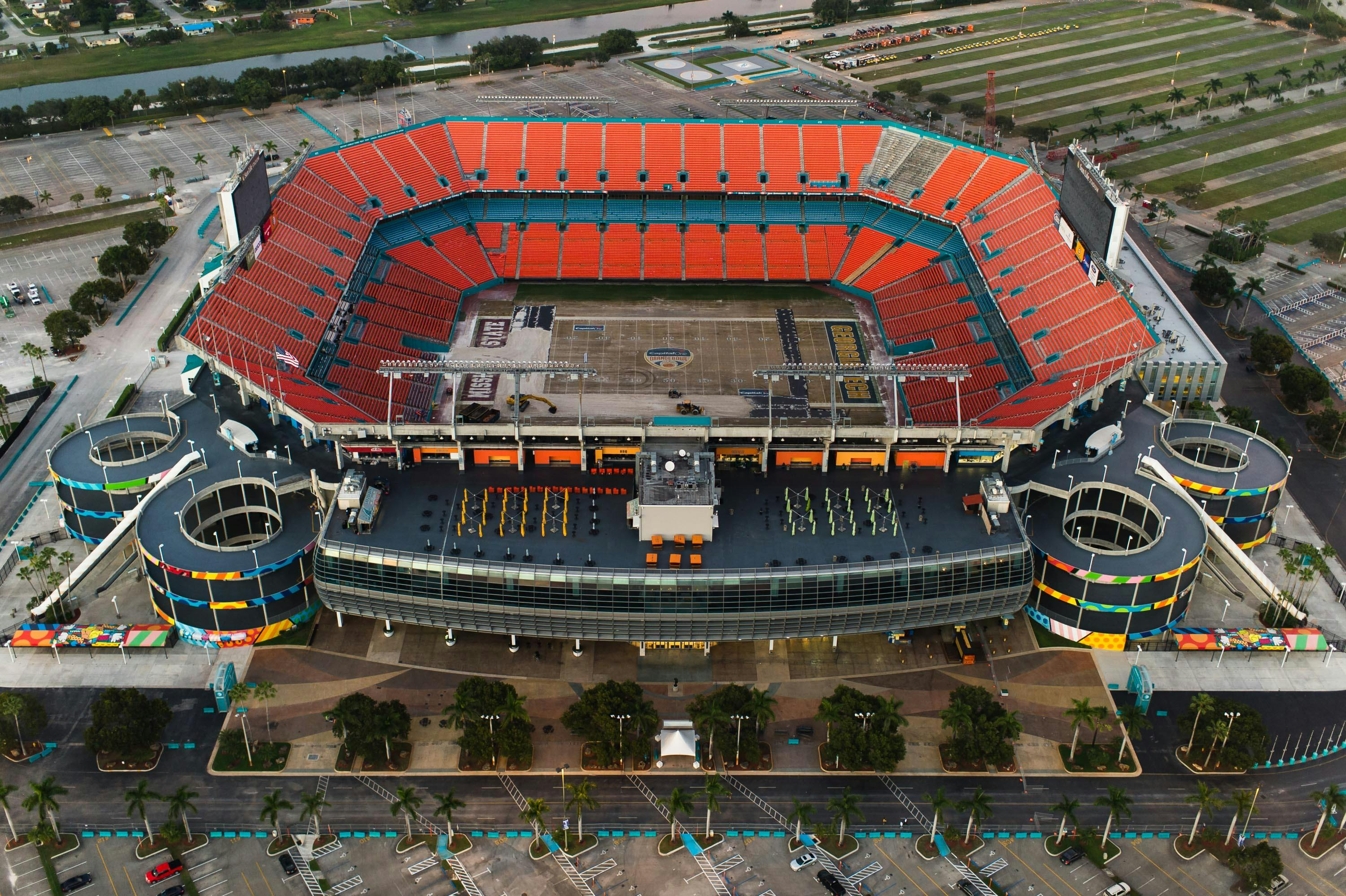
Modern stadium with digital infrastructure
The broadcaster problem becomes everyone's problem
For years, connectivity at sports venues was primarily a broadcaster concern. Elite competitions demanded it. A Champions League final involves upwards of 40 cameras, each requiring approximately 1.5Gbps of bandwidth, according to Peter Coppens, vice president of product at Colt Technology. That's 150 times the 10Mbps download speed Ofcom considers "decent" for domestic broadband.
Venues met these requirements with dual high-capacity fibre connections, often at considerable expense. But broadcasting needs remained largely separate from fan infrastructure. Supporters could survive a patchy mobile signal. Annoying, certainly, but not operationally critical.
That calculation changed the moment venues mandated digital ticketing and cashless payments. When the wi-fi fails, you can't take payment for anything. The payment terminals stop. The box office goes dark. Revenue generation halts entirely.
This shift from convenience feature to single point of failure has profound implications. Operators have effectively outsourced their operational resilience to network infrastructure that many cannot afford to properly implement.
The physics hasn't changed, but the expectations have
Building reliable connectivity in a stadium presents challenges that money alone cannot solve. As Elliot Townsend, senior director at HPE Networking, points out, steel and concrete structures packed with tens of thousands of people create very harsh network environments where radio signals struggle to penetrate. Sports events generate usage spikes—everyone checks scores at half-time—whilst concerts produce what Townsend calls relentless, sustained pressure from start to finish.
Temporary events face even steeper obstacles. Golf tournaments and music festivals must install infrastructure weeks before opening, then dismantle it afterwards. Simon Wilson, chief technology solutions leader at HPE Aruba Networking, notes that failure remains unacceptable regardless of impermanence. Missing the start of the 100 metres because connectivity failed during broadcast setup simply cannot happen at elite sporting events.
Crowded festival venue with mobile phones
Mobile operators point to 5G and 5G standalone architecture as eventual solutions. Gareth Elliott, director of policy at trade association Mobile UK, argues these technologies will support far more simultaneous connections near venues. Perhaps they will. But the timeline remains uncertain, constrained less by technical capability than by Britain's planning system.
Local objections to mobile masts slow network upgrades across the country. What begins as NIMBY resistance in individual council areas compounds into a national infrastructure bottleneck. Elliott acknowledges the planning system directly impacts operators' ability to deploy the equipment needed for reliable venue connectivity.
The mandatory-but-broken contract
Ben Jones, a creative director from north London, describes the cognitive dissonance of matchday connectivity perfectly. He can use his phone to enter the stadium and buy a pint, but cannot reliably call a friend seated elsewhere in the ground or check scores from other matches that might determine his team's fate. Some functions work. Others don't. The inconsistency makes the failure more maddening than total disconnection might be.
Nobody forced Premier League clubs to eliminate cash payments or paper tickets. These were operational decisions driven by cost savings and data collection ambitions. But operators made these transitions without first ensuring the underlying infrastructure could reliably support them.
Those benefits are real. Handling physical currency requires secure transportation, counting, and banking. Paper tickets can be forged. Digital systems promised efficiency gains whilst capturing granular data about fan behaviour. But venues have mandated digital participation whilst providing analogue reliability.
Sports stadium crowd using mobile devices
Davies at Everton acknowledges a tension in the model. Technology enables fans to share their experience from their seats, but the club also wants to generate an atmosphere in the stadium. Large sections of crowd staring at screens rather than watching the pitch undermines that objective. There's supposedly a balance to strike, though venues themselves have made finding it harder by eliminating alternatives to phone use.
Smaller operators face particularly acute pressure. Everton's multi-million pound connectivity investment at a new-build facility isn't replicable for League Two clubs in aging stadia or independent festival promoters working on thin margins. Yet the operational requirements—digital ticketing, cashless payments, real-time crowd management—increasingly apply regardless of revenue or facility age.
The planning bottleneck on mobile infrastructure shows no signs of rapid resolution. 5G rollout will continue, but when it will improve remains uncertain as overloaded mobile networks continue to plague UK festivals. Meanwhile, the expectation that phones must work at venues will only intensify as more services migrate to apps and digital wallets. Venues that cannot afford Everton-level infrastructure will find themselves unable to deliver experiences their own policies require. Fans will keep buying tickets, keep showing up, and keep finding their phones don't work at sporting events when they need them most. That's the trap. And connectivity at festivals and sports matches remains a critical infrastructure challenge that nobody's building the exits for.
Venues have created operational dependencies on digital systems without ensuring infrastructure reliability, leaving smaller operators unable to deliver experiences their own policies require
The planning system bottleneck on mobile mast approvals will delay 5G solutions indefinitely, widening the gap between wealthy venues with enterprise connectivity and everyone else
Watch for increasing operational failures at cashless venues during peak events as the gap between digital mandates and infrastructure reality becomes unsustainable
Multi-award winning serial entrepreneur and founder/CEO of Venntro Media Group, the company behind White Label Dating. Founded his first agency while at university in 1997. Awards include Ernst & Young Entrepreneur of the Year (2013) and IoD Young Director of the Year (2014). Co-founder of Business Fortitude.