Wayve has raised $1.5bn at an $8.6bn valuation, making it Britain's most valuable AI company
Uber has committed $300m specifically for deploying Wayve-powered robotaxis across 10+ global markets from 2026
Unlike Waymo and Cruise, Wayve licenses software to existing manufacturers rather than building custom vehicles
From 2027, consumers can purchase vehicles with Wayve's AI Driver pre-installed from partners including Mercedes-Benz, Nissan and Stellantis
Wayve has just secured $1.5bn in funding at an $8.6bn valuation, making the London-based autonomous driving firm Britain's most valuable AI company and the recipient of its largest-ever AI investment. But the truly consequential detail sits buried in the announcement: this isn't another attempt to build a fleet of purpose-built robotaxis. Instead, Wayve is licensing its software to existing car manufacturers and ride-hailing platforms, betting that autonomy reaches mass adoption through established industry rather than Silicon Valley's vertically integrated approach.
The funding round, led by Eclipse, Balderton and SoftBank Vision Fund 2, includes a notable $300m commitment from Uber specifically earmarked for deploying Wayve-powered robotaxis across more than 10 global markets from 2026. That timeline matters. Waymo has spent 15 years and tens of billions developing custom vehicles for limited geographic markets. Cruise burned through similar sums before General Motors effectively mothballed the operation following safety incidents.
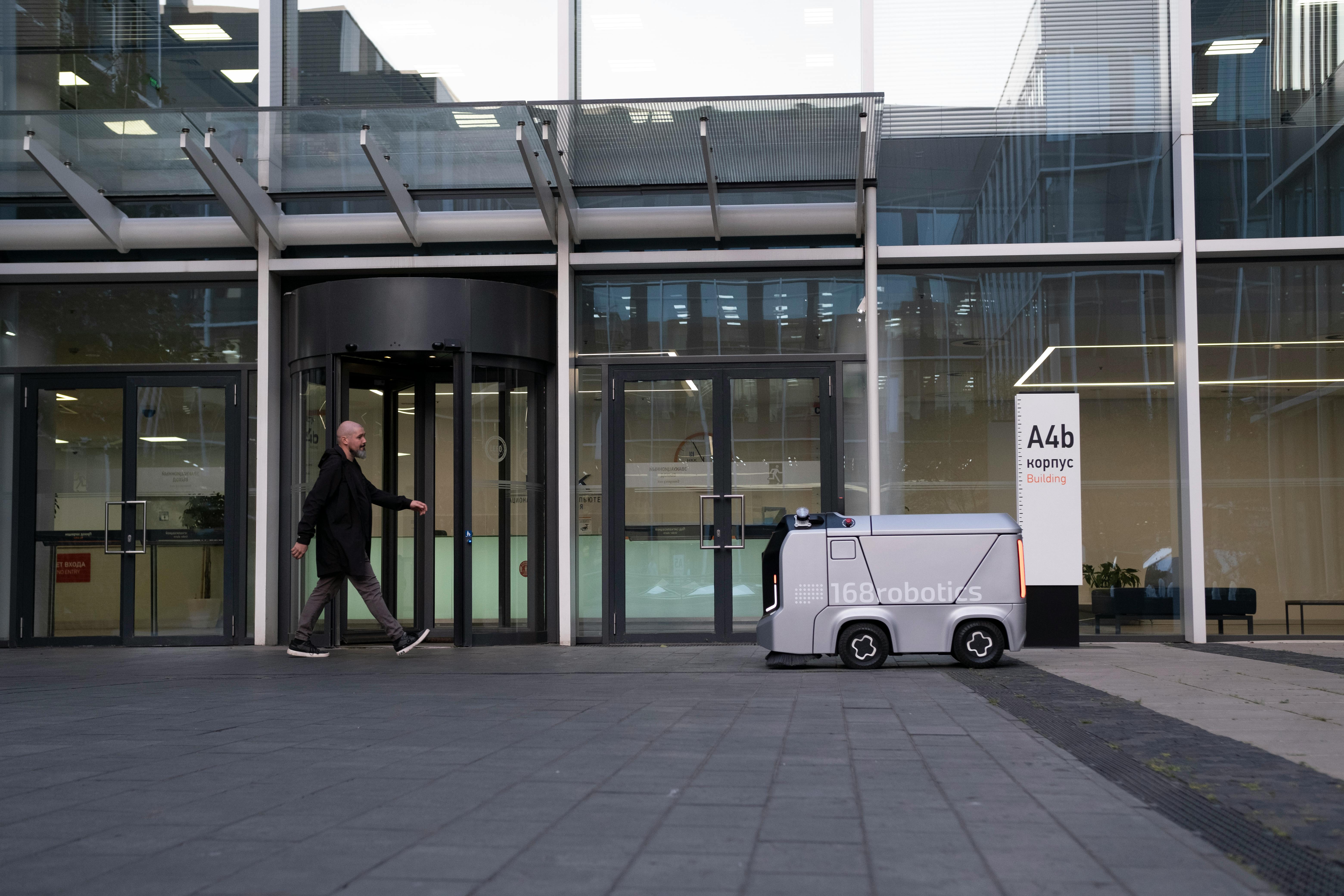
Autonomous vehicle navigating city streets
Wayve's model—providing an AI platform that runs on standard vehicle hardware without requiring high-definition mapping—promises faster, cheaper deployment. Whether it actually delivers remains the $8.6bn question.
The platform play that could change everything
What distinguishes Wayve from its better-known American competitors isn't just technology architecture. It's business model. Rather than manufacturing vehicles or operating fleets, the company sells autonomy as a service to automakers including Mercedes-Benz, Nissan and Stellantis, who participated in this funding round alongside their cheques.
Enjoying this article?
Get stories like this in your inbox every week.
From 2027, according to the company, consumers will be able to purchase vehicles with Wayve's 'AI Driver' pre-installed, initially offering Level 2+ hands-off capability—the system handles steering and navigation whilst the driver maintains ultimate responsibility. It's a cautious entry point, but one that gets the technology into customer hands far faster than waiting for full autonomy approval. The embedded approach also sidesteps the capital intensity that has plagued robotaxi operators, who must purchase, maintain and insure entire fleets before generating a penny of revenue.
This isn't just theory. Uber's substantial additional investment signals genuine intent to commercialise, with London slated as the first deployment city in 2026. The choice of London carries symbolic weight—a statement that Britain can host cutting-edge technology trials—but also introduces regulatory complexity that the announcement glosses over.
Britain's regulatory fog
Business Secretary Peter Kyle's enthusiasm is predictable: 'The growth of great British AI businesses like Wayve is a big vote of confidence in the UK and in the future of our auto industry.' His promise to back the investment through the British Business Bank participation is welcome. What's conspicuously absent is any detail on the regulatory framework these vehicles will actually operate under.
London street traffic and urban infrastructure
The UK government has repeatedly pledged legislation to enable autonomous vehicles, but implementation remains frustratingly vague. The Automated Vehicles Act received royal assent in 2024, establishing liability frameworks, but the secondary legislation required to approve specific autonomous systems for public roads hasn't materialised on any clear timetable. Wayve's 2026 London launch assumes these regulatory pieces fall into place within 18 months. That's optimistic given Whitehall's recent track record.
Britain risks creating a world-leading technology company without the regulatory environment to let it actually operate at scale domestically.
Compare this to the regulatory certainty—however imperfect—that Waymo enjoys in California and Arizona, or the aggressive state support Chinese autonomous vehicle companies receive. Phoenix, Arizona didn't become the robotaxi capital by accident. It happened because local and state governments actively wanted it.
The uncomfortable China comparison
What's interesting here is that Wayve's approach mirrors the strategy that's made Chinese autonomous driving companies like Pony.ai and WeRide formidable competitors. They've focused on partnerships with established automakers rather than building everything in-house, enabling faster deployment across multiple vehicle types. Chinese regulations have also moved faster than their Western counterparts in designating testing zones and commercial operation areas.
The $1.5bn Wayve just raised sounds impressive until you consider the capital available to Chinese competitors through state-backed funds and the integration between technology companies and domestic manufacturers. Britain has the research talent—Wayve co-founder Alex Kendall emerged from Cambridge's machine learning community—but lacks the manufacturing ecosystem that would turn this into sustained industrial advantage.
Mercedes-Benz and Stellantis are investors and partners, certainly. But neither has committed to manufacturing Wayve-equipped vehicles in Britain. The risk is familiar: British intellectual property, developed with British research talent, commercialised primarily overseas whilst the UK captures a fraction of the economic value through shareholdings that eventually get sold to foreign acquirers.
What actually happens next
Wayve's technology claims are substantial but unproven commercially. The company describes its system as 'production-ready', but no vehicles running Wayve software have yet carried paying passengers outside controlled trials. The 2026 Uber deployment in London will be the first real test of whether the end-to-end AI approach works in the chaos of urban traffic without the high-definition mapping competitors rely on.
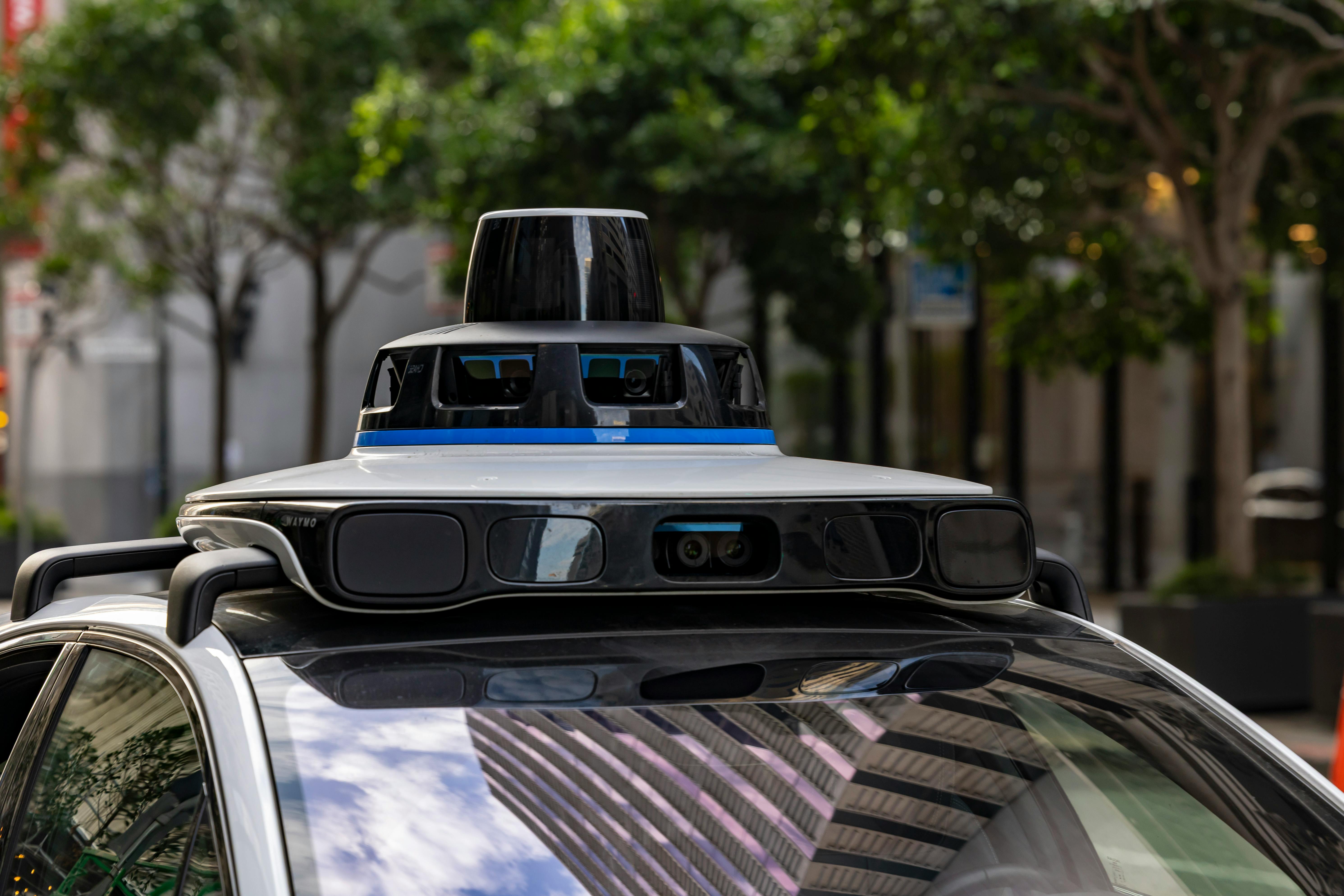
Advanced vehicle sensors and AI technology systems
That technological bet is either brilliant or reckless depending on execution. Traditional approaches pre-map environments in exhaustive detail, essentially giving autonomous vehicles a perfect memory of road layouts. Wayve's system must interpret its surroundings in real-time using only onboard sensors, more like human driving. This could enable rapid expansion to new cities without months of mapping work. Or it could prove less reliable than approaches with more environmental certainty baked in.
The funding runway this raise provides—combined with the Series C's £850m raised just last year—suggests investors believe Wayve can prove the model before competitors catch up. But 'well-funded' and 'commercially viable' remain distinct categories. If the 2026 London trials stumble, or if regulatory approval delays deployment, the company's valuation assumes commercial success that hasn't yet materialised.
For Britain, the stakes extend beyond one company's success. If Wayve scales globally whilst manufacturing and job creation happen primarily overseas, the 'vote of confidence' Kyle celebrates becomes another case study in British innovation that enriches shareholders without transforming the domestic economy. The alternative—that
Multi-award winning serial entrepreneur and founder/CEO of Venntro Media Group, the company behind White Label Dating. Founded his first agency while at university in 1997. Awards include Ernst & Young Entrepreneur of the Year (2013) and IoD Young Director of the Year (2014). Co-founder of Business Fortitude.